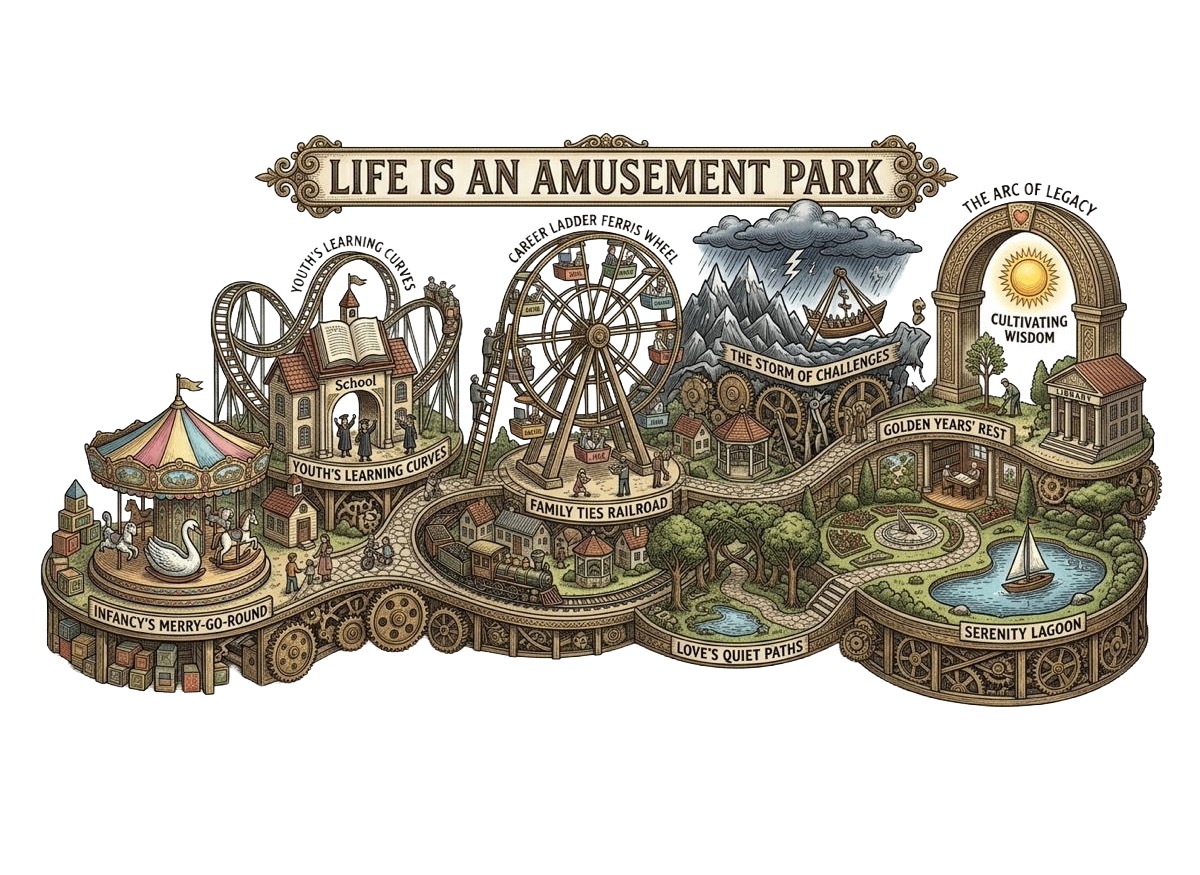
A man I know was diagnosed with pancreatic cancer. When I visited him in the hospital one day a while back, he used a metaphor for life. He told me that life is an amusement park. He said that everyone goes on rides, and there are ups and downs, and then eventually, everyone has to leave the amusement park.
I was struck by how he was facing death. He showed courage and acceptance and gratitude for the life he had lived. His husband, his family, and his friends expressed their love for him on social media posts and in person. He continued to do his treatments with hope and with a positive attitude. There was no bitterness. There was no resentment. There was no self-pity. He was not a victim. He was a man who lived a good life, and now it was time.





Psychologists who use a treatment approach known as dialectical behavioral therapy, or DBT, call that “radical acceptance.” You don’t have to like what is happening, but you acknowledge that you can’t change what is happening.
I decided to write something about this man and his story. I did not want to be morbid or maudlin. I just thought that maybe some people could learn from his wisdom. I also thought I’d share some of my story. It’s only fair, as I have asked probably hundreds of people by now in my 20-something years working in journalism to share theirs. Human beings are social creatures, and one of the ways we connect and teach is by telling stories.
I am a recovering alcoholic and addict. I have some time behind me now, but most importantly I have today. I have the present. Yesterday is gone. What happened then doesn’t matter. We can never get it back. Tomorrow isn’t here yet, so I don’t have to concern myself with that.
Addiction loves darkness. Addiction loves isolation. One of the first things I do when I wake up in the morning is open the blinds in my apartment and let the sunlight in. I also have a sober support network and genuine friends who text and call me to see how I’m doing. They don’t want anything from me. They just want to be helpful.






As we all do from time to time, I wrestle with existential questions. I wish I had all the answers, but I don’t, of course. I am learning to become comfortable living with questions to which there are no answers. We may know one day, but not right now. Faith is a flimsy reed when compared to the security of certainty, but faith is all we have.
I am grateful that my friend in the hospital told me what he did. I keep what he said close to me.













Today the weather is nice. It’s a beautiful day. I’m going to go for a walk, either in my neighborhood or on the boardwalk by the ocean.
As I walk, I will think of my friend and of all the possibilities and ways I can continue to build and enjoy a life that is healthy for me.
I suppose I have some more rides to go on.