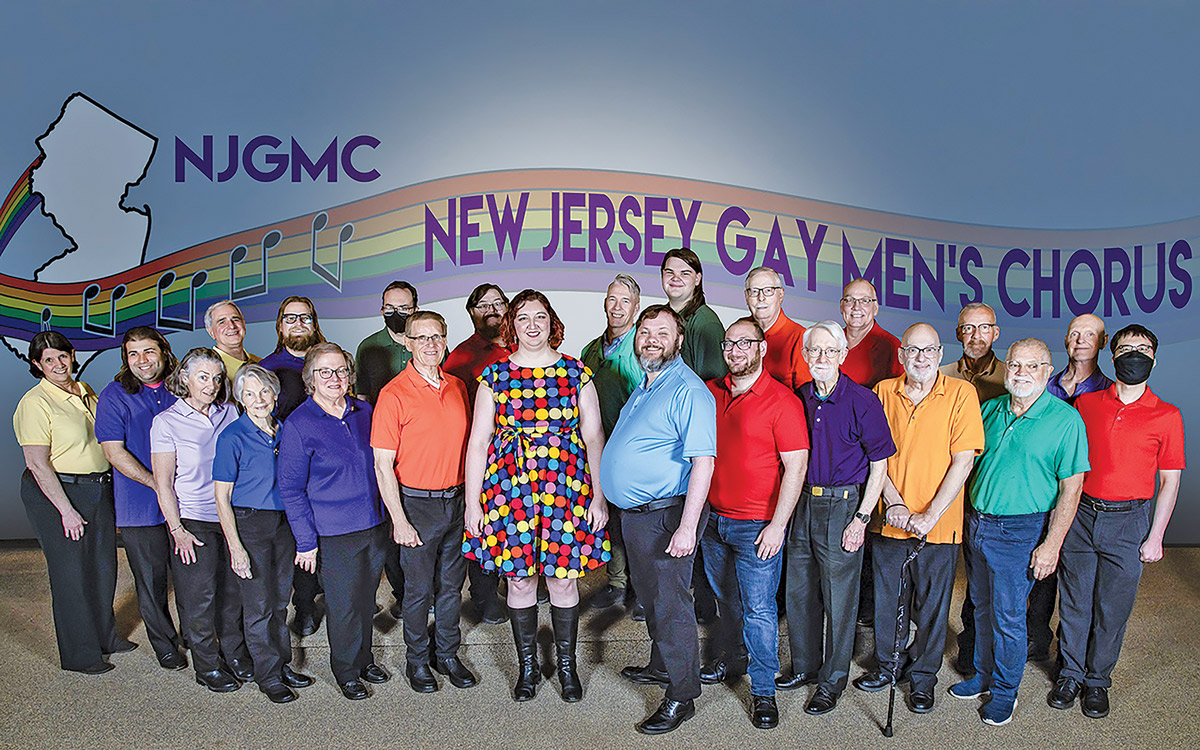
A chorus is a group of people singing together, by definition, but when such a group develops into a community, it can do more than present beautiful music, it can change lives. The New Jersey Gay Men’s Chorus started making music together in 1991 as the Delaware Valley Men’s Chorus. It soon came out of the closet to become the NJGMC, but today it has developed into much more than a group of gay men singing together. In fact, the group is currently contemplating a rebranding, and even a name change, to more accurately represent its current form. NJGMC members include women, straight men, and even those who don’t sing. So not only does the group change people, it has changed itself.
As many choruses do, the NJGMC rehearses once a week, in their case every Monday evening in Cranbury, and presents several concerts of a variety of styles of music each year. Any chorus would strive to sing the notes correctly, blend together in a symphonic vocal sound that is pleasing to the ear, and uplift an audience with musical beauty. But some choruses go beyond the technical motions of performing music, and into a deeper realm.





Many choruses have been formed as a part of the gay chorus movement, not only to provide singers in the LGBTQ community a way of socializing and connecting beyond the gay bar experience, especially in the early days of the AIDS crisis, but also to sing powerful words of resistance and activism during times of oppression. Having reasons to coalesce beyond music can help a chorus to develop into much more than a performing group, and more of a family.
According to Karen Wade, who sings in NJGMC with her wife, Colleen Fitzgerald, “I didn’t expect the camaraderie or the humor. I just came to sing. I didn’t expect all that I found.” Karen previously sang with another chorus where, after rehearsal, “They just left. After practice, that was it.”
When a chorus moves beyond just singing the notes, and develops into a deeper community, even a family, it can have an effect on the music. Richie Cahill, who joined the chorus because his late father was a member, said, “When you trust the people around you, so that you can make mistakes, and you don’t feel judged, it makes it easier to learn.” And when the members are united behind a cause, such as NJGMC’s mission to “inspires pride, empowerment, equality, and acceptance to all through extraordinary music and actions,” the resulting performance conveys power and meaning much more easily than just singing the notes.
George Bassett, who sings in the NJGMC with his wife, Nancy Wilson, said, “We realized very quickly that there was more going on here other than singing.” The chorus seeks to make everyone feel welcomed, not only if they can sing with the group, but also if they don’t sing, and can assist the many behind-the-scenes tasks to make the group function. And the chorus has welcomed those who are not gay and not men. Patty Mancuso, a straight woman who has sung with the chorus since 2017, said, “I quickly learned how important it is not only for the members to have a welcoming, supportive safe space to be, but for society to have the chorus. The chorus welcomes the community at large to celebrate the rights of all people to be who they are, where they are. All in the chorus, regardless of identity, support this mission. That is why I have remained a chorus member.”




Member Steve Ober said, “I love that our chorus is so inclusive that it extends to anyone who’s open to joining us.” Steve used to sing with the the New Hampshire Gay Men’s Chorus before moving to New Jersey. Like New Hampshire, the NJGMC is a non-auditioned chorus, which I loved, because I don’t read music, but with repetition and practice I memorize each piece without great difficulty.
Having a combination of accomplished musicians and total novices with only a love for singing, really embraces the inclusion factor, which underlies true diversity. I am forever grateful to both NHGMC and NJGMC for the strength and courage they’ve given me to live freely and proudly as a gay man, and fight the good fight for our recognition, acceptance and inclusion.”













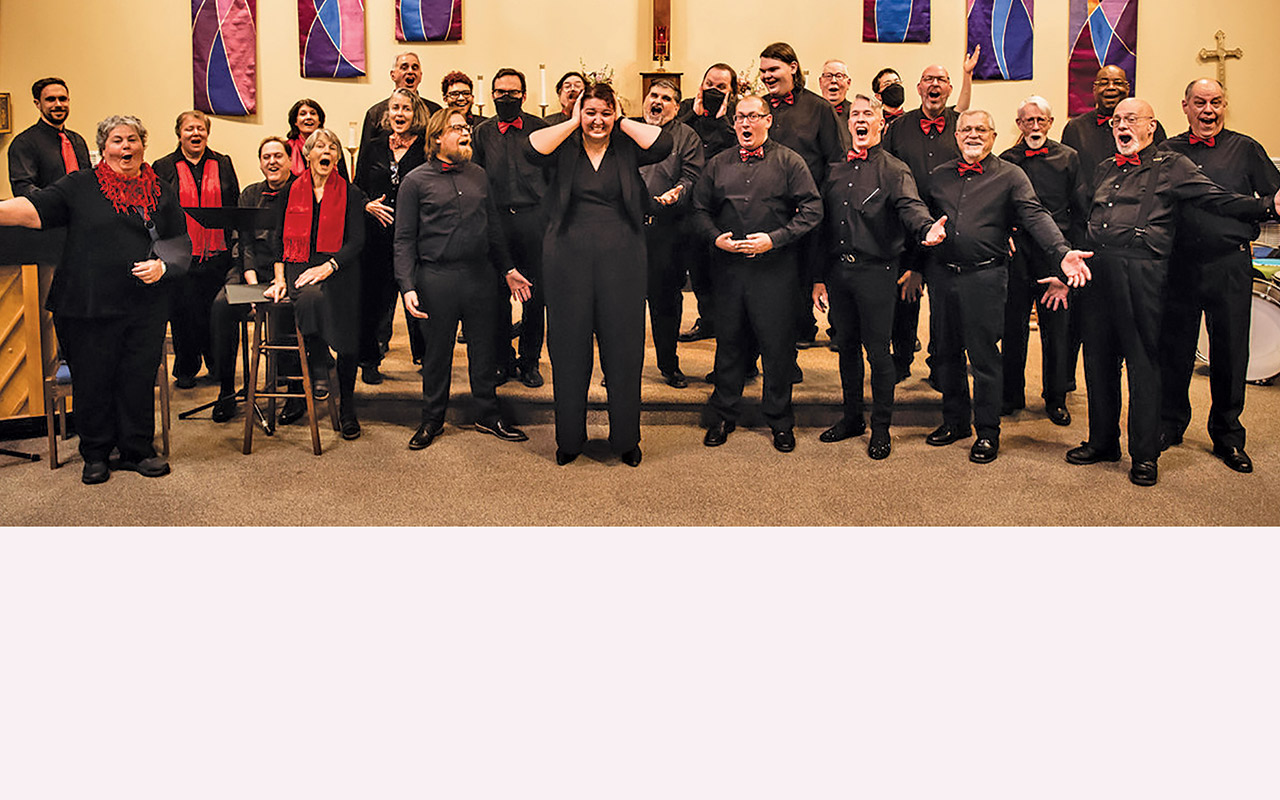
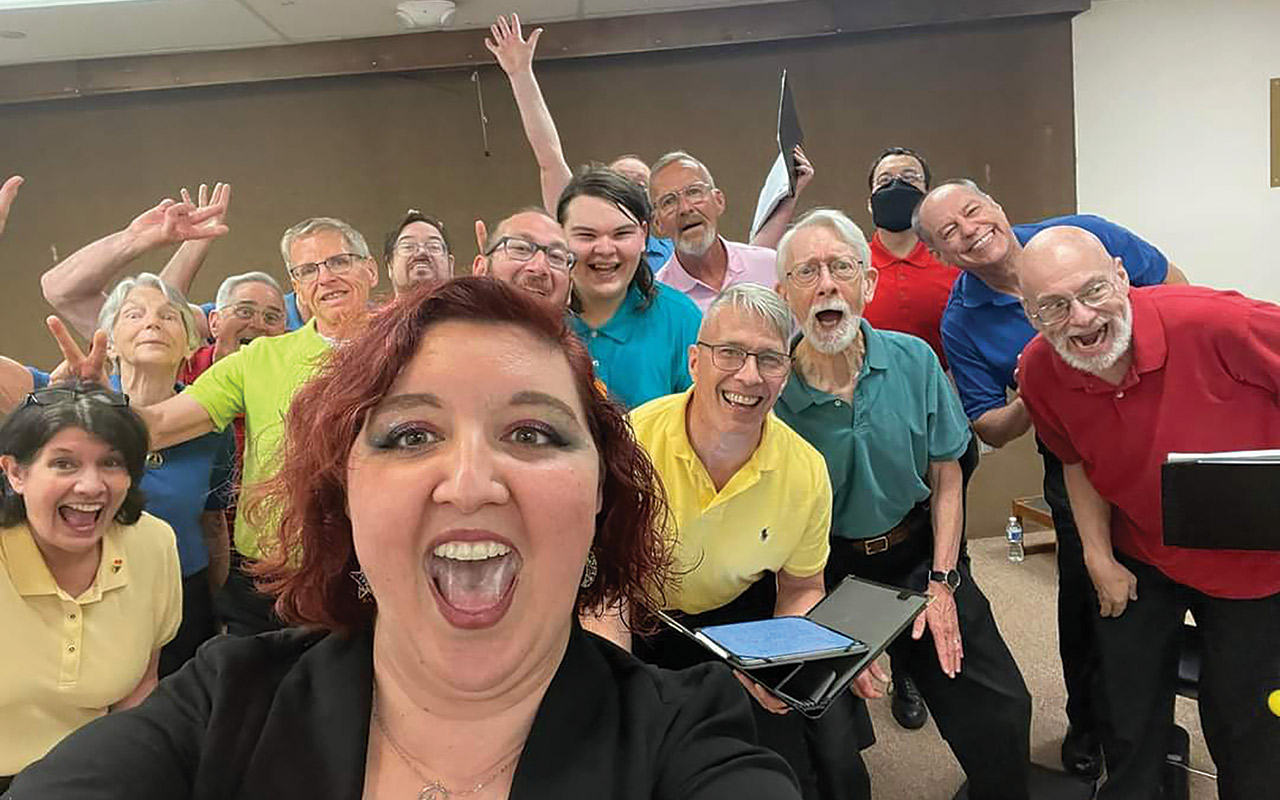
This kind of changing is not new to the chorus. It was the NJGMC that changed me. I directed the group from 2002 to 2014. When I started with them, I aimed to strive for musical excellence, as any director would. To achieve that goal I was, perhaps, a bit overzealous, sarcastic, and even snarky at times. However, during my tenure we intentionally did things to foster an environment of support, inclusion, safety, and companionship. We started what we called “The Circle,” where, just before a break we could stand in a circle locking arms around each other, and share joys and concerns with each other. It had a profound effect on me, as I’m sure it did on others. As we prepared for each concert, we would have an all-day rehearsal, which were sometimes all-weekend events.
It was heartwarming to hear that the chorus was still doing these. My time with the chorus changed me into a more compassionate, warmhearted conductor, who learned to use humor and fun in more productive ways. It was a joy to see them thriving, bringing powerful, life-changing music to life.