


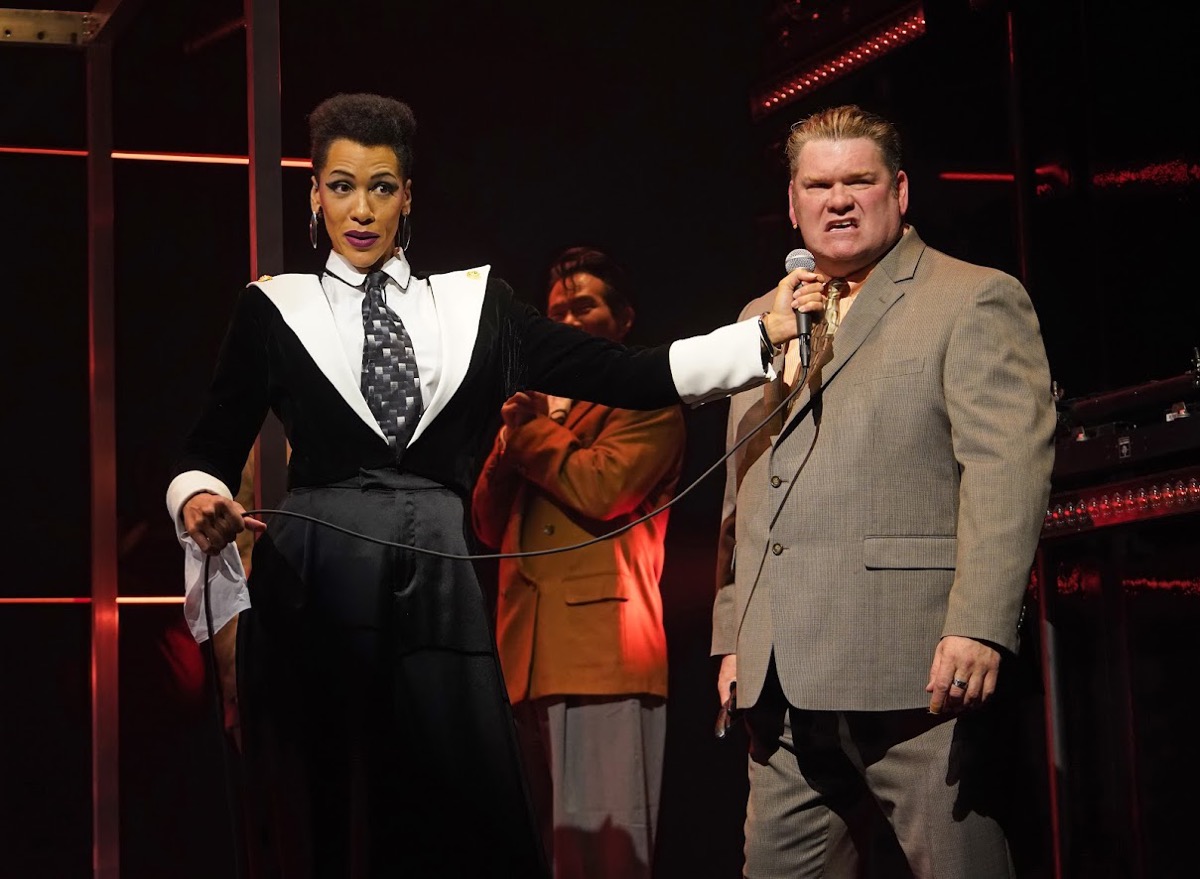


Shakespeare’s Richard II is, like all of Shakespeare’s history plays, not to be relied upon for historical accuracy. Of course, Shakespeare was writing during the reign of Elizabeth I, so one had to be very careful in writing about her ancestors. Still, as Elizabeth reportedly said to a biographer, “I am Richard II, know ye not that?” and performances of Richard II were always suspected of being treasonous.
Red Bull Theater is presenting a version of Richard II revised and directed by Graig Baldwin, with the out queer actor Michael Urie in the title role. Urie, last seen on Broadway in Once Upon a Mattress as the lovelorn Prince Dauntless, turns in a performance that captures many of the character and mental flaws that lead to the historical Richard’s downfall.





He also manages the quick mental changes that show Richard’s equivocation and capriciousness. However, some of Urie’s line readings bring to mind Richard Dreyfuss’ Richard III in the movie The Goodbye Girl, awash in queeny gay stereotype.
Other characters from Shakespeare’s original are gender-switched from male to female. In this Richard II there is a Duchess of York and Countess of Northumberland (Kathryn Meisle and Emily Swallow), wielding power their historical counterparts would never have had. Richard’s unnamed Queen (Lux Pascal) is a material girl, faithful as long as her status remains unshaken, while his male lover, the Duke of Aumerle (David Mattar Merten), son of the Duchess of York, brings about his final downfall. In several scenes, Richard’s sexually ambiguous nature is on display, with Urie’s mostly naked body on full display, either in underpants or luxuriously wrapped in gold cloth.
Grantham Coleman co-stars as Richard’s rival, cousin, and usurper, Henry IV, son of John, Duke of Lancaster (Canada Lee). Henry is temperamentally the opposite of Richard: calm, resolute, forgiving, and with a touch of humility. Exiled by Richard early in the play, Henry returns after John’s death only when Richard denies Henry his inheritance and title, keeping the property and fortune for himself. Henry at first denies wanting anything more, but rebellious nobles, tired of Richard’s caprices, urge the throne upon him.
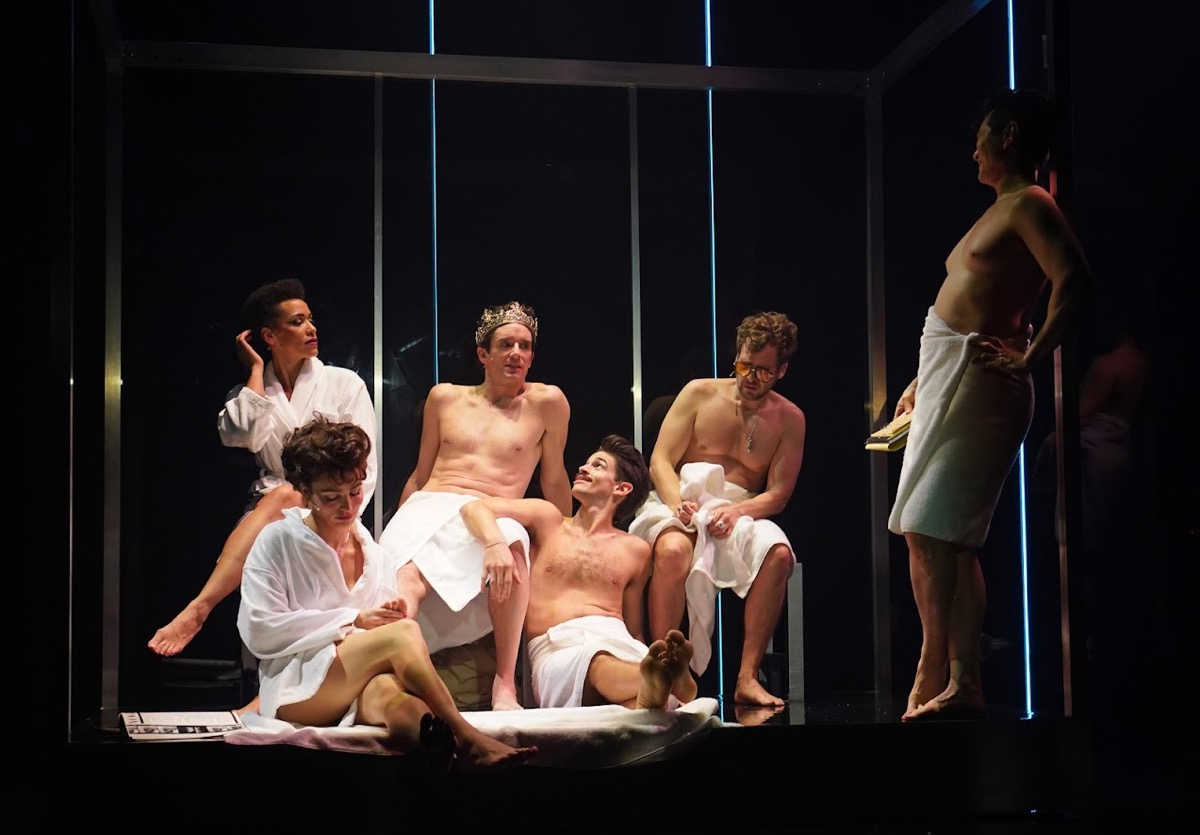

Arnulfo Maldonado’s set is dominated by a large open-sided metal and clear plastic cube which revolves to denote changes of scene. Thus it becomes Richard’s throne room, Henry’s command center, a fortress in which Richard and Aumerle take refuge, and various other spaces both indoors and outdoors. Jeanette Oi-Suk Yew’s lighting design is primarily plain yellow-white light that switches to red to denote violent death or heightened sexual passion. Rodrigo Munoz’ costumes are stylistic versions of military uniforms and dress formal court attire, adding a layer of definition to the various characters.






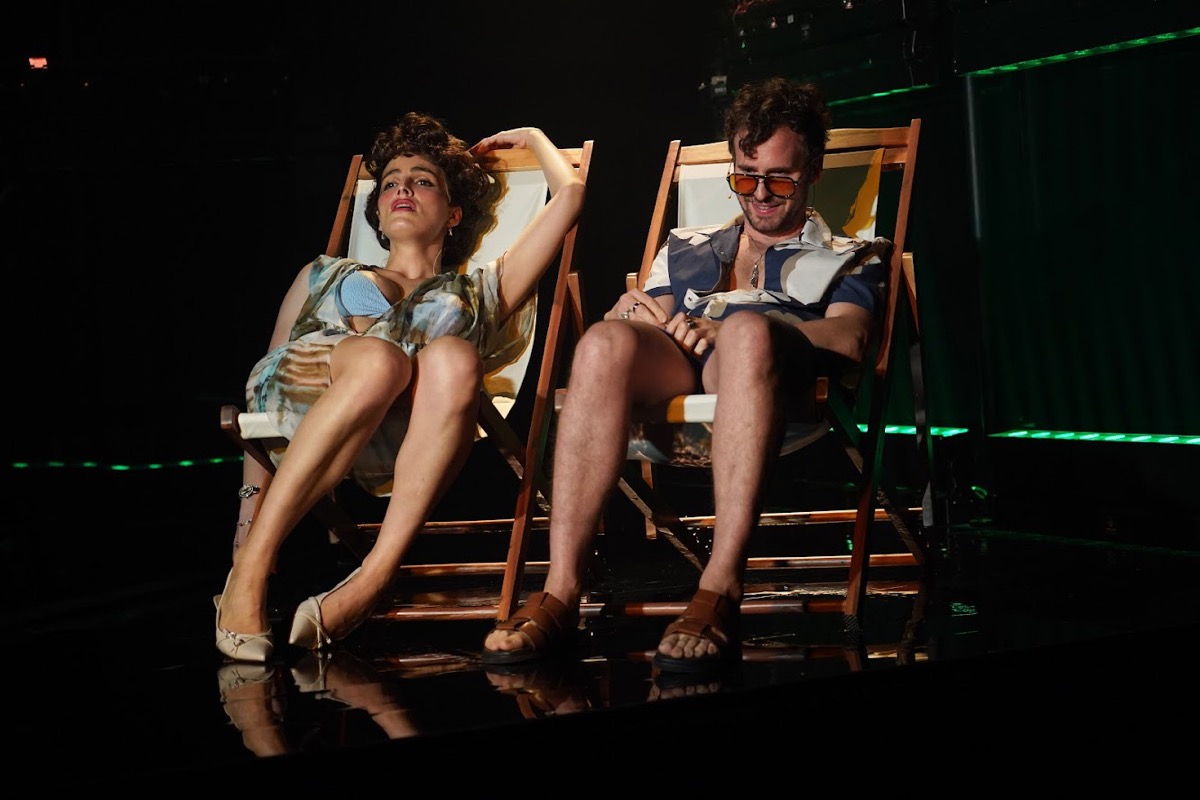
This is not your grandparents’ version of Shakespeare’s Richard II. It is a slimmed down, more contemporary adaptation that makes it easier to follow than the usual Shakespearean history play. As such, it makes for an interesting introduction to the histories, heightening and clarifying the interrelations of the characters for a modern audience.
There are several ways that it is not perfect — use of stereotype, lack of historical accuracy (Shakespeare’s cross to bear), some glaring anachronisms (video cameras recording Richard’s abdication) — so I cannot recommend this to everyone. Still, as a production it’s a worthwhile experiment, and if you can’t take risks with new representations of the classics in the theatre, where can you? For those who take an interest in such productions, I recommend spending time experiencing the tragedy that is Richard II.













Richard II is presented by Red Bull Theater at the Astor Place Theatre, 434 Lafayette St., in New York through Dec. 14, 2025. For more information or to purchase tickets, go to redbulltheater.com.


