
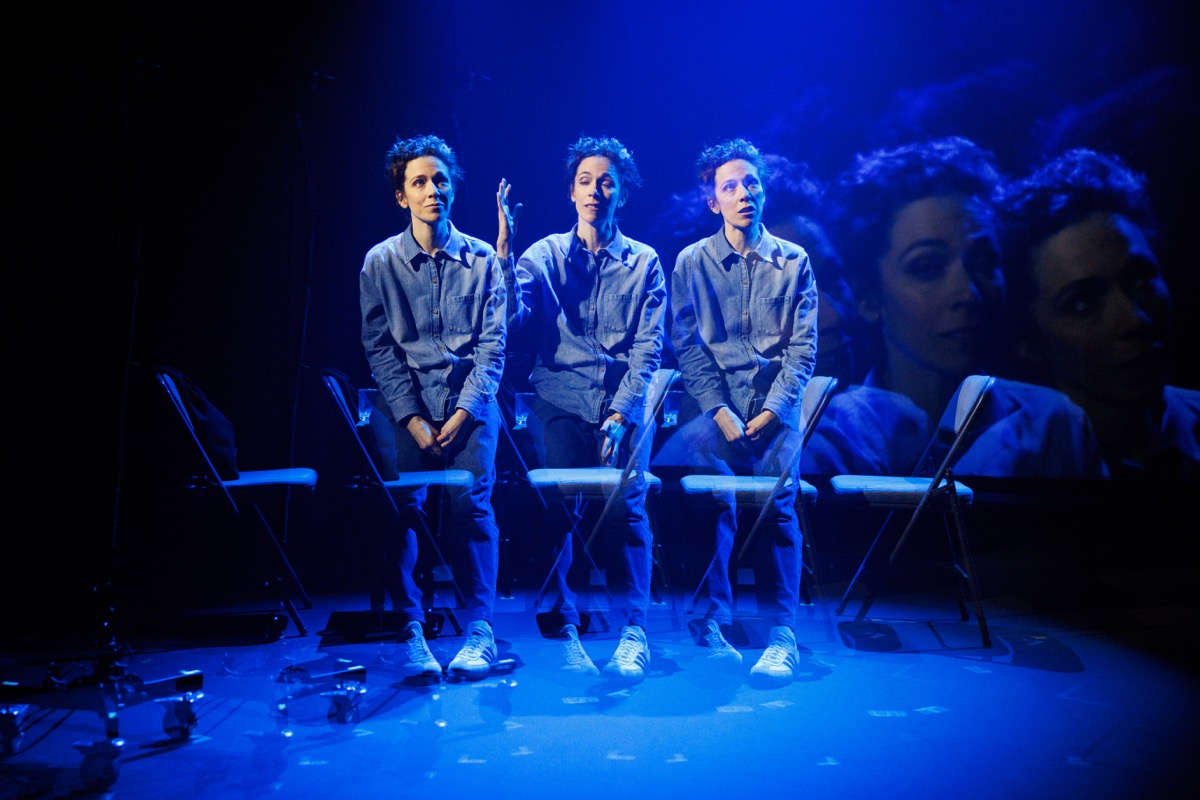
Playwrights Jen Tullock and Frank Winters began working on Nothing Can Take You from the Hand of God during the height of COVID. Starting with the idea for a screenplay inspired by Tullock’s upbringing in an evangelical church, they eventually decided to reshape the work into a one-woman play. It is this play that Playwrights Horizons is now presenting, and it is an intentionally unsettling experience.
Tullock portrays Frances, the author of a highly successful book about her own coming of age as a queer woman after leaving her insular small town. She has written a second book about her life in the town and church in which she was brought up. But since the book involves several people still living in town, including Frances’ mother and brother and a Polish female missionary who Frances claims was her first female lover, the publisher is trying to get releases from them before the book comes out. They have refused, some threatening lawsuits if the book is printed as is. Frances is sent back home to get the releases, hoping to preserve her story the way she remembers it.





But Frances’ family remembers the events she portrays in her book quite differently. The Polish missionary does not see their relationship as that of lovers or romantic. She wants to protect her own son, a youngster at the time, and her reputation in the church from the implications of Frances’ story. The mother also wants to preserve her reputation, refusing to believe Frances’ accounts of being sexually abused by the local pastor and being physically abused by her. Frances’ brother, who is also gay, cannot see himself ever leaving the community, nor can he live there as an openly gay man. He feels trapped and cannot see a way out, with Frances’ story only deepening his despair while allowing the community to start questioning him.
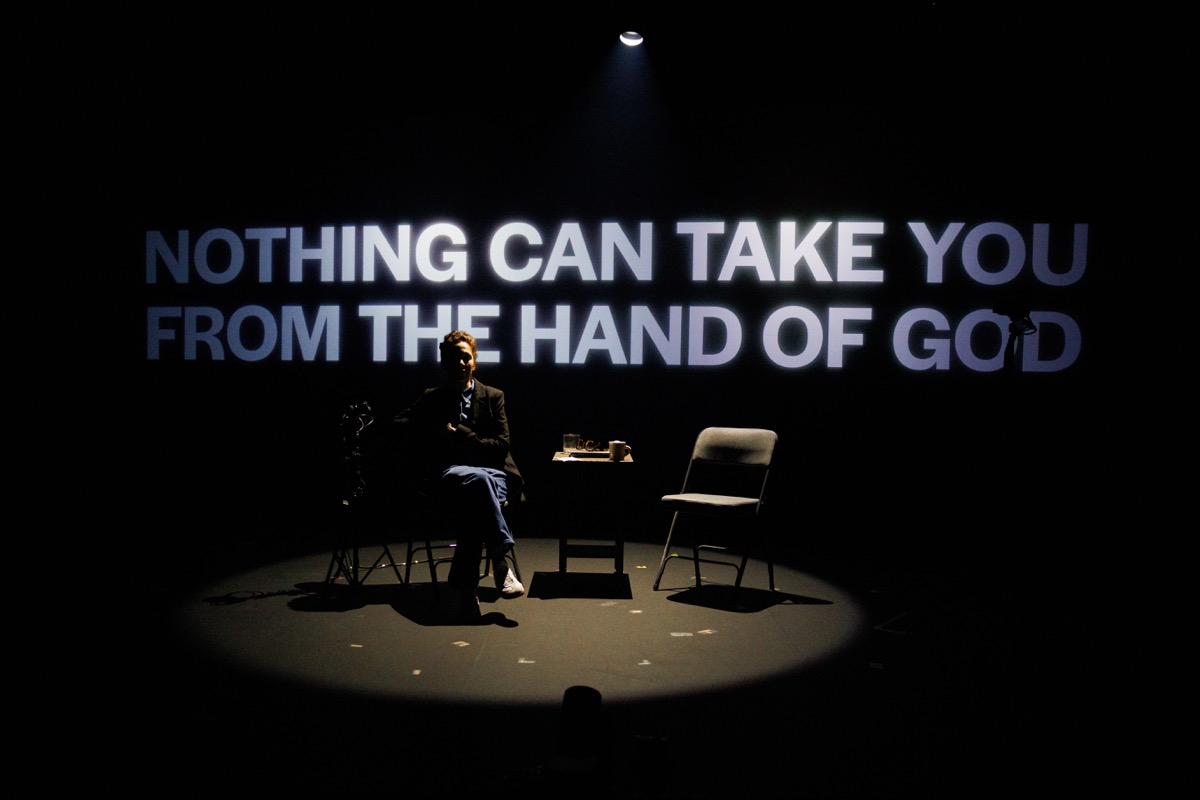
The play wrestles with the effects on memories of time and expectations. No matter how clear an event may be in the moment, every participant and every viewer comes away with their own version of it. Frances starts off solidly convinced of a life filled with abuse – physical, mental, and at times sexual – from the authority figures of church and family and the group-think of the town. The acclaim that came from her first book encouraged her to write about her early life, true, but she also got canonized as a queer heroine, and now feels the pressure to maintain that image. Therefore, Frances’ story as she tells it has to be the one true version, and now it cannot be nuanced by how her words and actions affected those she left behind.
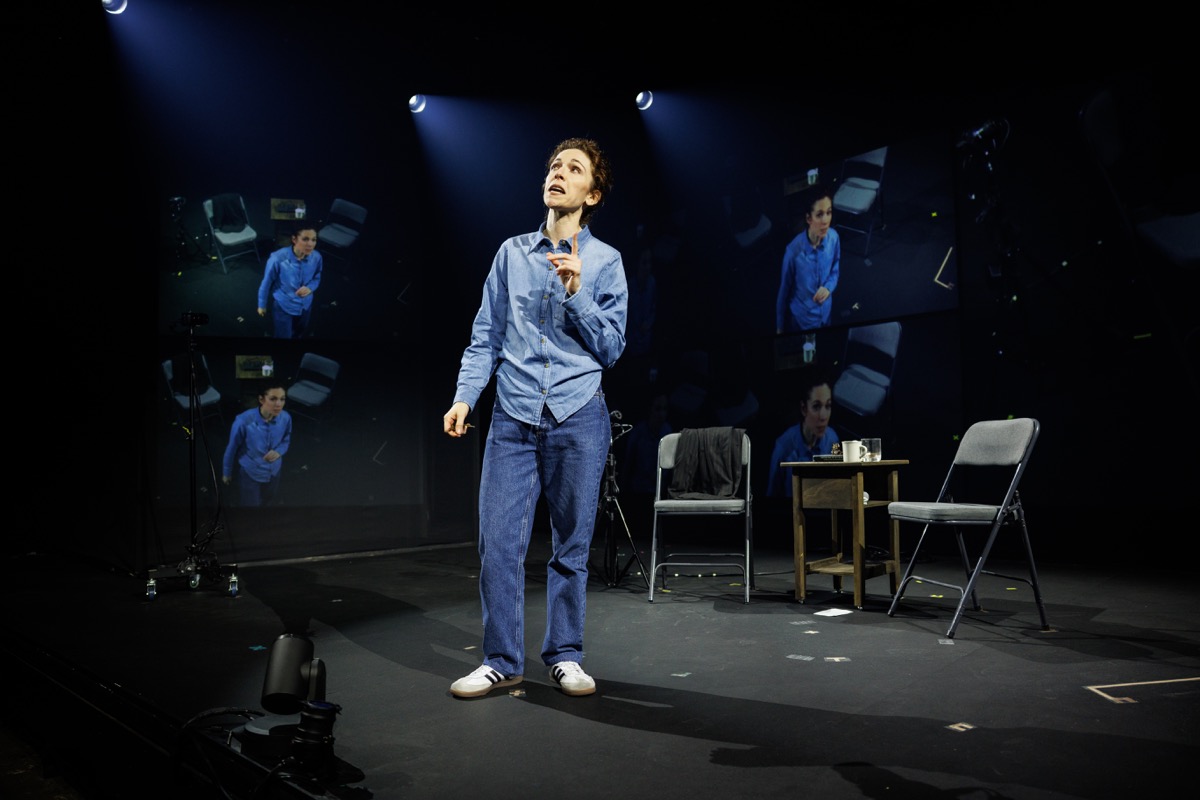
Jared Mezzocchi has directed Jen Tullock through this one-woman tour de force, utilizing flashing lights and projected videos purporting to come from the video cameras set on stage. However, playwrights Tullock and Winters have done actor Tullock a disservice in splitting her concentration on the different parts she has to play. The result is that after a while everyone tends to blend into everyone else, and the play suffers for it. Actor Tullock would have been much more powerful if she concentrated on playing Frances; if other actors were allowed to take on the remaining characters, it would have resulted in a stronger expression of their motivations and positions.
Nothing Can Take You from the Hand of God is bold enough to take up the theme of individual truths based on memory. Playwrights Horizons is to be commended for presenting this play. I would like to see Tullock and Winters revise and expand this play, and will be interested in what their next collaboration will produce. It is with some reservation that I suggest seeing Nothing Can Take You from the Hand of God.





Nothing Can Take You from the Hand of God is presented in the Peter Jay Sharp Theater at Playwrights Horizons, 416 West 42nd Street, New York through Nov. 16, 2025. For more information, or to purchase tickets, go to playwrightshorizons.org.