When the dust cleared on the night of Sept. 27, there was no room for debate: Madonna walked away as the undisputed victor of the MTV Video Music Awards.
She kicked off the broadcast with an opening performance that was pure grit and staggering spectacle, making it undeniably clear why she remains firmly on top after four decades in the public eye.





Entering the night as the ceremony’s most-nominated artist, she gave a room full of 20-somethings a masterclass in staying relevant: put in the work. The discipline that made her an icon was still on full display as she pulled off physical feats pop stars half her age might think twice about attempting.
Decades into her career, the drive remains unmistakable.
Predictably, the peanut gallery assembled right on cue — half cheering her historic sweep, half calling her “granny” or criticizing her for daring to take up space in a room she helped define in the first place.
The sexism and ageist commentary are such a foregone conclusion that Madonna spoke back to it directly with “Bring Your Love.” Her response to the inevitable criticism is right there in the lyrics, if you’re listening.




I was listening in a different way one day early this summer. Spotify randomly shuffled the Peter Rauhofer remix of Madonna and Britney Spears’ “Me Against the Music” into my playlist as I drove to work.
Something occurred to me almost immediately. Rauhofer has been gone for more than a decade, taken far too young. Britney Spears, despite our collective hopes for her happiness and stability, seems to be circling Saturn. And yet Madonna is still here. Still making records. Still performing. Still competing. Still defining pop.













Still Madonna.
If you have followed her for long enough, you have watched an extraordinary amount of history disappear around her. Friends and lovers have died. Collaborators have died. Rivals have disappeared. Entire genres have come to prominence and faded into obscurity. Technologies have changed. The way we consume music has changed. The culture itself has changed.
And somehow, Madonna has kept going.
Madonna is far from over. She’s still here — and she’s worth it.
Not merely as a celebrity who happens to still be alive, but as an artist, performer and force within popular culture. At almost 70 years old, she can still release an album of original material and see it go straight in at No. 1. That is almost impossible to comprehend.
Yet I think we have become so accustomed to Madonna surviving that we sometimes forget how extraordinary her survival actually is. For decades, people have been waiting for the moment when Madonna would finally become irrelevant.
She was supposed to have had her 15 minutes. Then it became 20 years. Then 40. Eventually, people simply stopped being able to explain her success. And perhaps that is because Madonna has always possessed something that is harder to quantify than vocal range or musical virtuosity.
She may not have the greatest voice of her generation. She may not be the most technically gifted musician. But she knows how to survive. Her talent for remaining on top and refusing to give in without a fight is unmatched.
That is its own kind of genius.
But I didn’t always appreciate the complexity that accompanies that. In 2012, as anticipation was building for the MDNA Tour, I remember Madonna saying, “Save your pennies. I’m worth it.” I was immediately turned off. At the time, I was a struggling actor spending a considerable amount of time and money on formal education. I had other priorities. I decided I would watch the tour on DVD instead.
I would have spent the money on Cyndi Lauper or Elton John in a heartbeat. And I did. But Madonna?
“Save your pennies. I’m worth it.” I shuddered.
But now, more than a decade later, I hear that comment differently. I still think it was irreverent — but maybe that’s part of why it mattered.
Madonna has spent her entire career being told that she is too much. Too sexual. Too ambitious. Too loud. Too provocative. Too arrogant. Too old. Too unwilling to accept the limits others have placed around her.
And her response has been to work hard, play it cool and keep moving forward.
She doesn’t have to placate. She doesn’t have to cajole. She doesn’t have to make nice or be polite. She doesn’t have to apologize for her legacy or her ambition.
She can even be arrogant and get rewarded for it. She doesn’t call herself an “unapologetic bitch” for nothing.
There is something deeply important about that for people who have been told, in one way or another, that they should make themselves smaller.
Men have historically been given much more room to be imperious, ambitious, difficult, sexually confident and self-important. Women have often been expected to become more agreeable with age. To soften. To shrink.
Madonna? She became more Madonna.


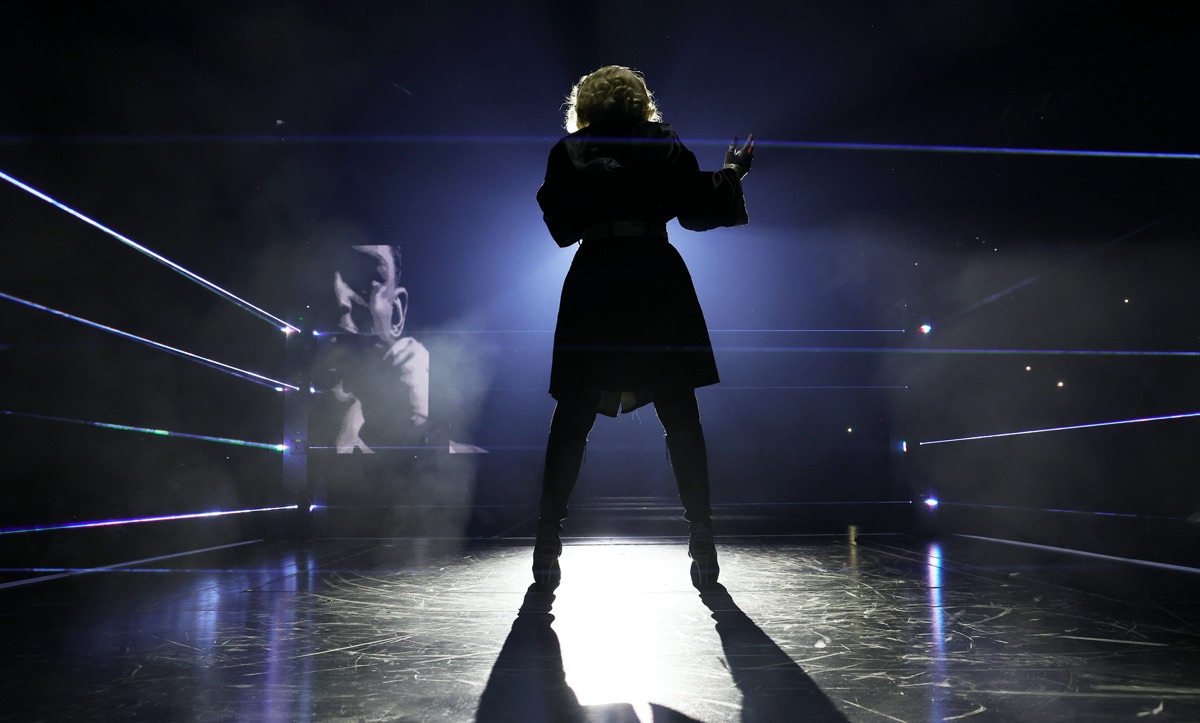


Her head is distinctly and firmly unbowed, and a lot of LGBTQ+ people have absorbed how important and unique this is. I don’t think we need to reduce her relationship to our community to the word “ally.” It’s tempting, but the word is too trite and tidy — traits Madonna actively avoids. Our relationship with her has been more complicated — more meaningful — than that.
Madonna absorbed queer people and queer culture into her work at moments when doing so mattered. Gay men, lesbians and trans people were not simply decorative accessories in her universe. They were collaborators, dancers, artists, friends, audiences and cultural participants.
She was there during the AIDS crisis. She stood up publicly when that support meant everything. It can be difficult for younger LGBTQ+ people to understand just how consequential that was precisely because the world she helped create is the world they inherited.
And LGBTQ+ people were there for her, too. We bought the records. We went to the clubs. We learned the choreography. We defended her. We made her music part of our own lives, no matter where she was charting on Billboard.
The relationship became reciprocal.
So when Madonna wins now, it means more than watching a pop star come out on top. It is a victory that many of us share in.
When I wear a Madonna shirt and someone [a straight man, always, let’s face it] jeers or makes some reductive comment, I don’t have to bother setting the record straight about her legacy or significance. She has already won. She doesn’t need them to appreciate her, so why would I?
That is why seeing Madonna succeed now feels personal.
I remember the opening night of the American leg of the Celebration Tour in Brooklyn in December 2023. I had deliberately avoided spoilers. I didn’t want to know what was coming. As I made my way to the show, I was nervous as hell for Madonna.
She had been gravely ill only months earlier. She had been hospitalized and majorly physically compromised. She wore a leg cast. She had struggled to get through her previous tour, with several cancellations. Only months earlier even her most devoted followers were speculating as to whether the Celebration Tour would happen at all.
I remember thinking: How is she possibly going to do this? What must it feel like to be expected to deliver when people compare you at 65 to your 25-year-old self?
Then the first notes of “Into the Groove” played. I wouldn’t have blamed her one bit for letting her dancers do all the heavy lifting. That’s what I fully expected. Then she started moving, and before I knew it, she was going full throttle with all the dancers around her. I could barely breathe. For once in my life, I felt like I might pass out from sheer euphoria.
It was one of those rare moments when you feel like you are watching history happen in front of you rather than watching a recreation of history, and that distinction matters. Nostalgia looks backwards — the Celebration Tour was alive. It was happening in the present, taking the past along with it.
I will never forget it as long as I live.
I consider it the greatest concert I have ever seen, not simply because of the songs, but because of the narrative, the style, the spectacle, the choreography, the theatricality and the sheer finesse of putting that enormous history into one living, breathing piece of world class performance art.
Madonna was not just asking us to remember who she had been — she was also showing us that she was still here.
My friend and I immediately bought tickets for the final New York performance at Madison Square Garden, bringing two more friends with us. That night, Madonna took a moment to tell the audience that a nurse who had taken care of her during her illness was in the audience.
She spoke about this woman seeing her at her weakest, helping her with even the most basic things — getting to the bathroom, bathing herself — as she wondered if she’d ever be her old self again. Madonna’s voice cracked. She began to cry.
I have always admired her stoicism and stiff upper lip, her refusal to let her wounds become public property. Of course, she has been hurt and criticized. She has experienced profound grief and endured more than her share of hardship. But she rarely gives the public the satisfaction of seeing her collapse.
She curates vulnerability through her art. She lets us see exactly as much as she wants us to see.
Seeing her cry felt unusual. I instinctively covered my face, as though I were invading someone’s private moment.
It reminded me of the one time I ever saw my father cry. When I was a child, my father and I went to see Adam Sandler in Big Daddy. He became emotional watching the unlikely father-and-son relationship in the movie. Even then, I understood some of what moved him was his love for me, reflected through the film.
It felt strange. He was simply not someone I associated with crying. In fact, it’s the only time I ever remember seeing him cry.
I was reminded of this walking away from the Garden that night. There she was — still powerful, still Madonna, and not reduced for being vulnerable for a moment. The contrast underscored for me just how strong, deeply feminine and tough as nails she can be.
She does not have to choose and refuses to do so. She can be all of it.
For straight men who don’t quite understand the Madonna phenomenon among gay men or why she matters deeply to legions of women, I sometimes think of her as our Clint Eastwood. Not because she is secretly like a man or wishes to be one but because she occupies some of the same cultural territory.
She has true grit. She gets knocked down and gets back up. She doesn’t spend a lot of time explaining herself. She has the courage to be lonely. She does not require constant reassurance that she is liked, understood or approved of.
She never acknowledged that she was the underdog when she was 25, and she’s not doing it now that she’s 68 and so many tell her she should just quit. She ignores it and keeps walking. That is extraordinarily powerful for people who have spent their lives being told to make themselves smaller so others can be comfortable or remain unchallenged.
From the moment she entered the public eye she has met that very notion with her middle finger, and she’s still waving it.
The older I get, the more I understand that this is one of Madonna’s great and unusual gifts.
Not perfection. Not infallibility.
Permission. Permission to remain standing. To have the last laugh. To outlast the punchline.
I could go on and on about the people — especially the women — who make ageist, sexist comments about her. These days, they do it from the cocoon of their keyboards. Meanwhile, she’s out there living her best life, not losing any sleep over them as they continue to miss the point.
And so much of the commentary about her appearance misses something fundamental: Madonna has never seemed particularly interested in curating herself for anyone else’s approval, least of all a man’s. For decades, she has changed her hair, clothes, body, sound and image according to her own instincts and tastes. The point was never to be the woman men wanted her to be.
The point was to be Madonna.


The irony? Every time the naysayers invoke her name, they push her squarely back into the center of the cultural conversation once more.
None of that noise, by the way, can eclipse the sheer power of her best songs.
I gently wept when she performed “Bad Girl” in Brooklyn. Not because the lyrics described my life literally, but because I had reached an age — roughly the age Madonna was when she wrote the song — when I finally understood something about what it means to lose something precious and wonder whether you will ever get it back.
To wonder whether you are still worthy. Whether you are still beautiful enough. Whether mistakes have changed you permanently.
The song had aged with me. So had Madonna.
That is another reason her continued existence matters. Her catalog does not remain frozen. We change, and the music changes with us. A song that once seemed like a mere slice of entertainment can suddenly become a piece of your own emotional vocabulary.
A dear friend who’s Madonna’s age quietly beat cancer years ago. When the first notes of “Die Another Day” played in a fan-made video from the tour that I showed him, he grew quiet. He held his beer, looked at me and said, “You didn’t tell me this song was in the show…” Then he began to cry — something he, too, doesn’t often do.
What Madonna did with “Live to Tell” on the Celebration Tour was so powerful that I don’t think it needs much explanation. It was performance art, memorial and living history all at once. I think LGBTQ+ people will be talking about it decades from now.
My partner was at that Brooklyn concert with one of his best friends. [We hadn’t met yet, but were in the same building that night.]
His friend sobbed during “Live to Tell” because she remembered gay men she had loved and cherished who had died from AIDS well before their time.
That told me something important. Madonna’s work can become a container for grief. A performance can give people somewhere to put memories they have been carrying for decades. This is why I don’t think it is quite enough to call Madonna a beloved gay icon.
The phrase is true, but it is too small.
She is embedded in LGBTQ+ cultural memory — not simply as an artist who witnessed our history, but as someone whose work helped us process it. Her own survival has become part of that memory, too. And incredibly, she is still giving us new songs to grow old with.
The first nine tracks on Confessions II are state-of-the-art pop at its zenith. For me, the “holy shit!” moment comes toward the end of the third song, “One Step Away.” Madonna hits a money note, her voice as supple as ever, and the song suddenly whooshes toward its finish in a riot of synths before seamlessly transitioning into “Bring Your Love.”
Then there’s “Everything,” a stark reckoning with a culture Madonna has watched degrade and darken around her. The way she glides directly from that disillusionment into “Love Sensation” is as cleansing as it is ingenious: Here is the rumination, and then here is the reason to keep dancing. Coming from Madonna, after everything she has lived through and witnessed, that joy feels bittersweetly earned. It’s her most euphoric slice of pop since she first burst into the Top 20 with “Holiday” in 1984.
By the time she reaches “Love Without Words,” a lush, immaculately produced tribute to the glory and refuge of club music, it’s undeniable that this living legend has made some of the very best work of her career. Laced with sumptuous house piano, the track manages to sound both aptly retro and utterly contemporary. Out magazine has called this the best album she has ever made. To hear it is like watching a basketball player catch fire and stay hot, landing one shot after another, until you’re sitting there mouth agape, thinking, “How does he do it?”
There’s also “The Test,” an outlier that changes the emotional temperature of the album without disrupting its momentum. A collaboration with Madonna’s daughter Lourdes, whose stage name is Lola, it explores the unique warmth and uneasy complexities of their mother-daughter relationship without becoming narrowly autobiographical. Instead, it’s piercingly universal. It’s achingly beautiful without a single ounce of cheap sentiment. It flutters like a butterfly before gently burrowing into your brain.
Quietly, it’s the greatest song on the whole project.
Which brings me back to this summer. If LGBTQ+ people have been a little overzealous about Madonna since the release of Confessions II, I don’t think we need to apologize.
This is our Knicks victory. This is our World Cup.
Most of my friends are straight, and I have no problem with them celebrating the things that matter to them.
But LGBTQ+ people are allowed to have a communal cultural victory, too. We’re allowed to text each other, buy the ridiculous amount of vinyl variants, post pictures and sing along in bars. We’re allowed to say MADONNA DID IT AGAIN!
Because she did.
And maybe a lot of straight people don’t completely understand why that feels as big as it does. That’s OK.
You don’t have to understand every cultural reference in somebody else’s history to respect what it means to them.
There is a reason this moment feels like a victory. There is a reason it feels like something worth celebrating.
Because the woman who has been declared finished over and over again is still here. Still creating, still performing, still making new work.
The extraordinary thing isn’t simply that Madonna was once great. The extraordinary thing is that she is still here to surprise us. The story is not over. That may be one of the most direct ways to understand the significance of her longevity.
The estates of George Michael, Whitney Houston, Prince, Michael Jackson and Luther Vandross give us reissues, merchandise and memories. My inbox is filled with ads for archival recordings and new greatest hits configurations.
Madonna is here texting us about a new album.
She can walk onto a stage and give us something we have never seen before. She can collaborate with Charli XCX and Sabrina Carpenter. She can make another record.
She can compete again. She can win again.
She is not simply preserving her legacy. She is continuing to create it.
That is a gift. And perhaps that is why seeing her crush it this summer has felt strangely reparative to me.
Life has a way of teaching you how tough it can be. It teaches you that trust has consequences. It teaches you that some people will not stay. It teaches you to make your circle smaller.
But I can look at Madonna —
Still standing. Still working. Still declining to dignify others’ hatred and cruelty. Still refusing to accept the premise that her best days must necessarily be behind her.
I think that means something to people who have been knocked around themselves.
Not because Madonna knows us personally. She doesn’t. But because her work can become a stable cultural presence in our lives.
For some of us, she has been there for so long that she feels almost like an old, reliable, incredibly resilient friend. Like a candle in the dark whose flame simply refuses to go out.
She’s remarkably low-maintenance considering the gifts she has given us. It is a gift to still have Madonna. It is a gift to still be able to watch her win. And perhaps the most beautiful thing is that Madonna herself seems to understand that survival is not the same thing as standing still.
Accepting the Artist of the Year award, she spoke about spending the last year and a half “finding myself, believing in myself” and making the music she wanted to make. Then she offered that same challenge to the young artists standing around her: spend the next year, the next 10 years, the rest of your life doing the same.
That may be the real gift she has given us after all this time. Not simply permission to survive. Permission to keep becoming.
Permission to find ourselves again. To believe in ourselves again. To discover parts of ourselves we didn’t know were there, even after we thought we had ourselves figured out.
Because getting older does not mean the journey is over. Maybe self-knowledge is not a destination at all. Maybe becoming more whole and more integrated is something we get to keep doing for as long as we are here.
Madonna is still learning who she is.
So are we.
It ain’t over till it’s over. And Madonna is far from over. She’s still here — and she’s worth it.