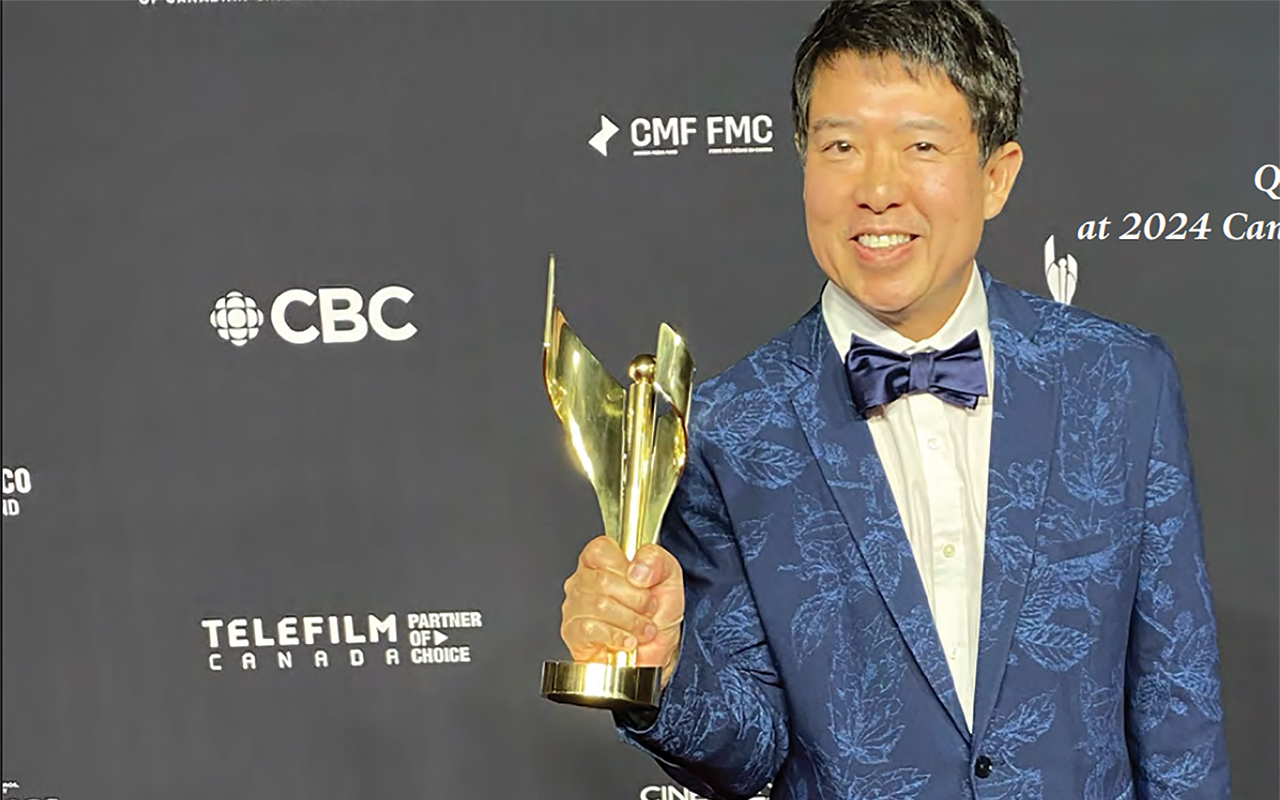
It’s hard enough to get any project off the ground and into production in Hollywood, but when visual stories aren’t led by white, heterosexual protagonists, that process becomes more difficult. Film has the power to open viewers up to different points of view, and that’s why a filmmaker like Quentin Lee stands out as a formidable force in the industry. He is unafraid to spotlight characters often pushed aside in mainstream movies.
Lee’s work consistently centers Asian and LGBTQ+ leads, offering perspectives that still feel all too rare. His production company, Margin Films, is celebrating a major milestone this year: three decades of creating distinctive films about groups too often pushed to the margins. From the 2016 female-led psychological thriller The Unbidden to the 2023 coming-of-age mockumentary Last Summer of Nathan Lee, the company’s diverse slate spans genres and offers something for a wide range of audiences.





Last Summer of Nathan Lee stands out as a particularly meaningful project. At a time when the emotional coming-of-age stories that defined the early 2010s feel somewhat absent, the film plays like a throwback to that era. It follows a high school senior diagnosed with brain cancer and facing a limited time to live. As his days grow more uncertain, Nathan decides to marry his gay best friend, Dash, who has long been in love with him. The film serves as a reminder of the importance of living boldly, not holding back on love and making the most of the time we are given to live.
So we are coming up on the three-year anniversary of the initial release of your film Last Summer of Nathan Lee. Can you talk a little about the impact that film has had on people? It really is such an inspiring coming-of-age story that I feel is perfect for people to check out with the sunnier days now here!
Quentin Lee: I have heard some great things. With this being a story about a teen coming to terms with his mortality, I think young adult viewers having to reconcile with that [idea] — none of us are immortal and it is a natural part of life — was an interesting concept. A lot of them really seemed to enjoy the film despite the heavy themes.
Did you have any doubts about telling this story in a mockumentary format? It was a clever move for a coming-of-age story to utilize this, but we have mainly seen horror films previously in this style.




QL: Knowing that coming-of-age movies rarely use that style actually made me think it would be a more creative way to tell the story. Me and the writer, Dennis Escobedo, thought it would be good if the film was written in a lighter and more comical way so we thought having the film be centered around teenagers filming their antics personally would be a good vehicle to capture that more lighthearted tone.
What do you hope viewers will take away from Nathan Lee’s journey after watching the film?












QL: I hope the film reminds people that, even if your life is given a shorter run, you can still maximize the time you are given. Like if today was my last day, I want to be doing stuff that brings me fulfillment because that is what makes life worth living.
What has been the most challenging project so far to get funded and filmed, but which also was the easiest one to get off the ground?
QL: Last Summer of Nathan Lee was actually really hard to get funded. It was just really hard to find investors who would champion that project. Shopping for Fangs was easy because it was actually covered by a grant, and we had investors for The People I’ve Slept With. I guess it had more of a commercial appeal because it was a romantic comedy. Even with that one, though, there were some challenges. I remember one of the investors read the script and was like, “Oh, that’s kind of gay.”
Have you noticed at all in the last couple of years that it’s gotten at all easier for queer stories to get funding?
QL: I do think it’s gotten a bit easier. I was able to get funding for my new feature, The Way You Dance, which is actually in post-production now. It’s about a choreographer who is queer and returns to Canada to take care of his father, who is dying of cancer. While he’s there, he starts teaching a dance class and meets a student who is transitioning from a boy to a girl. I also think the timing is better now for projects with LGBTQ+ characters to get greenlit, especially after the success of Heated Rivalry. Nobody really expected that to blow up the way it did.

Is there a character from any of the films who has had a big impact on your heart and also that you were maybe able to learn something from?
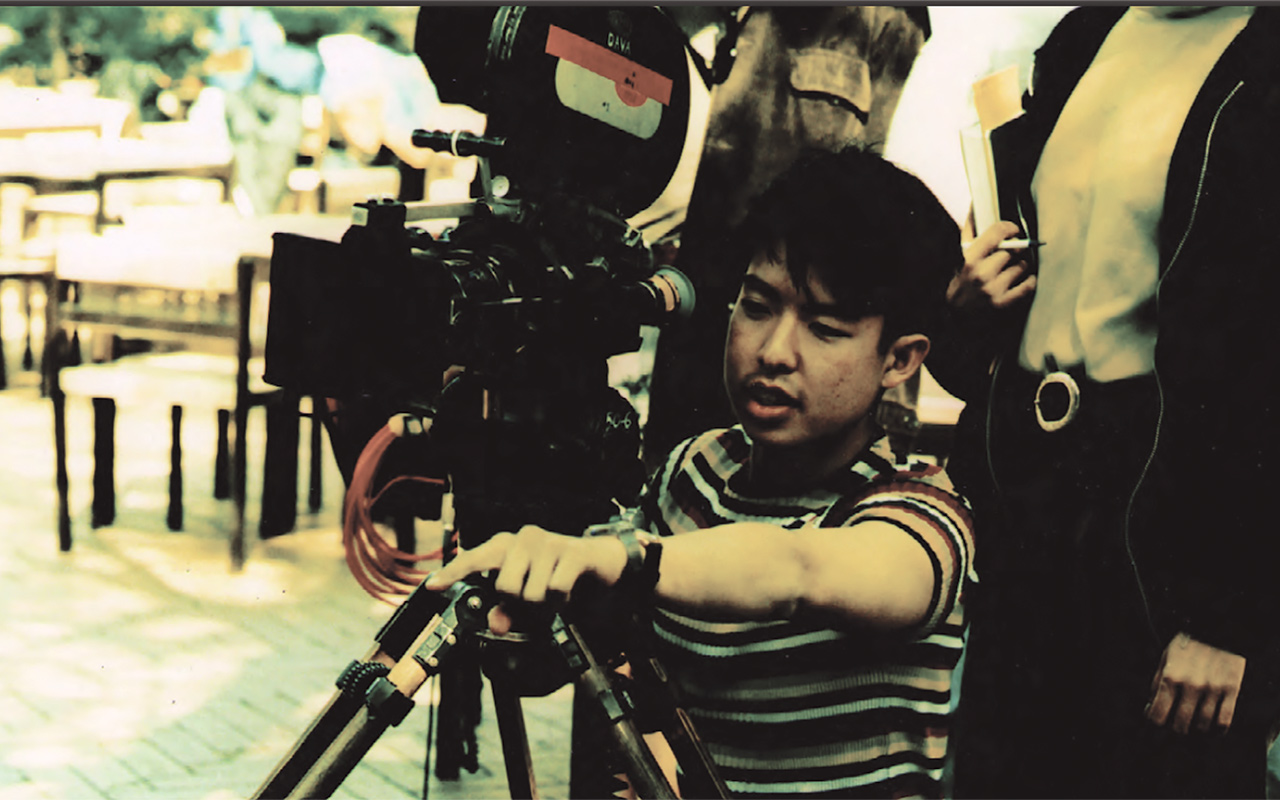
Q: When you create characters in film, you end up also going on this journey and learning a lot about yourself. Even with The People I’ve Slept With, about a woman who was promiscuous, finds out she is pregnant and now has to find out who her baby daddy is. At that point, though, I never thought I would become a parent; through her character I realized if she can do it, I will be able to do it too. Now, I have become a single parent.
Which of your projects was the most challenging to find the right casting for?
QL: They are all difficult. One that was an exception and easy to get the right casting for was The People I’ve Slept With, because we already had Karin Anna Cheung attached, who was playing the lead, so that helped a lot to get the rest of the cast on board. One that really stands out, though, as being really hard is Shopping for Fangs. Trying to find Clarance’s role for that project was difficult because he was a gay character and casting for queer characters in the ‘90s, when the film came out, was really challenging. There were more actors that did not want to play gay but now that fear is much less there in 2026.
Is it important for you when casting your films to have queer characters actually be played by people who identify with the orientation in their personal life?
QL: I definitely do try and find queer people to play the role. It is interesting because in my upcoming film, The Way You Dance, I do not believe both actors playing the lead roles are queer. Finding LGBTQ+ actors [is] something I do consider when casting, but at the end of the day, the best person for that role is the best person regardless of their sexual identity. Sometimes, I have to look past who they really are in order for the project to work.
Which film genre is your favorite to create, and also in your personal life, what is your favorite to watch?
QL: My favorite genre to watch for fun is horror. I really have not worked much in that genre, so it would be cool. I watch so much horror and I am picky, so maybe that is why I just have not found the right story yet. But eventually if the right project comes, I would love that. I have been doing a lot of comedy, but I definitely want to explore doing thrilling and darker movies more.
Do you think there is potential to explore horror from the perspective of a queer Asian character right now?
QL: Absolutely. I actually have one film now called The Unlucky that Ludi Lin, an actor that was in Mortal Kombat II, is attached to right now, and I would not say his character is actually queer, but there is a lot of queer influence to the storytelling. Knowing too that queer horror has already been made recently, especially in the past couple years, shows there is an interest in the market for these type of stories.
What do you bring to the table as a queer Asian filmmaker from your own lived experiences that your straight peers do not have?
QL: Honestly, I think every filmmaker brings a unique perspective and skill set to make a movie that they are passionate about. I am not the type of director that does a job for hire much. I only did that once, actually for a queer Asian film, which was really fitting. I do think any director, especially those that write their own script, is good to make that movie. I think every movie is unique and every director who follows their passion to make the film is the best and most qualified person.