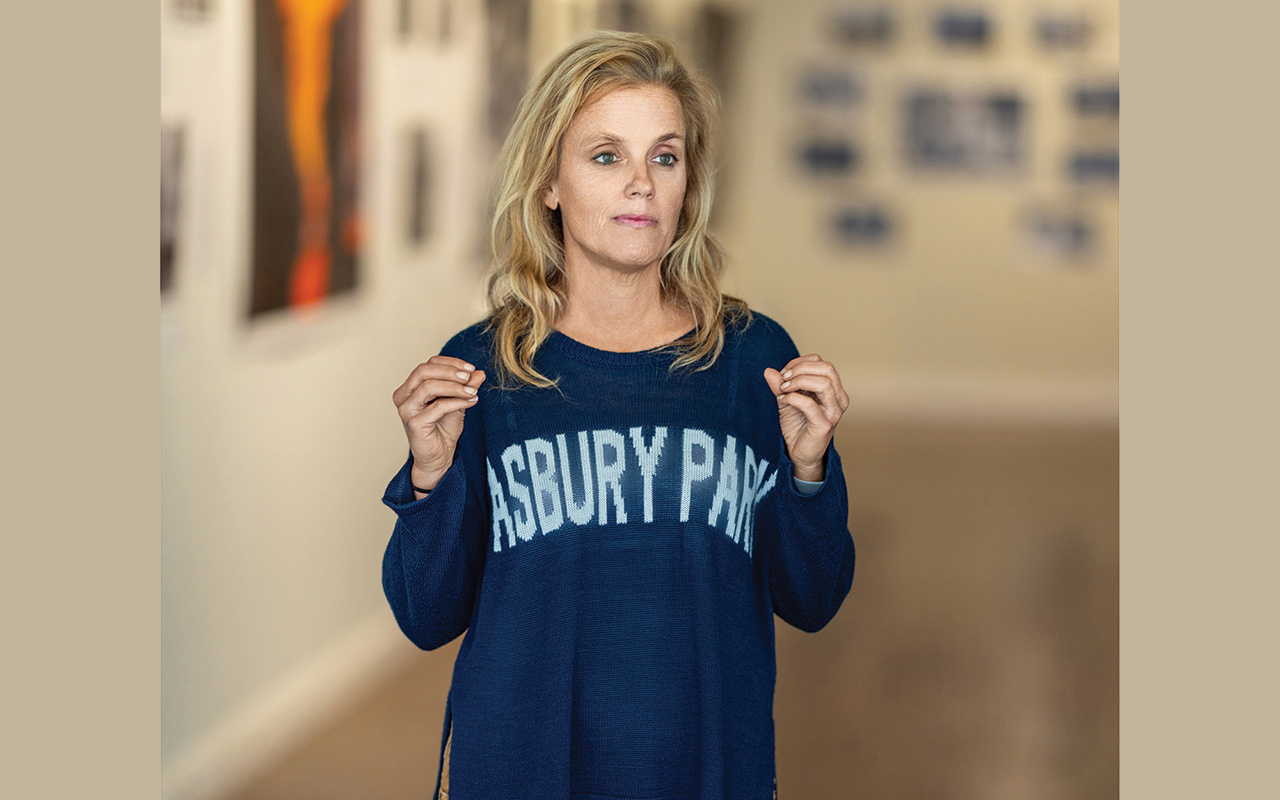
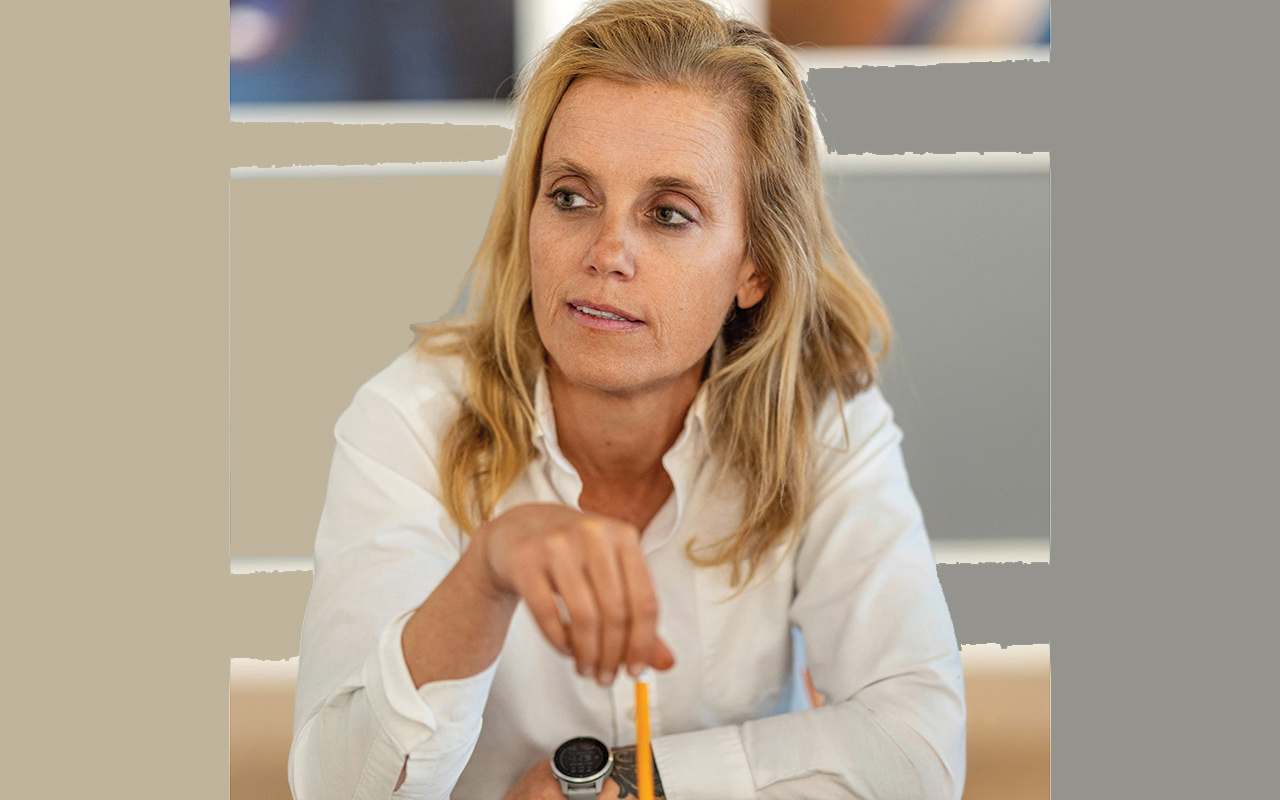
Editor’s note: This is an extended interview with Asbury Park Deputy Mayor Amy Quinn. A story on her mayoral aspirations, background and advice for aspiring LGBTQ+ public office holders was published in our August/September 2026 summer print issue. This is the interview by Alina Arshad.
I can start by asking about your interest in politics. When did you start deciding that you wanted to do that as a career?





Amy Quinn: I had been working with the marriage equality movement in New Jersey before [same-sex] marriage was allowed. If we consider that politics, you could say that I was involved in that. I had a little apartment when I moved down here [to Asbury Park] 27 years ago. And I run. That’s how I deal with my anxiety. I was running, and geese were being put into a truck. Then a couple days later, I read in the paper that they had gassed the geese. It wasn’t Asbury Park; it was the town next to us. And that was the method they used to…
Control the population?
AQ: Yes, that was horrifying to me. I called Fish and Wildlife. I was very, very upset about it. A man named Tom Pivinski, who was the chair of the [Asbury Park] Environmental Shade Tree Commission, reached out to me. He and I did some training on humane ways to deal with the geese population. And you had to get some sort of certification because they’re federally protected animals. So if you hate me, thank Tom Pivinski. And if you love me, thank Tom Pivinski. Without that segue into the community, I would never have moved on to the City Council. When I would go to the City Council meetings, I thought I had a voice to add to that group, so I ran for office.
And were you still practicing law at this point?






AQ: Yes. I graduated from law school and passed the bar in 2005 and started working. I have been at a nonprofit legal service agency for the last 20 years. We represent people who can’t afford an attorney, like a public defender for civil matters. And because many, if not all, of those people don’t have a large income, we obviously represent them for free.
When did you know that you wanted to go into law?





AQ: While I was in law school. I worked for Child Protective Services. That was difficult; you do nothing all day but investigate child abuse and neglect. My plan had been to go to law school while I worked for CPS, which I did, and become an attorney for the Division of Youth and Family Services. I found that job extremely difficult, so I concluded at some point that I couldn’t be the attorney for the case workers — that I had to do something else.
How would you describe your sexuality in your own words? With labels or otherwise?
AQ: I would describe myself as a lesbian. People use “queer.” I don’t identify with it, but I don’t have a problem if people call me queer. By the time “queer” became a word people used, I had already felt comfortable using “lesbian.” And because it was a little bit demonized in the ‘80s and ‘90s, it [“lesbian”] felt like a word I wanted to reclaim.
OK, and when did you know?
AQ: That’s always an interesting question. I would say around 7 or 8 [years old] I had a crush on my best friend’s sister. I knew that I liked her more than I should. I knew I wasn’t particularly into boys. I wasn’t rushing to hang out with boys.
And did you have a big “coming out”? Or was it something that you just kind of settled into as you got older?
AQ: I think I did what a lot of people do, which is, I, as a teenager, came out as bisexual. Now, I was never bisexual, but the reason you did that was to test the ground.
Oh, yeah.
AQ: I went to Catholic school, and that wasn’t wonderful as a gay kid. So what I would do with my friends would just be like, “Oh, I’m bisexual,” and if they flipped out, then I knew I was never going to tell them the truth, which is that I was gay.
Yeah, that’s a pretty common lesbian experience.
AQ: Yeah, totally, … to say that you’re bisexual. Gay men in the ‘90s did the same thing. Both of my parents were very good when I came out to them.
Then, did you ever worry about being gay and then going into the career path that you eventually ended up in?
AQ: Well, no, because by then I lived in Asbury. This place has always been extraordinarily welcoming and inclusive. So I was not worried about being gay, but what I will say is being a woman in politics has been far more difficult than being a lesbian.
Right.
AQ: And that is because I spend a lot of time, again, not in Asbury Park, Asbury Park has a very women-centric vibe. When I am in other rooms, I am often the only woman. Or I’m often talked over. So I would say being a woman has been more of an adjustment than being a gay woman.

That leads me nicely into the next thing, which is, what made you fall in love with Asbury Park? What are some of your favorite things about the town?
AQ: Again, because I moved here back in 2000, I was going through a breakup with my high school sweetheart. I wanted to start over, and Asbury Park then was very cheap. A lot of gay people lived here. The architecture was really sharp. I knew I wanted to live by the water. I knew I wanted to live around gay people and Black people and Hispanic people. I didn’t want to live where everything looked alike; to this day, those neighborhoods make me anxious. I wanted something different.
Can you tell me more about your platform and where you would describe yourself on the political spectrum, from left to right?
AQ: Left. I would obviously say liberal, but I wouldn’t say blow-it-up left. I’m OK with change if it takes a little while, as long as we get to the change. I’ll work within the system.
Not anti-establishment?
AQ: I would say I’m not anti-establishment.
And what are the core policies that you’re running on?
AQ: Some of the issues that I’m seeing are related to affordability, affordable housing, taxes. One of the things that has happened in Asbury Park is the gentrification. I’ve been in office for a little over 10 years. And when I was initially elected 10 years ago, people wanted development. That was all. There was no development. No business could sustain winter because nobody lived here in the winter.
We worked really hard on getting development going, block by block. And then the pandemic hit. People from New York and Philly and North Jersey were buying up houses for hundreds of thousands of dollars more than they were worth. So we passed some policies as a result of that, like rent control. We greatly limited Airbnbs. We have implemented 20 percent set-asides. When you build, you put 20 percent affordable in the units. But I will tell you, the pandemic, the onslaught of money that came in during the pandemic, I don’t know that there was any way to prepare.
I think this is a good point to get into small businesses, since you mentioned them. Do you have any plans for tax breaks or any other policies that are aimed towards small-business owners in Asbury?
AQ: We have a couple of programs that obviously would continue, and then we’re doing some new stuff. Probably one of our most-used programs is a rent subsidy program. That means during the off time of the year, we will pay a portion of the rent just to keep you open, so you can keep your employees.
I was talking to Nancy [Jonson, proprietor of The Art of the Bean and Leaf coffee shop on Cookman Avenue] about putting on more events that are drawing people to town during the off season. January, February, March are the most difficult time for businesses in Asbury, so we did an event called Made in Asbury that seems to draw people from different parts of New Jersey. We try to do events across the city. We have four nights of free professional music. That’s what I was talking to Nancy about. The event she’s talking about is Asbury Fresh, which is a huge farmer’s market that people go [to], and they shop and then they come here and get a coffee and they go wherever. Another event, it’s not a free event, but it’s a great event, and brings people from outside of town, is Vegan Fest. And that’s a great way to get people here who otherwise wouldn’t be here who stay over and then come down here and shop. And then, always trying to do more of that, and I think we’re always really open to ideas on it. If something’s not working, we’ll tweak it.
So drawing in customers from outside, basically?
AQ: Yeah.
And you also mentioned wanting to live in an area with immigrants. Well, you said Hispanic people, but also partially, immigrants. So I wanted to ask if you wanted to say anything about Delaney Hall and everything going on in Newark with immigrant detention centers and ICE across the country in general.
AQ: I’m not supportive of ICE. I don’t know if I want to specifically comment on Delaney Hall because I only know what I’m seeing in the news. But I will tell you Asbury Park was identified by the Trump administration as a sanctuary city even though we didn’t list ourselves as one. We welcome all immigrants. Gays, the whole LGBTQ, Black, white. I mean, I hope immigrants or the Latino community knows that we will try to keep you safe here.
I also wanted to ask how you think that nature and the proximity to the beach helps bring the Asbury Park community together. What do you think is the benefit of having that as a draw to both people outside and people in the community? Since we’re having a lot of conversations about data centers and what people are willing to sacrifice in the name of progress. So do you think that it’s worth keeping, preserving the natural world?
AQ: We’re actually passing a resolution this week on no data centers. [The Asbury Park City Council on June 10 adopted Resolution 2026-264, urging Gov. Mikie Sherrill and the Legislature to enact a statewide moratorium on new, industrial-scale data center construction, according to the city’s website.] I think the beach draws a huge amount of people here, I think, because of Asbury’s vibe. They’re generally lovely people. You don’t come to Asbury Park thinking you’re not going to see a rainbow of people. But what I would like to see is more diversity in the waterfront. Some of the things that we’ve tried to do with that in terms of getting just even kids in Asbury Park is we do free surf and swim lessons if you’re an Asbury Park kid. … We do a day where all families of Asbury Park get on the beach for free.
Right, the economic barrier, too.
AQ: And the economic barrier. We gave out cards, family cards, for the free use of the beach for Asbury Park families. And that was another initiative to get families who maybe otherwise don’t go to the beach when lifeguards are there. And ironically enough, you’re not allowed to do that. But for years, we did a program that allowed Asbury Park families to get on the beach for free as long as they economically qualified, under $100,000 a year. And then the other thing we do is we keep beach badges at the library. So if you can’t afford to get on the beach, you can go to the library. Just rent it out.
Yeah, I know other towns sometimes have museum passes at their libraries. So it’s kind of like that.
AQ: Yep, exactly like that. Just for the beach. We constantly try to make sure families in Asbury Park that want to go to the beach can get to the beach in some way.
How can local government affect things like gender-neutral public bathrooms or other local policies that might affect trans people?
AQ: That’s a good question. We have a rainbow crosswalk. The Trump administration has waged war on them, but ours is still up and going. We light City Hall up in a rainbow. We fly the gay flag. We get 100 on the Human Rights Commission’s survey, whatever they do for every town. I think we host the biggest Pride in New Jersey.
Those types of things that as an elected official, except for Pride, are things that have happened since this council’s gone on or since I got on. They are really important. My life would have been really different if I never saw representation. There was no “Happy Pride” in the ‘burbs. There was no “Happy Pride” at Catholic school. And maybe in those areas, there still isn’t. But if you come here, you’re gonna see City Hall lit up, and you’re gonna see a [rainbow] crosswalk, and you’re gonna see gay clubs, and you’re gonna see gay people. I think, as a person in an elected office, it’s really important to ensure those things remain — including gender-neutral bathrooms.
Right. So do you have any plans to expand those, or do you think that gender-neutral bathrooms are already present in Asbury Park?
AQ: Gender-neutral bathrooms are present in parts of Asbury. Not parts of Asbury where the city has some control over it. I don’t know that I would initiate a lot of new initiatives under the Trump administration to be quite honest. Holding onto that [rainbow] crosswalk right now, because Florida got rid of all of theirs. But I think there are other initiatives that we would like to see, maybe after this administration passes.
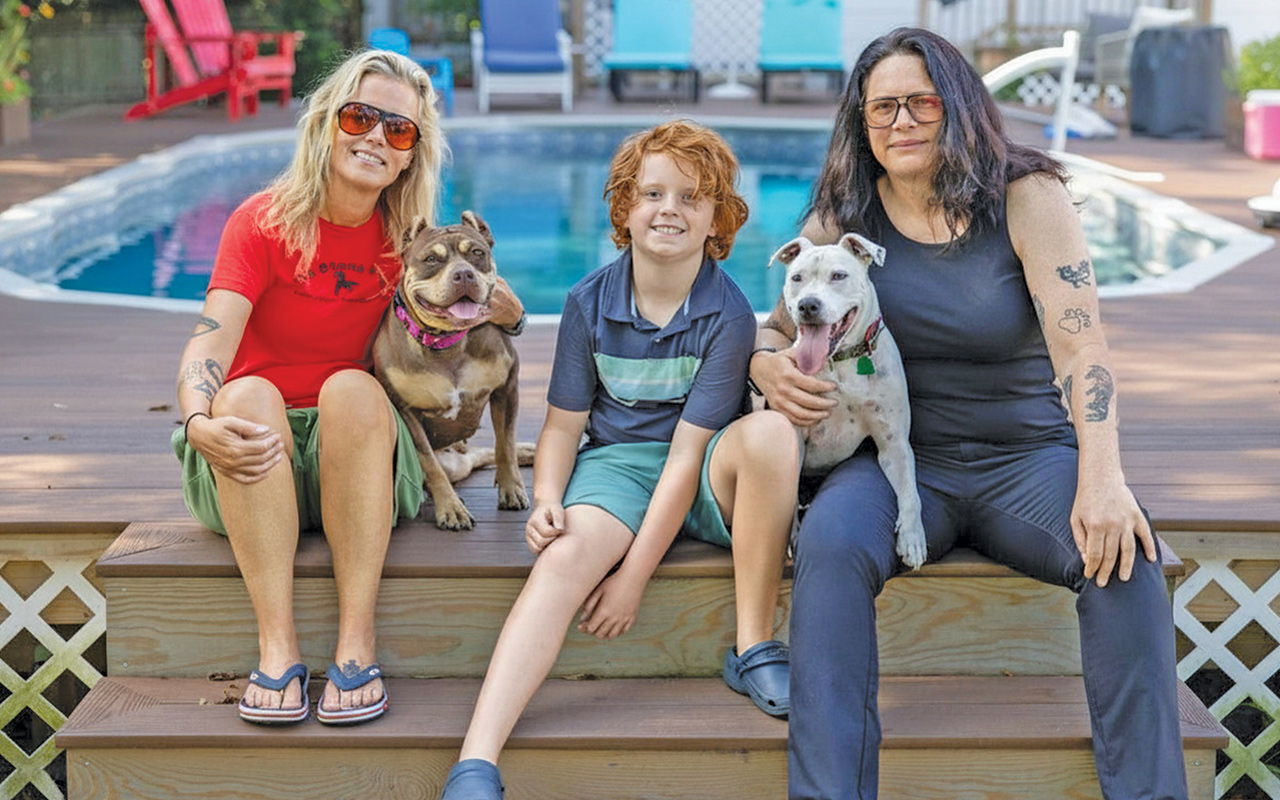
Asbury Park has a history with the gay community, having marriages from 2005. In 2005, Asbury Park married the deputy mayor at the time — his name was Jimmy Bruno — [and] married [other] people [that year]. The state of New Jersey responded with, “I’m gonna put you all in jail,” basically, “if you don’t rescind that.” And then we were one of the first people to do civil unions, 2008. … My wife and I are the first couple to get married on the Asbury Park Boardwalk, in 2015. I think all of those types of things, I hope, say to a younger LGBTQ community that you are welcome here. And we would love to have you.
Do you have any advice for young queer people, or LGBTQ+ people, who want to get into politics or local government?
AQ: Yes. So, running for office can be daunting. One of the things that I started with, and that I recommend people start with, is a committee or commission or board. Most municipalities have planning and zoning boards. What I would recommend that people who are just like, “I’m not sure what I want to do,” is go to those meetings. You don’t even have to join them. Go to them, assess the vibe, you know? And if that vibe is your vibe, join it.
Maybe you do that for a year and then you run for office. Or maybe you do that for a year and then you run for city council or maybe you do that for a year and you’re like, “You know what? I want to do more behind-the-scenes stuff. I don’t wanna do in-front-of-the-scene stuff.”
My other recommendation is go to a couple of meetings first. So, by way of example, everybody loves public art. We do a great job on public art, but our [Public Arts Commission] is … I think people think it’s gonna be more fun than it is. When we’ve talked about the shade of red for four hours, people want to pull their hair out. Getting involved locally is a great first step.
So why did you decide to run for mayor?
AQ: I love our mayor. He is gonna finish his term and then leave, and I think that I’m interested in both promoting some of the things that we’ve already done to keep Asbury Park moving forward, and then trying some new ideas and having some new things like historic preservation would be important to me. I would put art everywhere. Our recreation programs are great, and maybe we could expand on that. There’s a lot of concern right now in Asbury Park with historic preservation, overdevelopment and affordability. All those things I would love to start talking with the public and then … [come] up with policies and ideas on how to fix it.
Editor’s note: A city clerk spokesperson said on July 9 that Quinn is running unoppossed. The deadline to file a petition is Aug. 20.