Many musicals that fall under the category of “jukebox musical” fall into two types. The first has a score made up, in whole or in part, of songs written by the subject: Beautiful, for Carole King; MJ for Michael Jackson; Hell’s Kitchen for Alicia Keys. The other has a score made up of songs made famous by the subject: Tina, the Tina Turner Musical; Jersey Boys; The Cher Show. The new musical A Wonderful World falls into the second category, with a score of tunes made popular by arguably the first master innovator in jazz, Louis Armstrong.
A Wonderful World traces Armstrong’s life by touching on the major points in his career and focuses on his four wives. If you’re looking for a serious biography, this show is not the one for you. But if you’ve ever enjoyed Armstrong’s music, his style of jazz, then A Wonderful World is for you! Written by Aurin Squire from a concept by Andrew Delaplaine and Christopher Renshaw, A Wonderful World is a fast-paced, lively musical tracing the history of jazz from New Orleans bordellos to the clubs of Chicago to Hollywood and beyond.



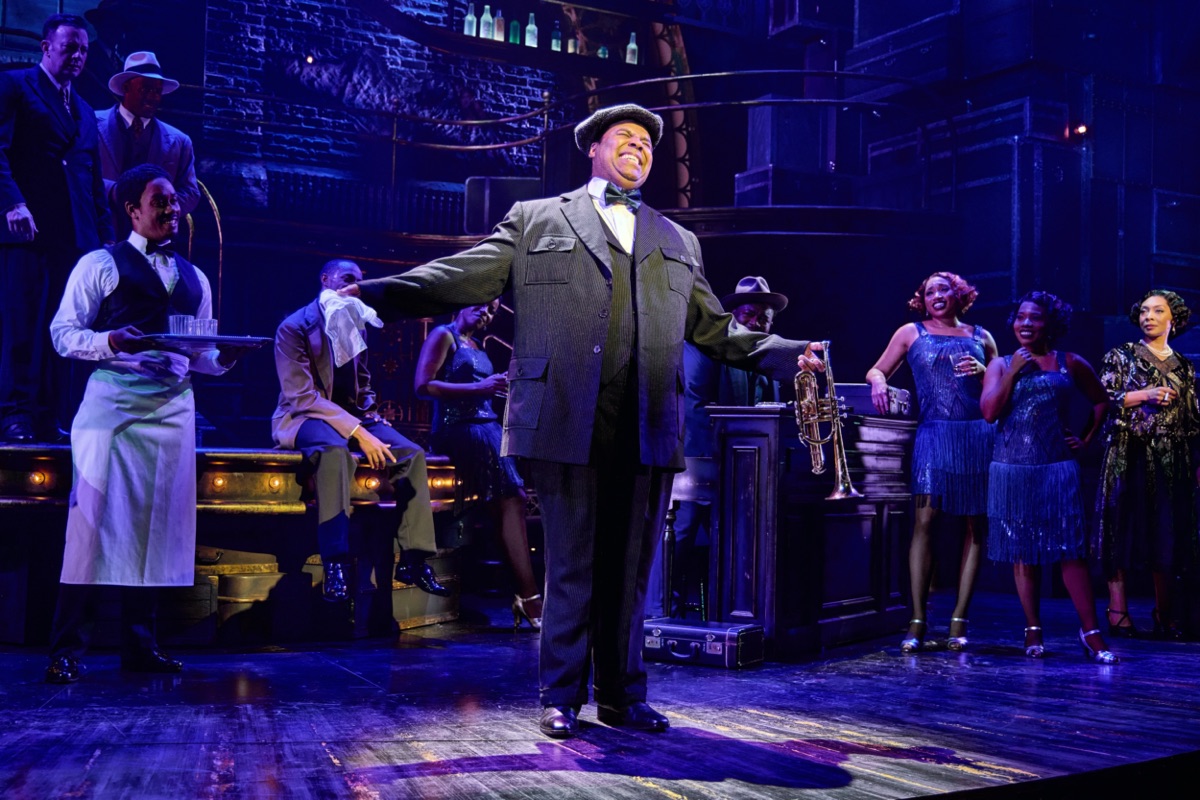
The show kicks off in 1910s New Orleans. The eager young Louis’s talent is noticed by popular band leader King Oliver, who hires and mentors him. After gaining experience on a Mississippi River party boat, Louis follows the siren call of his music to Chicago, rejoining Oliver’s band. Lil Hardin, Oliver’s pianist, influences Louis to change his appearance, smooth off some of his Louisiana bumpkin behavior, and form his own band. Armstrong, seeking a wider audience, heads for Hollywood, which features him in films but doesn’t give him a chance to perform as other than comic relief.
Armstrong gets advice on how to play the system from black actor Lincoln Perry (aka “Stepin Fetchit”). Disillusioned by the studios, Louis follows his passion for music to New York, finding employment at Harlem’s famous Cotton Club. Armstrong takes on a white manager, Joe Glaser, who encourages him to take an offer from the State Department and travel the world as a good-will ambassador accompanied by his wife. While on tour, the Armstrongs are horrified by seeing how black school children were threatened and spat upon by angry whites for integrating public schools. Louis cancels his tour, lashing out bitterly at the government about race relations, and is blacklisted as a result.
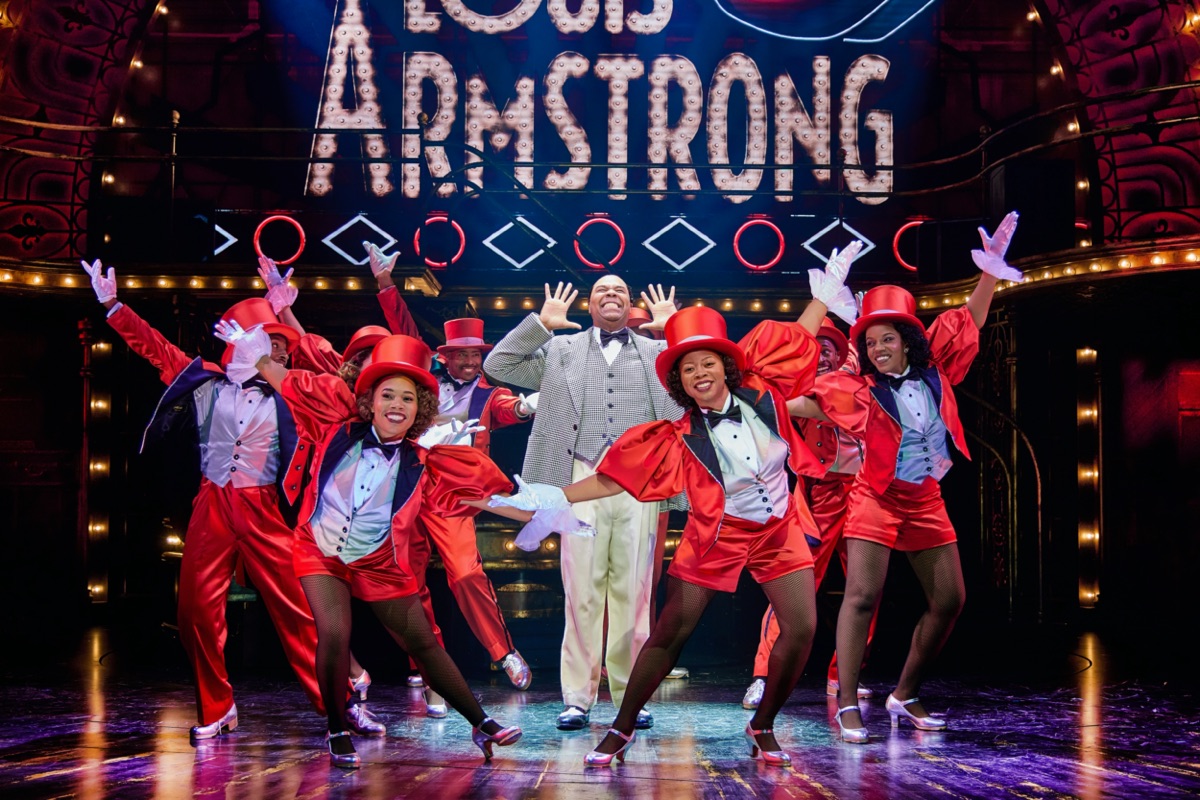
A Wonderful World’s musical numbers include high-energy dance routines for the ensemble, choreographed by Rickey Tripp; romantic duets for Louis and his four wives; and performances of songs made famous because of Armstrong. Stylishly taking us through the kaleidoscopic permutations of jazz over six decades, the orchestra, led by Darryl G. Ivey, does beautiful work, with orchestrations and arrangements laid down by Branford Marsalis.
Co-directors James Monroe Iglehart and Christina Sajous lead their talented cast through the life and musical legacy of Louis Armstrong. Along with Tony Award-winner Iglehart’s electrifying performance as Armstrong, the actors are outstandingly talented. Chief among them are the four wives: Dionne Figgins as the foul-mouthed, switchblade-wielding Daisy Parker; Jennie Harney-Fleming as career-savvy, musically gifted Lil Hardin; Kim Exum as the manipulative, gold-digging Alpha Smith; and Darlesia Cearcy as the tough, steadfast Lucille Wilson, brooking no nonsense yet standing by Armstrong. Each woman gets a chance to shine vocally: Daisy’s “Kiss of Fire”, a hot tango; Lil’s romantic ballad “A Kiss to Build a Dream On”; Alpha’s “Ain’t No Sweet Man That’s Worth the Salt of My Tears”, a frustrated lament; and Lucille’s “Cheek to Cheek”. The four women join Armstrong in a harmonically brilliant version of the blues classic “St. James Infirmary”.






Other fine performances include Gavin Gregory as King Oliver, who joins Armstrong in the jaunty “Do You Know What It Means to Miss New Orleans?”, reprising it as a solo lament after his fortunes fall. Jimmy Smagula makes the most of Joe Glaser, the manager who takes care of Armstrong both financially and professionally. Dewitt Fleming Jr. as Lincoln Perry leads the ensemble in “When You’re Smiling”, a rousing tap number. The entire company joins in the finale, the poignant “What a Wonderful World”, one of Armstrong’s last recorded hits.
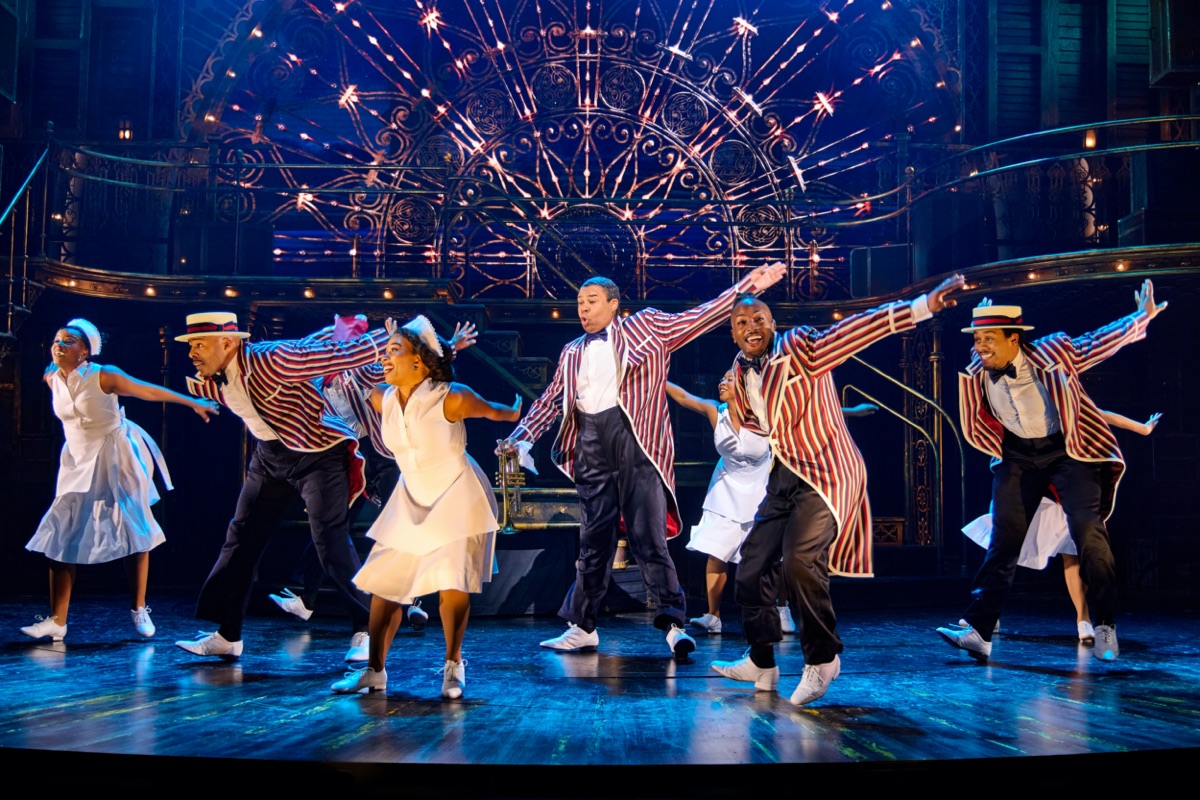
The technical team behind A Wonderful World have produced a set featuring a revolving stage with a stationary, multi-step performance space at its heart, screens and banners dropping from the ceiling, and staircases and balconies on either side. As skillfully created by Adam Koch and Steven Royal, with lighting devised by Cory Pattak, sound design by Kai Harada, and period-defining costumes by Toni-Leslie James, we get the atmosphere and rhythm of the four main cities in Armstrong’s life and career, as well as a Mississippi River riverboat. And this production has to be credited for training the actors playing Armstrong and his bandmates in the best faked fingerings on their instruments seen on any stage!













A Wonderful World is a slick, lively musical that is light in historical depth but heavy in entertainment. The performances, from star James Monroe Iglehart on down, are first-rate. The production values shine, as did the faces of the audience at the performance I attended. Do yourself a favor and revel in the pleasures of A Wonderful World!
A Wonderful World is presented at Studio 54, 254 West 54th St., in New York. For more information or to purchase tickets, go to louisarmstrongmusical.com. NOTE: At Monday and Wednesday performances, the role of Louis Armstrong is played by James T. Lane.