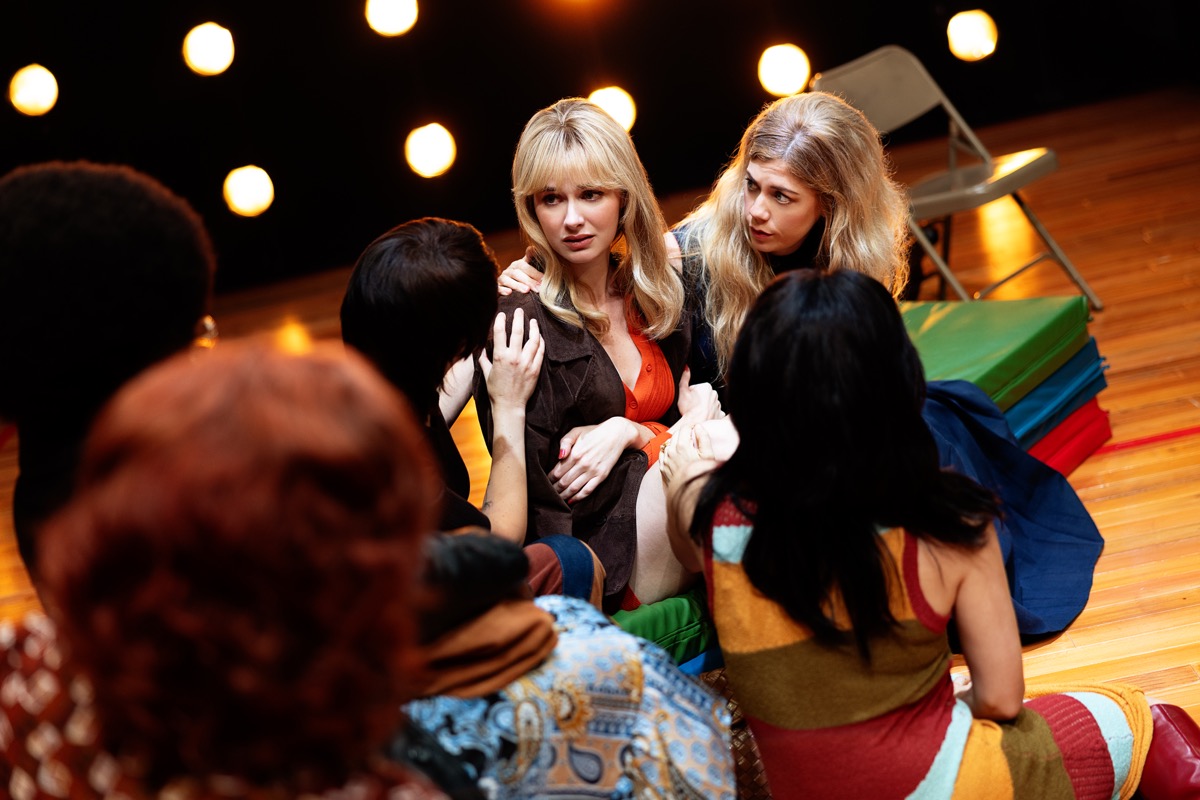

The 1970s were heady days for the women’s movement in the United States. Consciousness raising groups were still feeling their way. The idea of women of different ages, classes, races, and sexualities meeting to talk about their concerns, find common ground, and explore methods of political action was a radical one.
Bess Wohl’s play Liberation, now playing at Broadway’s James Earl Jones Theatre, has as its central character Lizzie (Susannah Flood), whose mother led one of those groups from 1970 to 1973. Lizzie seeks a deeper understanding of the choices her mother made at that time and what her motivation was — and why the original group eventually broke up.




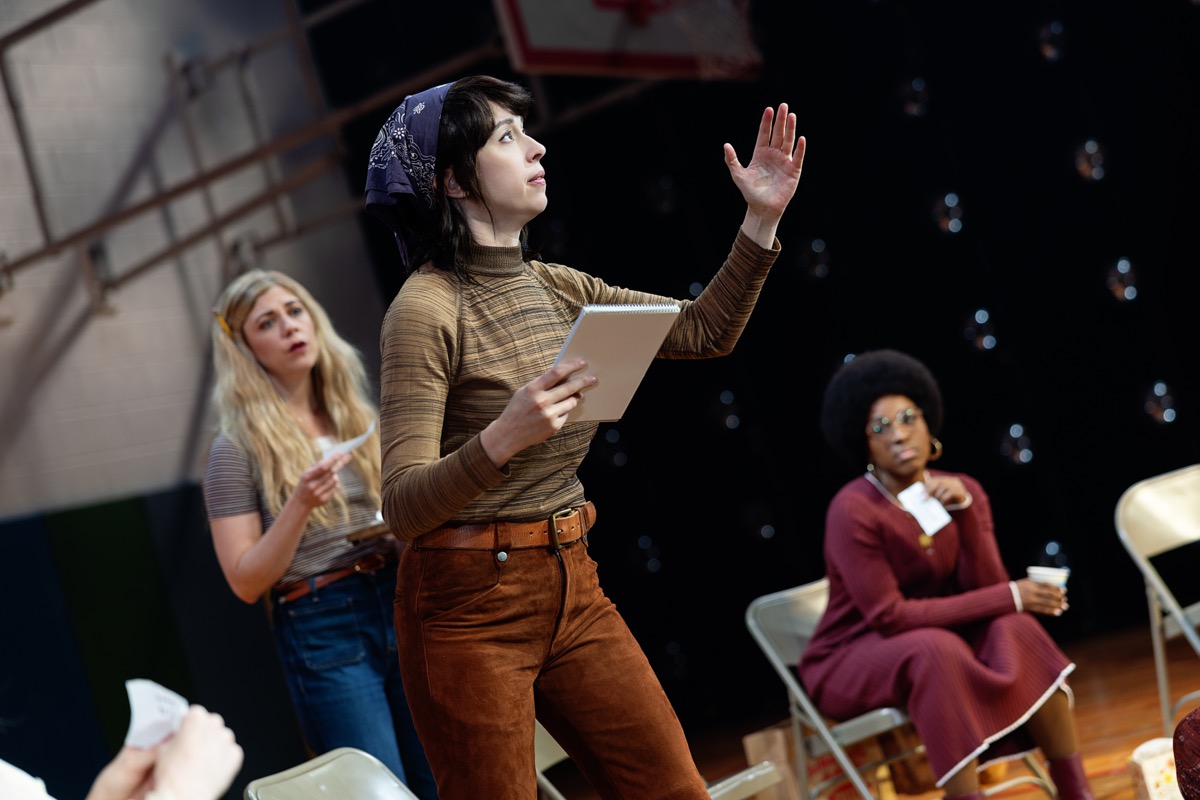
Wohl’s play moves between present and past, with Lizzie taking the part of her own mother, also named Lizzie, in the past. We see Mother Lizzie, working at a local paper as the weddings and obituaries writer, at the founding meeting of her group, interacting with the women who arrived. The original group consisted of Margie (Betsy Aidem), an older woman with grown children and a retired husband; Dora (Audrey Corsa) who’s there at first to give her roommate time alone with her boyfriend, but stays, eventually having her own feminist epiphany at work; tall, black, cool Celeste (Kristolyn Lloyd), a book editor from New York back in Ohio to take care of her dying mother; Isidora (Irene Sofia Lucio), a thickly accented Sicilian PA for local television news, strongly activist since the ’60s, who is in a green card marriage of convenience; and Susie (Adina Verson), a burnt-out survivor of the ’60s women’s lib movement, now living out of her car. The group meets in a basement basketball court at the local rec center, somewhere in Ohio.
There is also Joanne (Kayla Davion), a black mother of teen and pre-teen boys, who is not part of the group but becomes Mother Lizzie when Daughter Lizzie wants to see events in her mother’s life, like her meeting and romance with Bill (Charlie Thurston), a local lawyer.
Aside from Flood, the women in the cast are themselves as actresses, the members of the group in the ’70s, and members of the group being interviewed by Daughter Lizzie in the present. Flood is both Mother and, Daughter Lizzie, and occasionally breaks the fourth wall to speak directly to the audience.
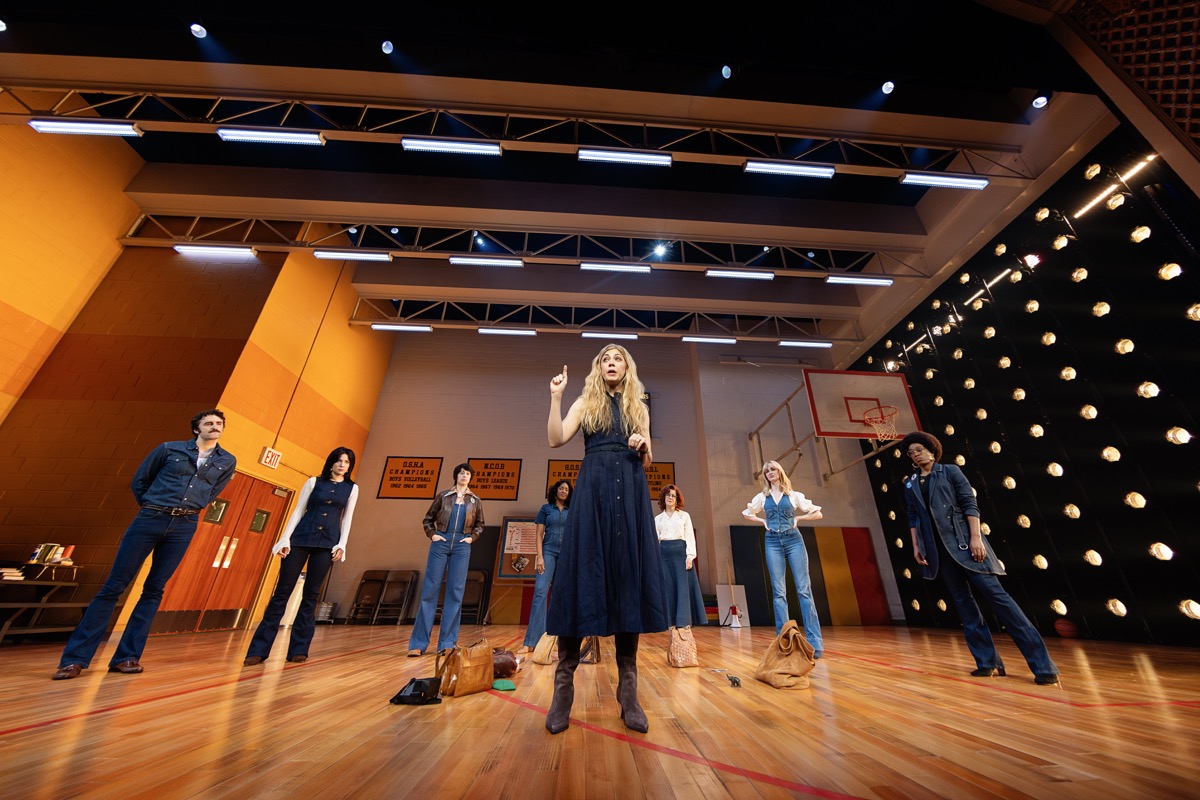
Director Whitney White guides her cast through the maze of scenes, moving smoothly between present and past, allowing the cast to embody these women who are facing their own oppressions while trying to create a better future for womankind. There is very real humor in a scene in which the group members, all totally nude, share one thing they like and one thing they hate about their bodies. And there is a kind of desire to rewrite the past when Daughter Lizzie asks her mother, this time played by Maggie, why after all her idealistic goals she settled for a conventional marriage.






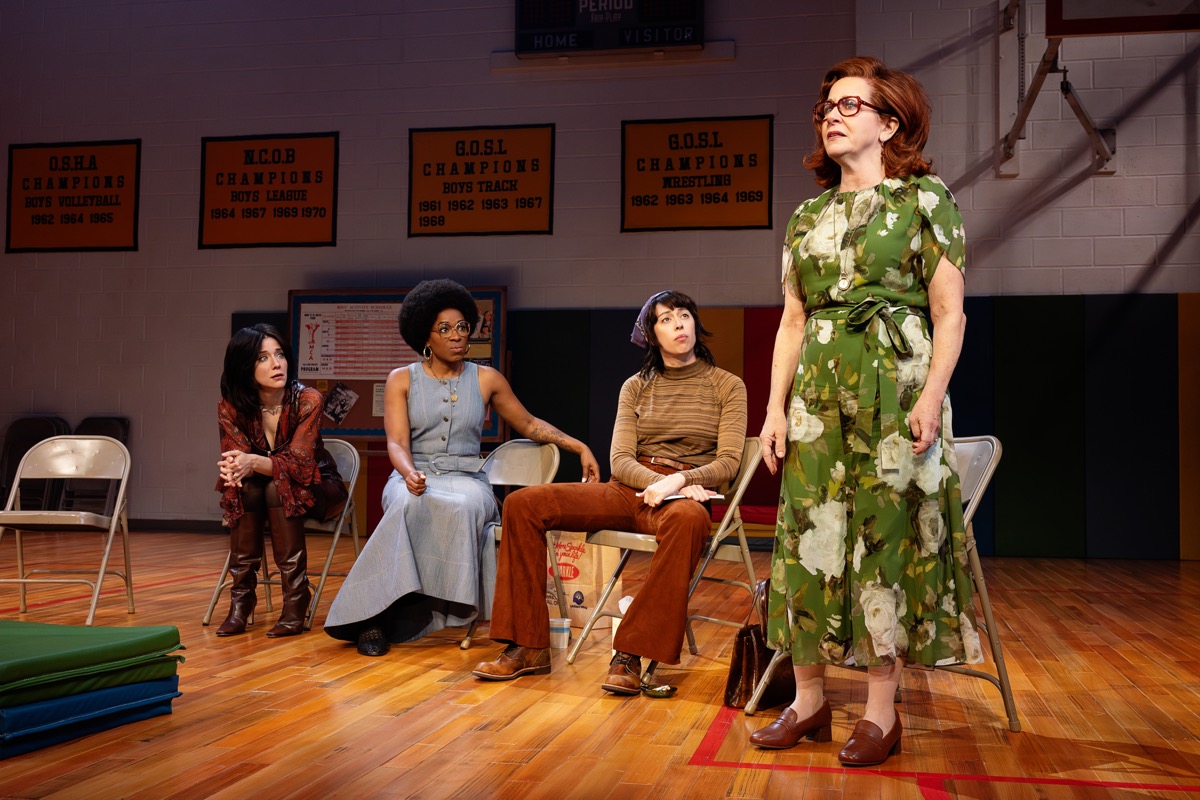
All this is played out on scenic designer David Zinn’s realistic basketball court set. A scoreboard is featured on the back wall, telling us what year in the past it is. It also counts down seconds during Daughter Lizzie’s interviews with surviving members of her mother’s group — as though time was running out to have such interviews.
Cha See’s lighting design and the sound design of Palmer Hefferan and Ben Truppin-Brown ground the set and story in the real world of two eras, as do Qween Jean’s costumes, which display a vibrant variety of class-defining styles from the heady days of the early ’70s.













Liberation is a bold, imaginative look back at a turbulent era, one that is eerily similar to the modern day. It is a play of disparate women bonding to achieve a common goal, only to face uncomfortable truths when their most closely kept secrets come to light. It is a play that pulls the audience into its world from the very first sentence, never quite letting us go at play’s end. It is a strong work of art, one which I strongly encourage you to see. Before its limited engagement ends, you must make the trip to enter the heady past and its promise of Liberation!
Liberation is presented at the James Earl Jones Theatre, 138 West 48th St., in New York, through Feb. 1, 2026. For more information or to purchase tickets, go to liberationbway.com.