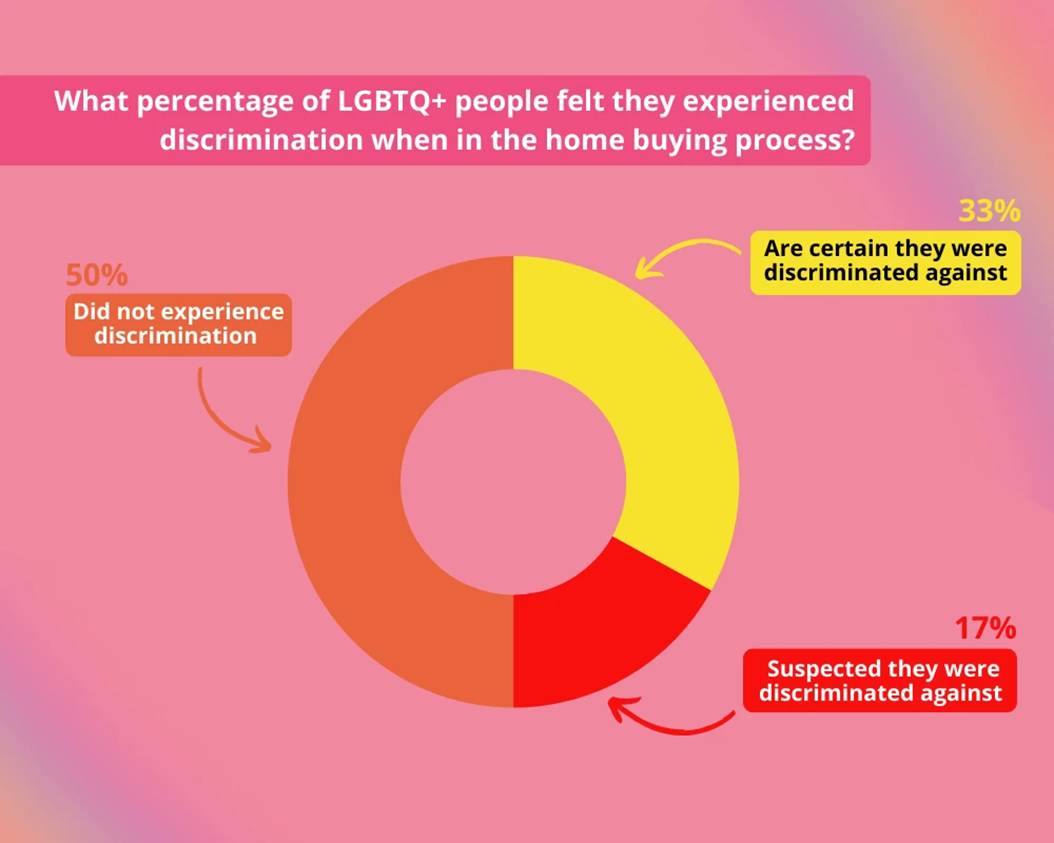
Half of LGBTQ buyers in the United States say they have experienced or suspected discrimination during the housing process, a new survey commissioned by Gay Real Estate has found. That single figure captures the reality behind one of life’s biggest milestones: buying a home is still not an equal journey for everyone.
Discrimination does not just hurt feelings. It limits access to neighborhoods, delays buying decisions, and pushes many to conceal who they are in order to secure housing. These patterns reveal the added weight LGBTQ people carry in a process that should be about opportunity and stability.



The LGBTQ Home Ownership Index, which draws on new survey data to uncover these challenges, shows how identity influences every stage of the housing journey. From neighborhood choice to financing, here’s the data that highlights both the barriers and the resilience of LGBTQ buyers.
Discrimination does not always take place in obvious forms. It might surface during an initial phone call, a property viewing, or even while negotiating terms. For LGBTQ buyers, these moments are often enough to alter decisions about whether to proceed at all. In fact…
- 33% have experienced discrimination due to their LGBTQ identity when in the home buying process.
- 17% suspected they were discriminated against, but could not be certain it was due to their identity.
- Combined, this means half of LGBTQ buyers report experiencing or suspecting discrimination.
For many, this ongoing risk changes the way they approach each stage of the process. Some hesitate to enquire about certain properties, while others walk away from negotiations when bias appears. These are not isolated frustrations but a pattern that continues to influence housing access nationwide.
Why Many Feel Pressure to Conceal their Identity
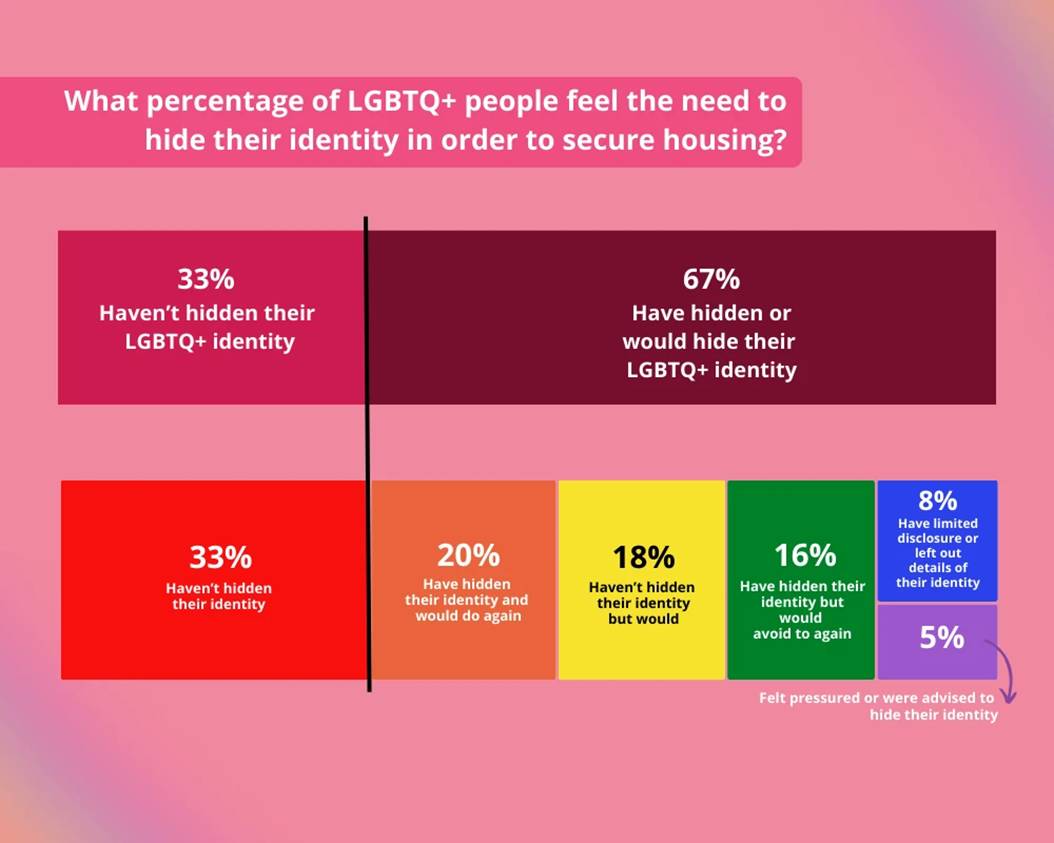
A striking 67% of the LGBTQ people surveyed either have hidden, considered hiding their identity, were pressured to hide their identity, or had limited disclosure of their identity while navigating the housing market. This can occur during property viewings, mortgage applications, or even casual conversations with landlords and neighbors.





This concealment is not about preference but survival. LGTBQ homebuyers weigh the risk of being open against the potential of being denied, steered elsewhere, or subjected to worse terms. The reality is that many feel they must downplay who they are in order to secure something as fundamental as a home.
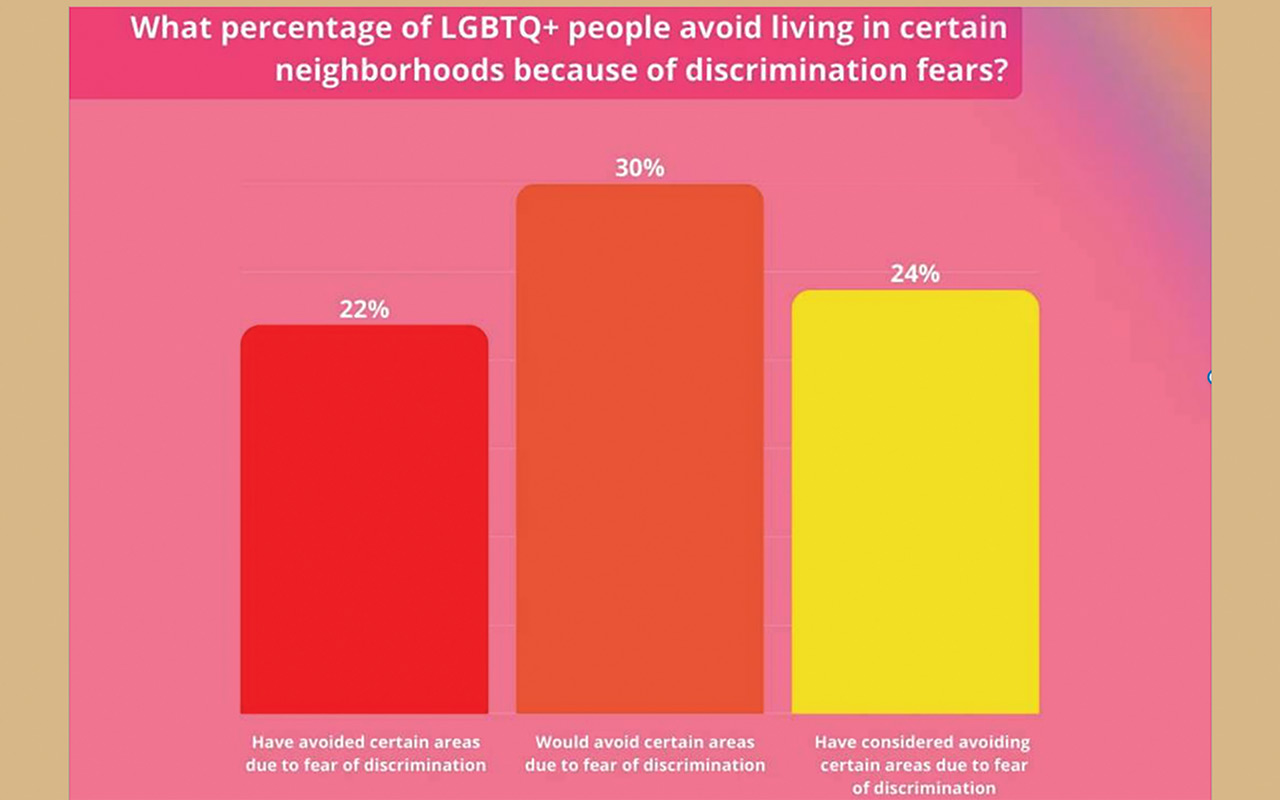
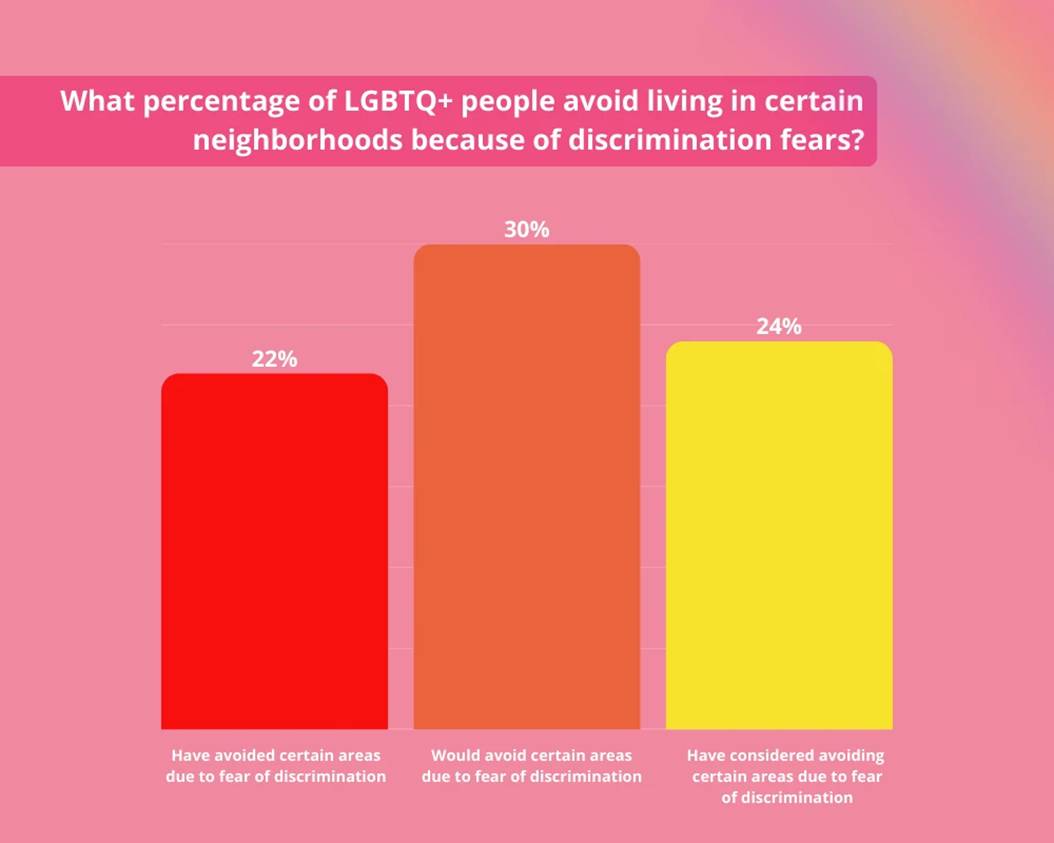
Location is a defining factor in real estate, yet for LGBTQ buyers it’s not just about schools, commute times, or amenities. It’s also about whether they feel comfortable walking around the streets, holding a partner’s hand, or participating in local life. The survey results show how deeply these considerations shape decisions:













- 22% have avoided certain areas due to fear of LGBTQ discrimination.
- 30% would avoid areas in the future for the same reason.
- 24% have at least considered avoiding certain areas.
Feelings of unease extend beyond neighborhoods. Eight in ten report experiencing at least some level of discomfort or risk that changes their behavior. This might mean avoiding viewings at night, skipping certain open houses, or limiting their search to areas perceived as more welcoming.
The decision to buy a home often comes with timing questions about jobs, interest rates, and personal finances. For LGBTQ buyers, the political and legal climate can be just as influential, with 24% reporting that they have delayed buying a home, and 17% are considering delaying because of these concerns. On top of this, 12% have even decided not to buy at all.
Altogether, 53% report that political or legal conditions have directly shaped when or whether they buy. These delays are not about whether or not they can make the decision, but about careful risk management. Many want assurance that their rights and investments will be protected before taking such a significant financial step.
The cost of an LGBTQ-friendly area
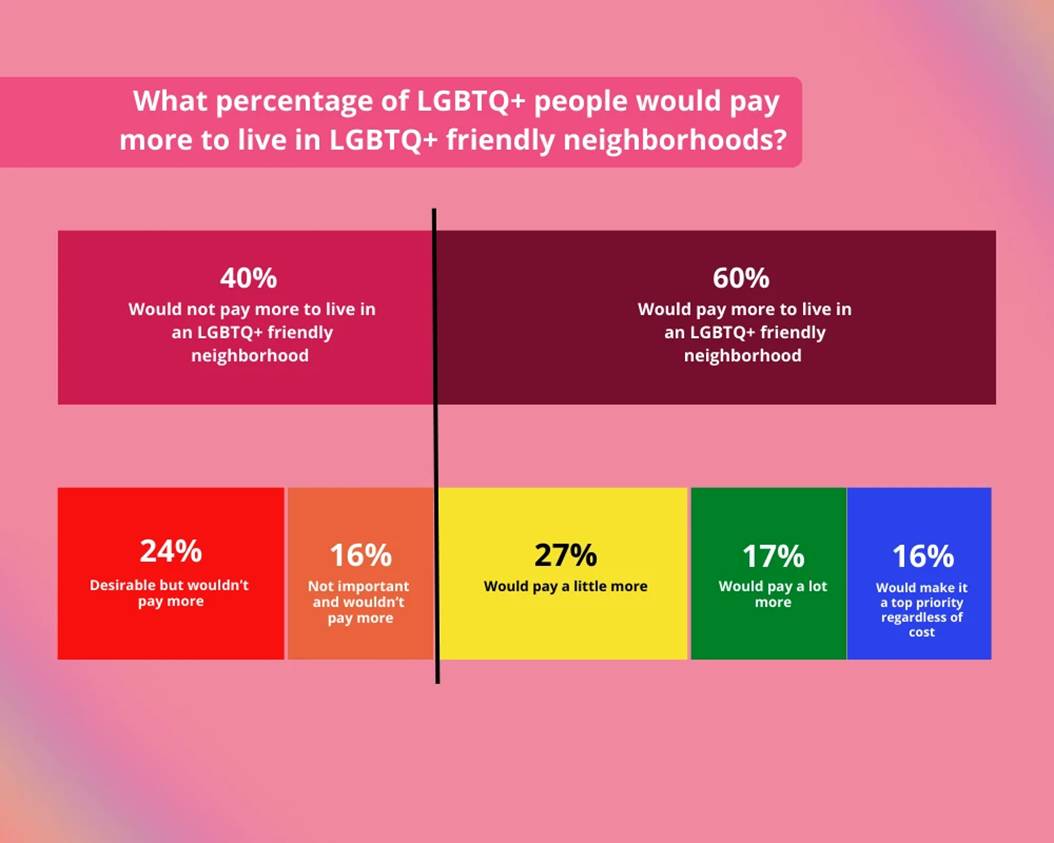
For most people, cost is the single biggest factor in choosing where to live, yet 3 in 5 LGBTQ buyers are willing to pay more to live in areas they know will be affirming.
Combined, 60% are willing to trade financial savings for the stability and predictability of an affirming environment. This is not treated as a luxury but as a necessity, one that enables people to live more freely and fully in their own homes.
When it comes to LGBTQ friendly places to buy a home, certain U.S. states and cities stand out. Our recent survey of 700 respondents revealed which areas are top of mind for prospective LGBTQ homeowners.
New Jersey was named by 2.0% of respondents. Its proximity to New York City — one of the most popular places mentioned — may mean some buyers focus on NYC and overlook New Jersey, even though it’s a blue-leaning state and a practical alternative: commutable, well connected, and often more accessible while still keeping the city within easy reach.California
Leading the way, California was cited by 17.6% of respondents. Homebuyers here highlight strong legal protections, vibrant communities, and the availability of LGBTQ friendly real estate agents in California as key factors when deciding on timing and location.
Close behind is The Big Apple New York City, with 16.7% of respondents naming the state. Buyers appreciate its inclusive neighborhoods and the broad choice of agents experienced in supporting LGBTQ clients, making the process smoother and safer.
At the city level, San Franciso was mentioned by 9.7% of respondents. The city’s historic LGBTQ culture and welcoming communities make it a top pick for those seeking both social connection and secure homeownership.
Cited by 7% of respondents, LA offers diverse neighborhoods and a strong network of supportive real estate professionals, helping buyers feel confident in their timing and choices.
Mentioned by 5%, Atlanta is increasingly recognised for its progressive neighborhoods and growing LGBTQ community, providing new options for LGBTQ homeownership in the South.
Why LGBTQ-friendly agents matter
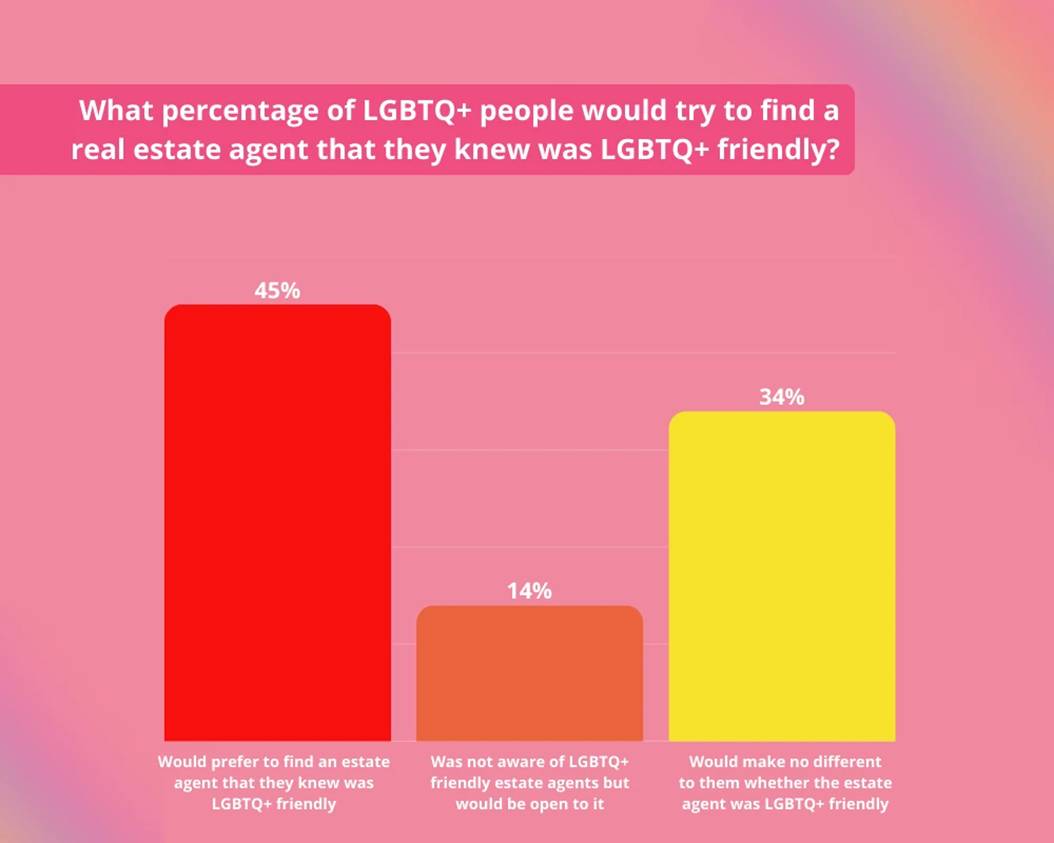
Choosing a realtor is about more than just market expertise. For LGBTQ buyers, it can also determine how comfortable they feel disclosing personal information, how they are treated during negotiations, and whether subtle steering is avoided.
45% of respondents agreed that they are more likely to choose an LGBTQ friendly real estate agent over a general agent, while 14% were not aware this was even an option, but expressed interest nonetheless.
That means nearly 6 in 10 are either actively seeking or open to working with an LGBTQ-friendly agent, like those at Gay Real Estate. For many, aligned professionals mean fewer risks of bias, more transparent conversations, and better overall outcomes.
The Barriers to Ownership
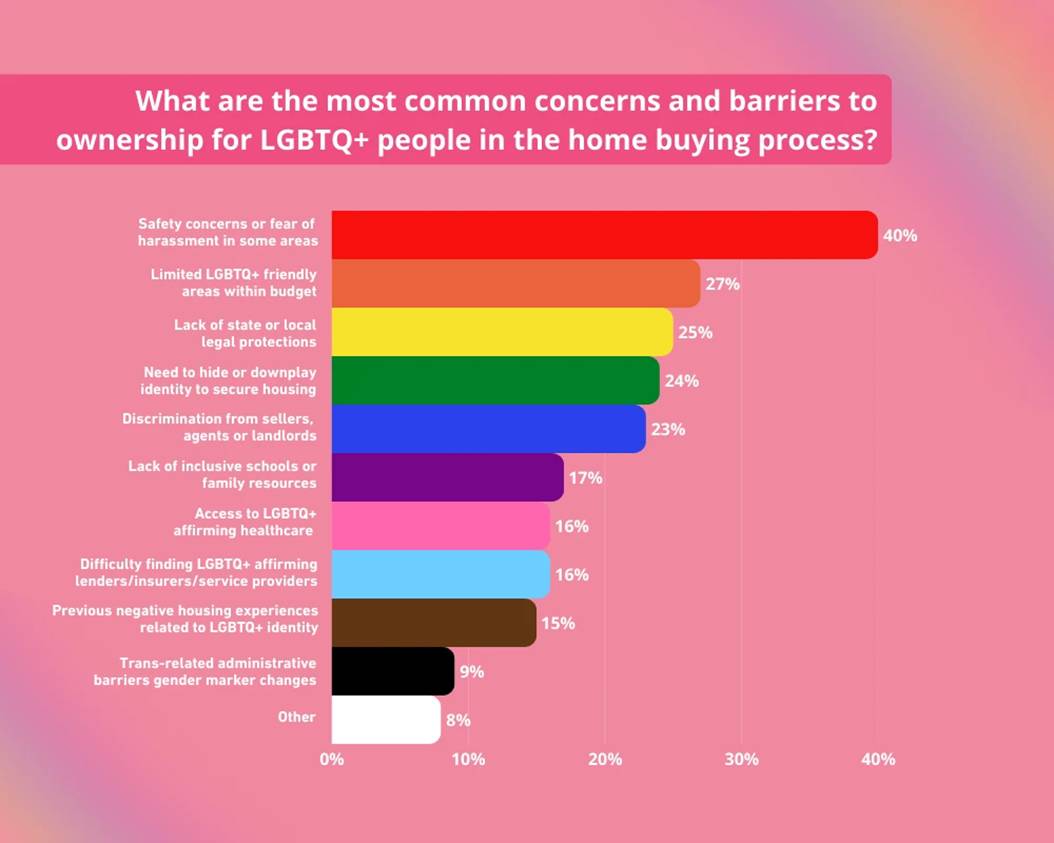
The survey also reveals how multiple obstacles stack together, slowing or even stopping LGBTQ buyers from achieving homeownership. These barriers are not minor inconveniences but compounding pressures that reduce choice and delay progress. Key obstacles reported include:
- Concerns about harassment in certain areas.
- Struggling to find LGBTQ-friendly areas within budget.
- Lack of local legal protections.
- The need to hide or downplay their identity to secure housing.
- Direct discrimination from sellers, agents, or landlords.
- The lack of inclusive schools and family resources.
- Access to healthcare.
- Facing negative housing experiences related to their LGBTQ identity.
In total, that’s 76% of the community that reports facing at least one barrier connected to their discrimination or identity.
Discrimination is not always obvious, but it may leave a paper trail. Survey respondents reported harassment, exclusion, and unfavorable terms across many different stages of the buying process, including:
- Harassment, derogatory comments, or intimidation (9%).
- Being steered to or away from certain areas (7%).
- Discrimination by a landlord or property manager (5%).
- Discrimination by a seller or real estate agent (5%)
- Being refused a viewing or property (4%)
- Being offered worse terms, higher prices, or additional conditions (4%)
Recognizing these patterns is the first step, but buyers should also document these incidents, keep written records, and work with agents who can support them in escalating issues when necessary.
Moving forward with support
Buying a home is never just about property. It’s about belonging, stability, and being able to live authentically. The LGBTQ Home Ownership Index shows how discrimination, concealment, and external pressures continue to shape this journey, but it also highlights the resilience of those navigating it.
A survey of 700 people from the USA was commissioned by Gay Real Estate, who help LGBTQ people and allies find the right home. Respondents were all a part of the LGBTQ community to provide real-life experiences and accurate results.