Anne Marilyn Lucas’ contemporary comedy Art of Leaving, directed by Matt Gehring, is a fable about happiness and relationships. These topics are seen through the eyes of three generations of couples in one Jewish family, the Katzmans, so you get the conflicting wisdom, opinions, experiences, and beliefs of different eras.
There is (mis)understanding between men and women, between husband and wife, and between fiancés. And there is a mix of humor, sometimes very broad, and seriousness, although there are times when it’s not so easy to take any of these people seriously.




The action takes place during one day at the Upper East Side apartment of Aaron and Diana Katzman. Aaron has felt vaguely discontented and unhappy with his life for some time now. He has tried various hobbies, activities, and fads, faithfully supported by Diana, but to no avail. He is now under the spell of a self-proclaimed self-help therapist whose latest book has become Aaron’s bible.
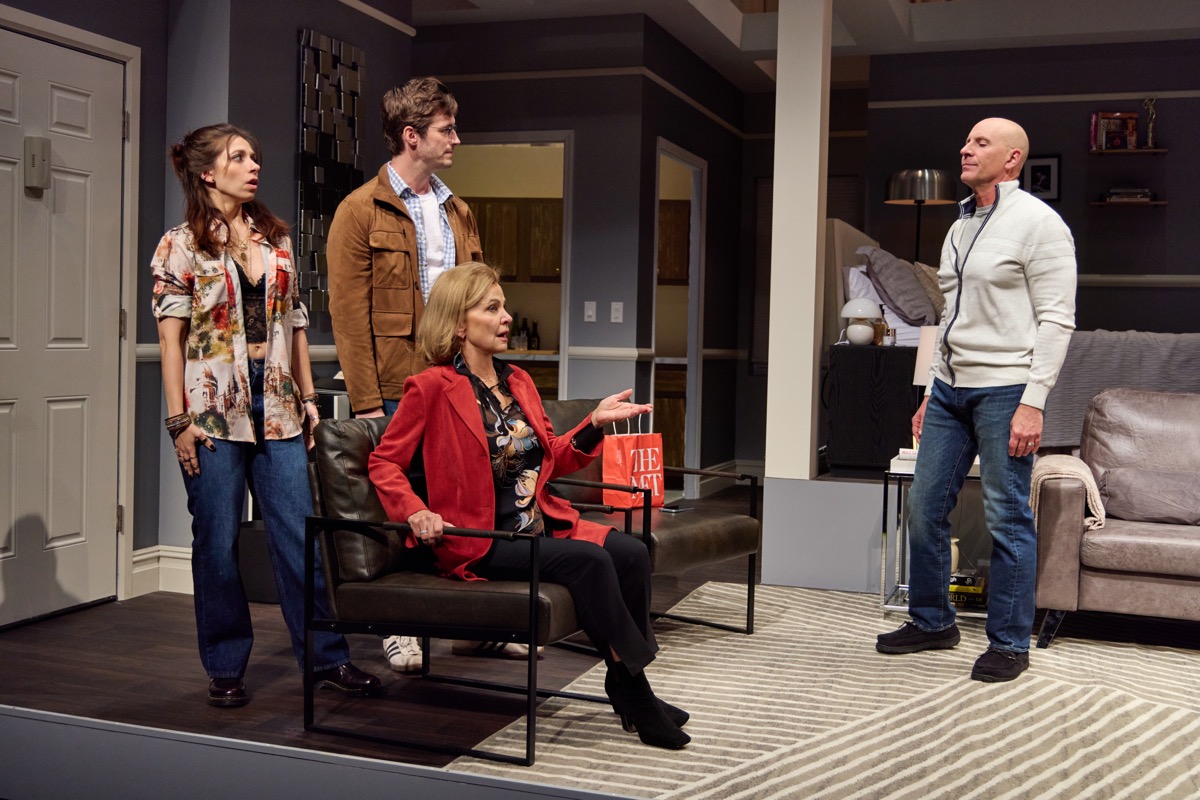
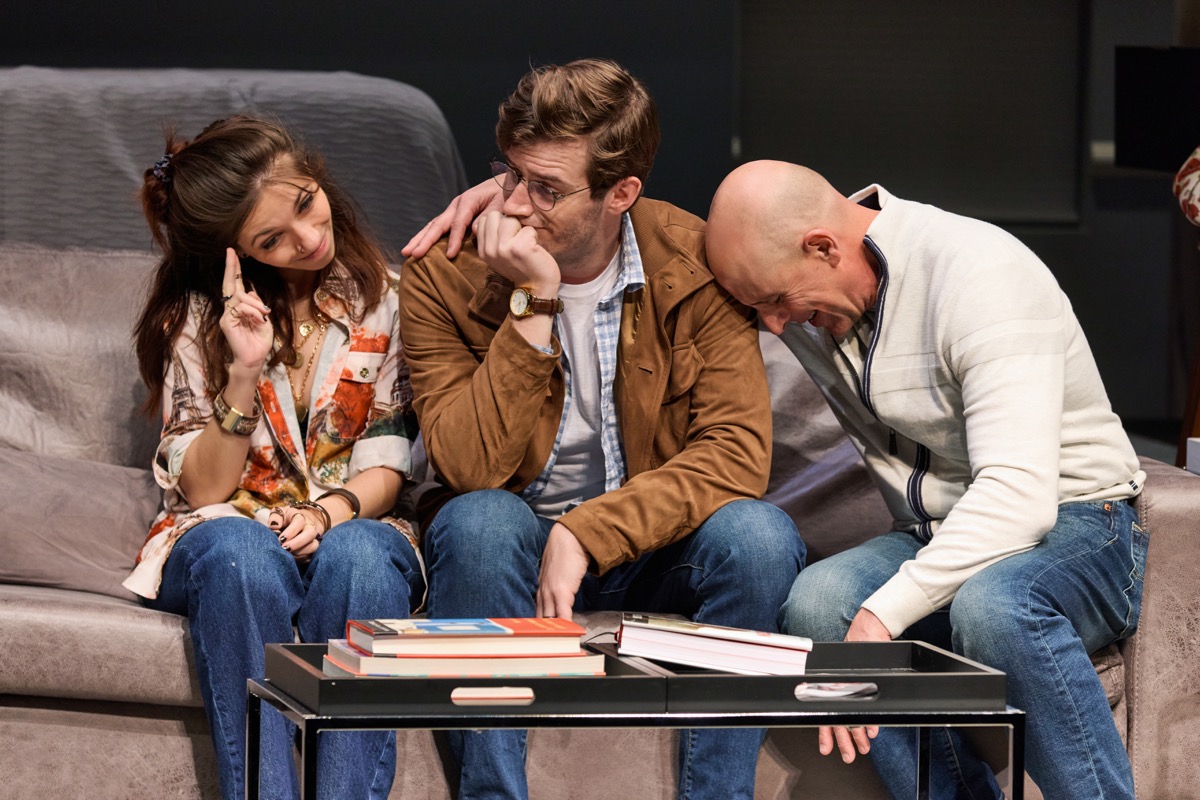
While Diana is out, Aaron invites over his son Jason and Jason’s fiancée Caitlyn, and his parents, Felix and Esther, surprising them with the news that he is going to divorce Diana. The therapist’s book preaches that men of Aaron’s age, in order to keep their masculine energy from being sapped by the emasculating force that is women, must break with their wives and experience life in the short time they have left. The problem is, Aaron hasn’t mentioned any of this to Diana — and, following the therapist’s playbook, wants the rest of the family to break the news to her.
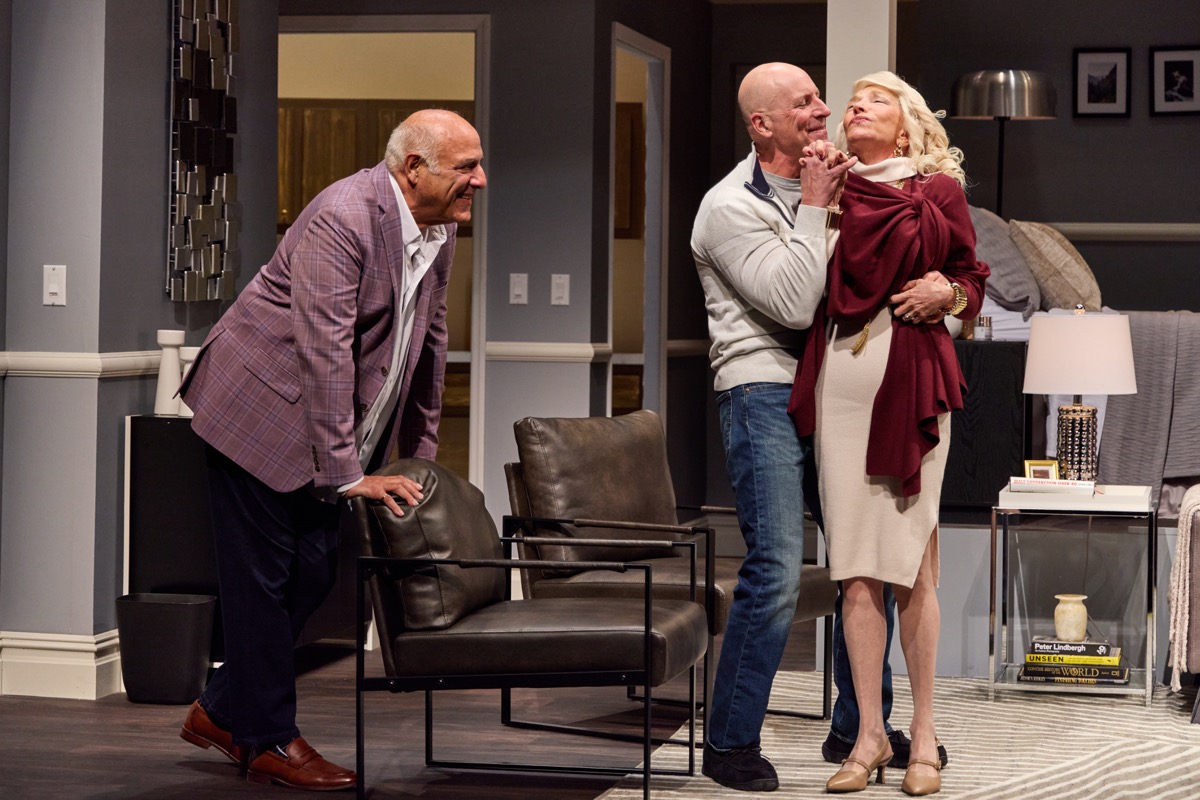
Diana, a talented artist who now curates exhibitions for a prestigious museum, has never needed a man to complete her life. Aaron, bewildered, blames Diana for not behaving the way the therapist said she would, the latest in a series of complaints he’s given her over the years about her multitude of shortcomings. Meanwhile, Jason and Caitlyn announce that while they are getting married, it will be a polyamorous relationship, unlike those of the two older couples. As for Felix and Esther, each one confesses their side of a long-buried family secret — Felix to the men, Esther to the women, swearing them to secrecy.
Most of the cast does not come out well. This could be because of Lucas’ script; it could be the direction of Matt Gehring; or it could be poor advice from dramaturg Dan Hasse. The best in my opinion is Audrey Heffernan Meyer as Diana; she lets you see the subtle changes that she’s going through, remaining level-headed and sensible during what one hopes is the last in a long line of ego-damaging events for this too-long-suffering woman.




Alan Ceppos’ Felix runs a close second, trying to connect with his spoiled, foolish son by confessing his own infidelity, explaining how and why he came to value his own marriage. Brian Mason and Molly Chiffer as Jason and Caitlyn are defeated by the script. They are at best ciphers, only there to bring up the topic of polyamory, which once raised plays virtually no part in the rest of the proceedings. Pamela Shaw’s Esther might seem to get the worst of it, embodying the outlandish Jewish mother stereotype. Wherever that version of Esther comes from, less would be much more satisfying.
But the one who has it worst is Jordan Lage as Aaron. As written, Aaron is a self-absorbed, self-centered idiot. Aside from being obsessed with himself, Aaron — when he’s being contradicted, when he’s not happy (which he keeps moaning as if it’s a valid reason for his decision) — is whiny and accusatory. After a while, with each new display of his sheer stupidity, the audience is rolling their eyes instead of laughing.












The set, designed by Frank Culva, portrays a modern if fairly sterile Upper East Side apartment which used to belong to Diana’s mother. The walls are a uniform blah green with white trim; the furniture all gray with chrome and glass fittings — all changed from the original warm decor by Aaron. The lighting of Stacey Boggs and Betsy Chester, and the sound design of Ben Vigus, complete the reality of the set.
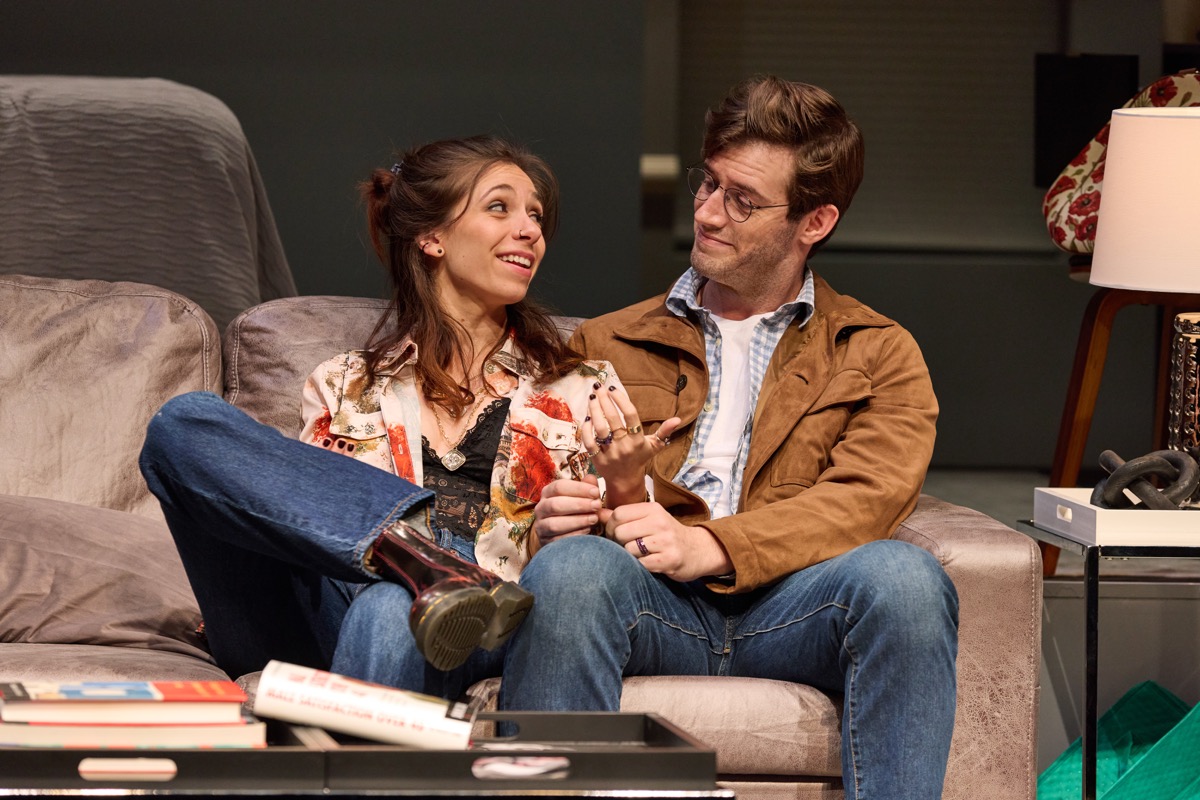
I would really like to be able to more strongly like Art of Leaving. It has more than a few moments of sheer hilarity, and I was pleased with the conclusion. But this play defeats the best efforts of its cast and director, lacking either the light touch comedy requires or the spiraling, manic frenzy demanded by farce.
This play needs rethought and reworking. It has the potential of becoming much stronger and much better, and I hope it does. I cannot totally recommend seeing Art of Leaving as it is now.
Art of Leaving is presented at the Alice Griffin Jewel Box Theatre in the Pershing Square Signature Center, 480 West 42nd St., New York through Dec. 14, 2025. For more information, or to purchase tickets, go to artofleavingtheplay.com