
While the late 2010s saw a rise in coming-of-age films and shows featuring gay lead characters, stories centered on characters exploring a different gender identity than the one assigned at birth have remained relatively rare — until recently. It’s been heartening to see more films and series begin to include transgender and non-binary characters, expanding the scope of LGBTQ representation in meaningful ways.
Holy Curse joins this growing wave, but what sets it apart is its setting: India. A country known for its deeply rooted traditional values, India is rarely the backdrop for stories like this — making Holy Curse potentially a landmark moment in both Bollywood and Hollywood cinema.





With diverse narratives emerging more frequently from both industries, the film is already generating buzz as a contender for an Academy Award. If nominated, it would mark a major milestone for both racial and LGBTQ representation on the global stage.
Snigdha Kapoor is a director to watch. Known for creating stories that center on underrepresented voices, her latest film, Holy Curse, continues her mission of telling stories from perspectives often overlooked by the mainstream. Her work not only bridges cultural divides but also explores deeply personal struggles, resulting in thought-provoking and emotionally resonant visual storytelling.
Kapoor’s earlier short film, Look Like You, was a ScreenCraft finalist, won the Audience Award at the Asian American International Film Festival, and is currently streaming on BFI Player. I spoke with this talented filmmaker to talk about the inspiration behind Holy Curse and the impact she hopes it will have.

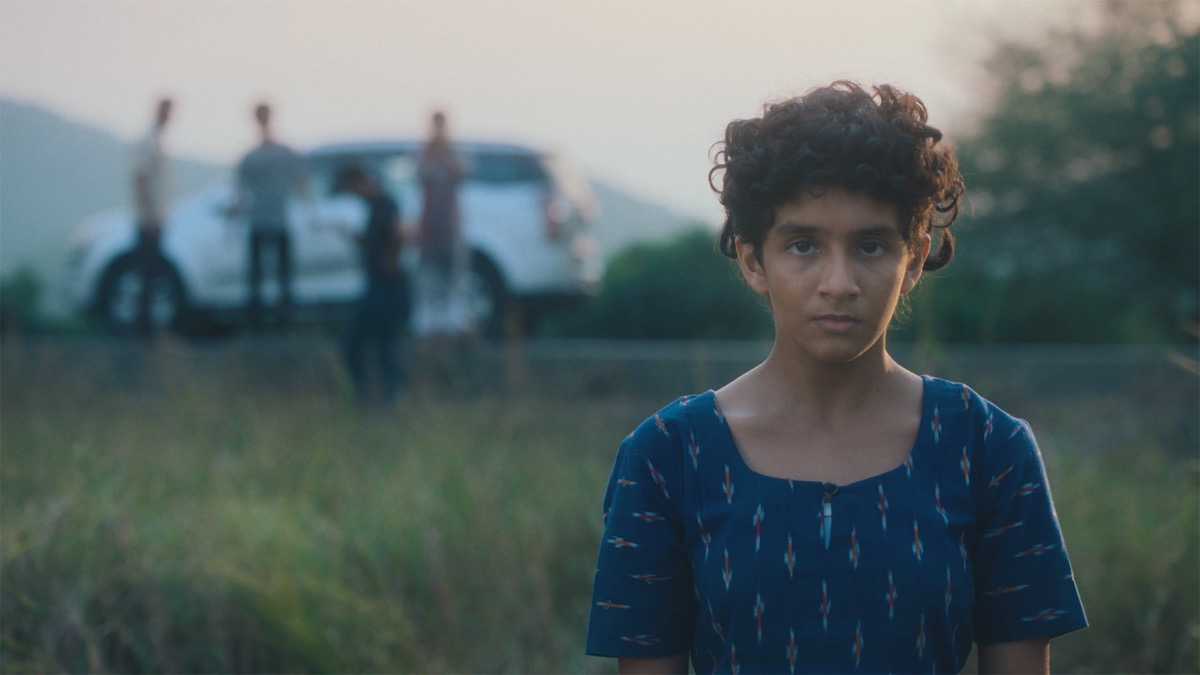
The film really does a good job at showing the suppression of one’s gender identity that family members can cause. Can you talk a little bit about what Radha is going through and maybe how family members can sometimes oppress their loved ones?




Snigdha Kapoor: We are talking about patriarchies and family traditions here. The bigger theme, though, I was trying to tackle here is patriarchy in a family. I really think the film dives into these themes for the whole family and all the characters, regardless of their genders.
You can see Radha’s father overshadowed by his older brother because the traditions in the hierarchy make it that way. With Radha’s mother, I have seen, sometimes in families in real life, that the mothers are unintentionally becoming enablers of the patriarchy. This happens in a lot of places, though, not just in India. I have seen it happen with families here in the West. In South Asia, though, rituals are a big part of our culture, so what Radha is being put through in the film is not seen as conversion therapy; it is so embedded in parts of the world. A lot of times, people over there are doing these rituals because they think it is the right thing, even if it could be harmful.












I wanted the film to explore the child’s right to explore themselves, but how also that can be hard because of ideas and systems that are put in place.
Can you talk more about Radha’s parents are what they may be going through personally?
SK: I can speak on the South Asian culture because there is a bigger emphasis on respecting the elder people in the family and there is more of a hierarchy. North India, where I grew [up], is a more conservative society, and the men in the family are the ones who come first and have a lot of power.
It is rare to see a woman have an independent voice. In my own upbringing I saw how women were not vocal about their desires. A lot of that is reflected in the film in some way. You can see how the father has much dominance and how the cousin is even scared of him. This creates a lot of tension that is evident throughout the short.
The film is being discussed in some circles for an Academy Award nomination. As a director what does mean to you and also what do you feel that says about the state of storytelling right now, as we are seeing more than ever before films with diverse characters getting lots of acclaim?
SK: Filmmaking is a privilege, and making films that challenge social norms is tougher. Getting funding to create it and getting a crew together in a part of the world like India can be a challenge but it is awesome now to see how things are evolving and changing with societal expectations even over in South Asia. Stories like this are so important because with the way things are now there is a war now with challenging familial traditions being pushed that hinders children from becoming their full authentic self. There is a push and pull between one embracing their individuality versus following traditional values so that is why we are getting more visual stories like this now.
How was it filming this project over in India?
SK: It was a very different experience. In India, there are big contract differences in the way we have our equipment rental and other agreements that are different than the way it is in Hollywood. It was a much bigger crew than I have worked with. Everyone, though, was so helpful. There was a shared clear understanding of knowing what we wanted to say through the film and I didn’t have to say a lot to the crew. We worked with a truly respected casting agency in India, and the actors all were able to bring their knowledge of the culture to the project in a an incredible way.
So coming of age stories are a popular genre of film that has been done quite a bit, but what makes Holy Curse a more unique spin on this genre?
SK: Coming of age really is such a big genre. I don’t think though we have necessarily seen what happens when a non-binary child is coming to terms with the fact that they don’t identify with one genre of the other. It’s complicated because they are coming of age and are being told who they are is not normal, and that ends up being such a confusing, rebellious, and frustrating stage. So many emotions exist already when you are growing up in that stage, and the experiences we all have in that stage of life define and shape who you are for the rest of your existence.
I always just wondered what it was like for someone who is non-binary to experience this already stressful time of life. I also wanted to add some more lighthearted moments with humor but also make them question if they should be laughing at this situation. Lighthearted moments are a big part of many coming of age films but here what makes Holy Curse stand out is that it’s from the lens of a non-binary child.
What was it like for your actors to take on these roles because this film does tackle some really sensitive issues?
SK: They all came with their own sensibilities The actor who plays the older brother is a big name in India who works on social subjects and is on a show that talks about social issues in India so he had that awareness from being a part of projects that educate people about things they may not be aware of. It was great to hear about what they brought to their characters from their personal lives.
What type of stories are you hoping to tell as a director in the future?
SK: I usually look for subjects we don’t usually see on screen. It always starts from the point of exploration. I come from a journalism background so I am always interested in researching and learning about someone whose life I never understood or knew about. I have made one short that was about a queer boy, but from the mother’s perspective, and I have never really seen that in mainstream cinema. I primarily focus on women and children and how they challenge societal norms at large but within that it really is about diving into who these characters actually are. I like to examine people who just by being who they are end up challenging norms.
How do you think your prior work as a journalist prepared you to create Holy Curse?
SK: I used to do documentaries and I always had this ethical question of “Whose story am I telling?” As a journalist I always wondered, “Am I forcing my narrative on the subject or am I allowing the subject to dictate the narrative?” That was always a dilemma I had. So when making films I ended up gravitating towards fiction stories about children and telling those stories while bringing some authenticity and emotional truth to it. Making fiction films gave me more of a freedom, but journalism gave me more of a foundation to be able to approach the subject matter I want to explore.

How do you think the future looks for Bollywood to keep telling more diverse queer stories? A lot of their films for so long have been so focused on traditional values?
SK: Bollywood is a broader term. We actually call it Hindi cinema which is so wide and rich. Just like Hollywood they have commercial stories and independent ones. The commercial aspect is trying to tackle more social subjects now but in a way that can be more accessible to a larger audience.
We have a huge population and not everyone is aware of certain themes, so it’s about finding ways to help audiences be able to understand more diverse themes. There are certain films out of there now that are getting wide attention like Homebound that deals with the caste system in India. We have a lot of filmmakers trying now to bring out diverse stories for people to see within such a huge country.