When it comes to romantic stories, there are several popular tropes. One is the “two different worlds” trope, where the man and the woman come from different cultures or countries, religions or races or social strata. Drama is created as the two lovers work to overcome the differences between them; comedy is created as the two lovers fumble with their preconceived ideas about each other.
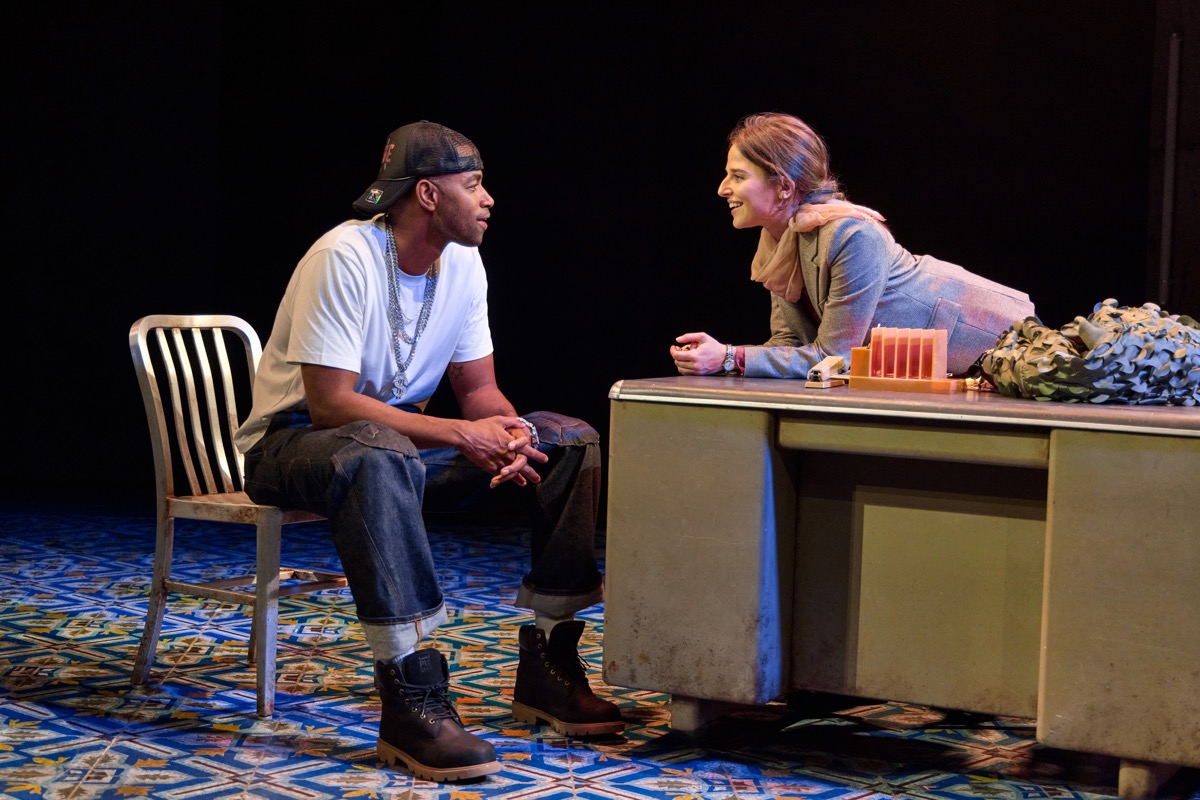
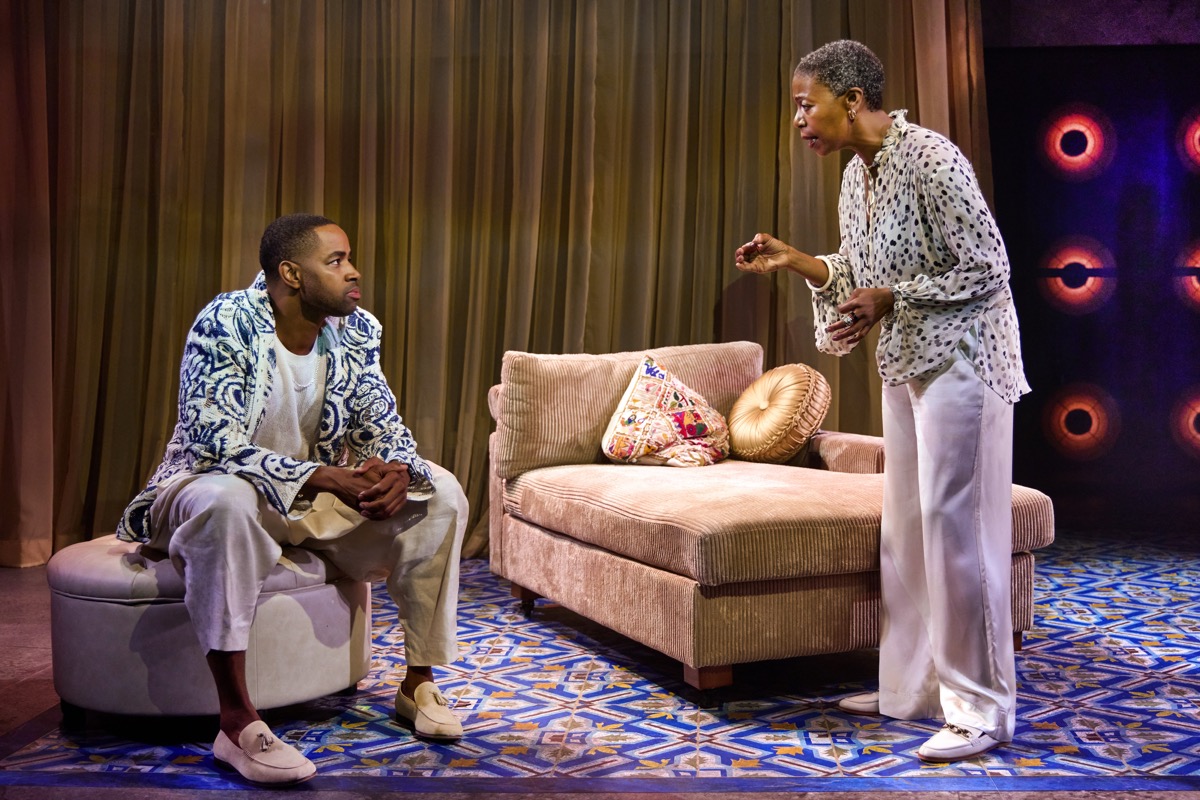
One such story is Charles Randolph-Wright’s Duke & Roya, now at off-Broadway’s venerable Lucille Lortel Theatre on Christopher Street. Randolph-Wright’s play crams in as many differences as possible. Duke (Jay Ellis) comes from a privileged family. He is a burgeoning hip-hop talent, he is black, he is American, and he is (nominally) Christian. Roya (Stephanie Nur) comes from a struggling middle-class family. She is a translator at an American Army base in Kabul, she is Asian, she is Afghani, and she is Muslim. They meet when Roya is assigned to Duke, who is entertaining soldiers stationed in Afghanistan, as his interpreter.





He is fascinated when she does not fall for his patented charm offensive, yet persuades her to take him out of the confines of the base to see the “real” Kabul. When the restaurant they stop in is the target of a suicide bomber, Duke lands in the Army hospital while Roya disappears for a few days. This worries Roya’s protective father Sayeed (Dariush Kashani), also an interpreter working for the Americans, and Duke’s mother Desiree (Noma Dumezweni), a lawyer involved with several charities and government agencies.
Since Roya had also been assigned to interpret during the interrogation of an old childhood friend believed to be working with the Taliban, her disappearance and return cause both her and Sayeed to become targets of military interrogators. Duke and Desiree are also interrogated because Duke was not supposed to leave the Army base for any reason.
While the course of true love in Duke & Roya does not run smoothly, it also runs in ways unlike that of a traditional romance story. It touches on themes of the nature of love and commitment; on loyalty, to country, to family, and to one’s personal safety; and on sacrifices made based on those conflicting loyalties. It also touches on the fate of so many in Afghanistan who, by working with the Americans, became targets of Taliban revenge and victims of America’s reneging on getting them out of the country.
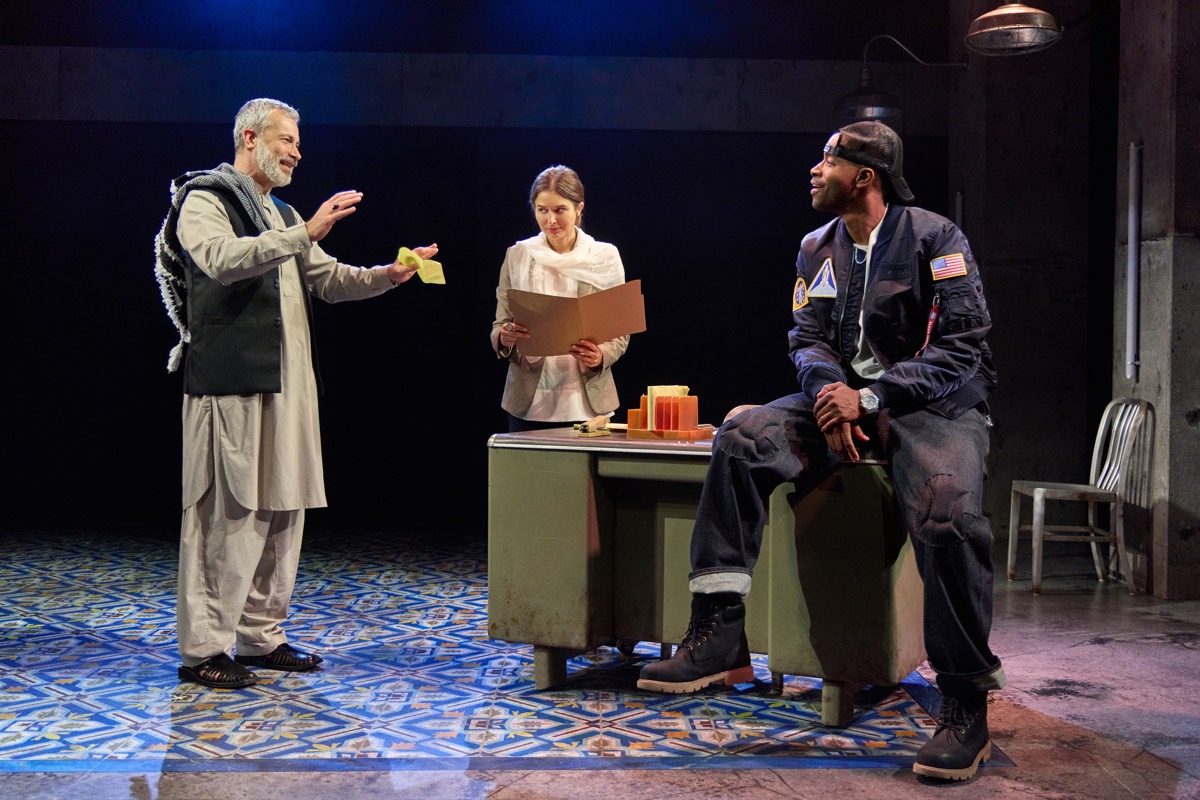
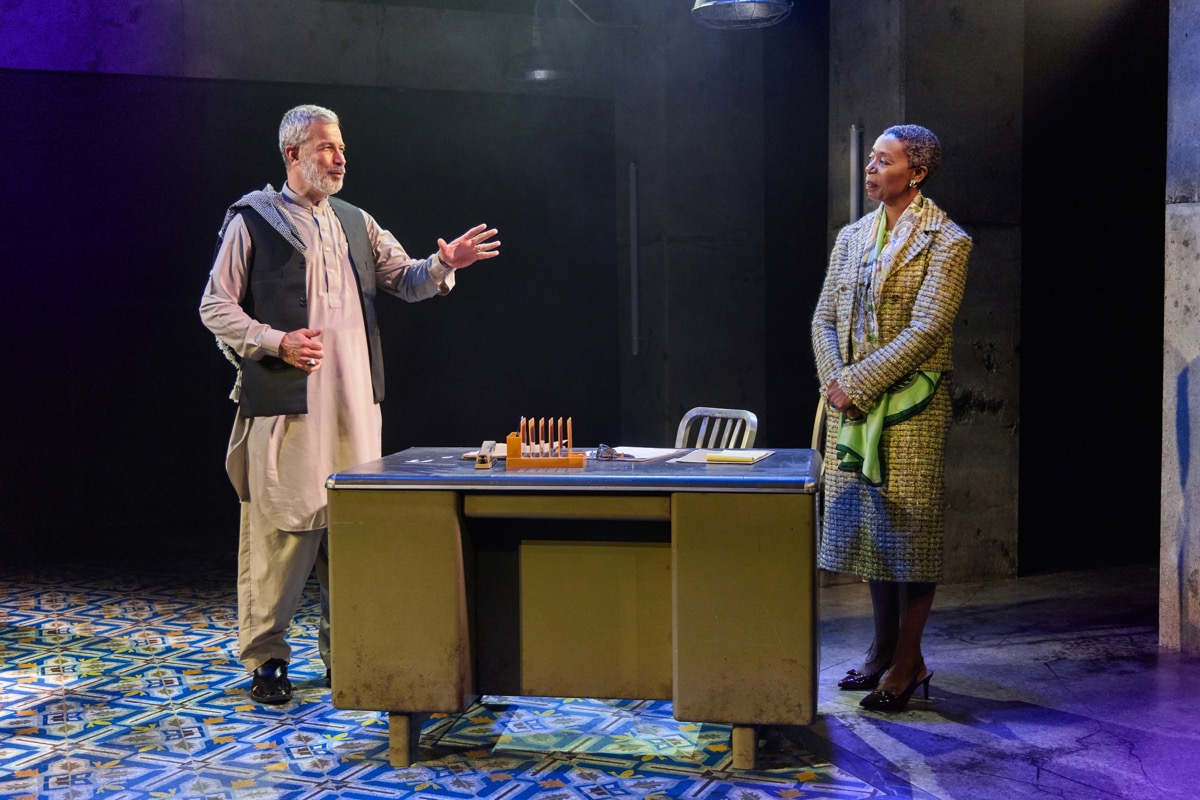
Director Warren Adams guides his talented cast through the mazes of war and espionage tactics, allowing them to give nuanced performances that resonate with the audience long after the play ends. Jay Ellis displays the many facets of Duke: the deceptive security of privilege; the slow dawning of true love; the desire to understand more of the world outside the bubble of show business, and more. Noma Dumezweni’s Desiree adroitly handles the conflicts among her many roles, as mother, lawyer, political insider, and mature, sensual woman. Stephanie Nur is adamantine in her determination to meet her goals, whether they be for the benefit of herself, her family, or her country. Her Roya is a deeply emotional woman, yet all too aware of the realities of the situations she finds herself in.






As Sayeed, Dariush Kashani displays the fatherly urge to protect his daughter as much as he can, agonizing when his advice is not heeded by his stubbornly determined daughter. In one powerful scene, his faith in American promises of safety for him and his family shatters under interrogation, leading him to demand recognition and respect for his loyalty from the questioners he has served faithfully for so many years.
Duke & Roya may not have the typical happy ending of many romantic plays. What it does have is hope for the futures of its two main characters. It is a play of immense passion on the part of all its characters, and in this production almost glows with the intensity of that passion. I strongly urge you to see this play before its limited engagement is over. You owe it to yourself to get acquainted with the colliding worlds of Duke & Roya.












Duke & Roya is presented at the Lucille Lortel Theatre, 121 Christopher St., in New York, through Aug. 23, 2025. The theatre is roughly one block east of the Christopher Street PATH station. For more information, or to purchase tickets, go to dukeandroya.com.