In the mountains of Kentucky, so the story goes, a young man by the name of Floyd Collins sought to make a name for himself by finding and exploiting a cave to rival other caves in the area. Exploring on his own, he finds one, only to have his foot wedged in by a boulder and his legs pinned by a later landslide, trapping him inside his glittering prize.
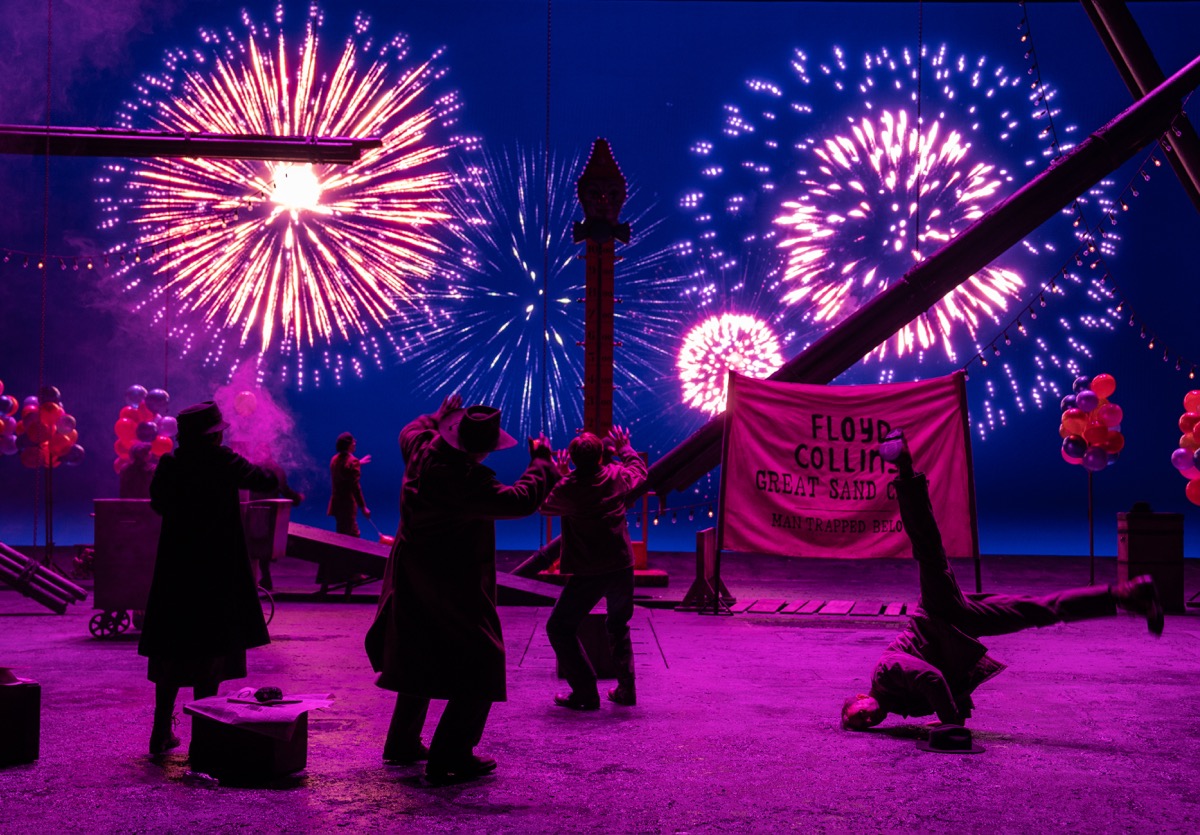
This is the story that has inspired Floyd Collins, the 1994 musical with music by Adam Guettel, book by Tina Landau, and lyrics by Landau and Guettel, which is finally making its Broadway debut courtesy of the Vivian Beaumont Theatre at Lincoln Center. It is a gripping musical drama brought to dazzling life by Landau, searingly indicting how sensationalized news reports turn personal tragedy into entertainment for the masses.





It casts guilt as well at the self-satisfied attitude of outside “experts” coming in to save the day. It is reminiscent of the movies Ace in the Hole and Radio Days, both of which had plots involving people trapped below ground while a media carnival blossomed above ground.
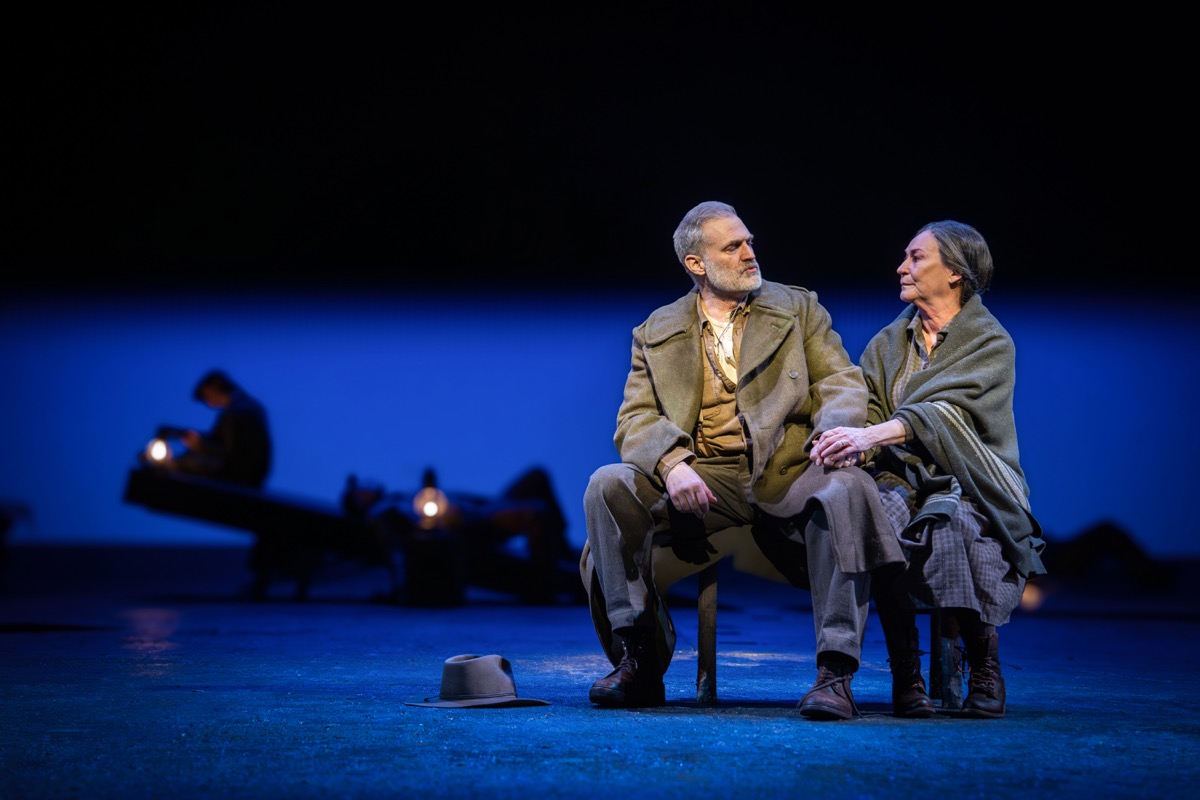
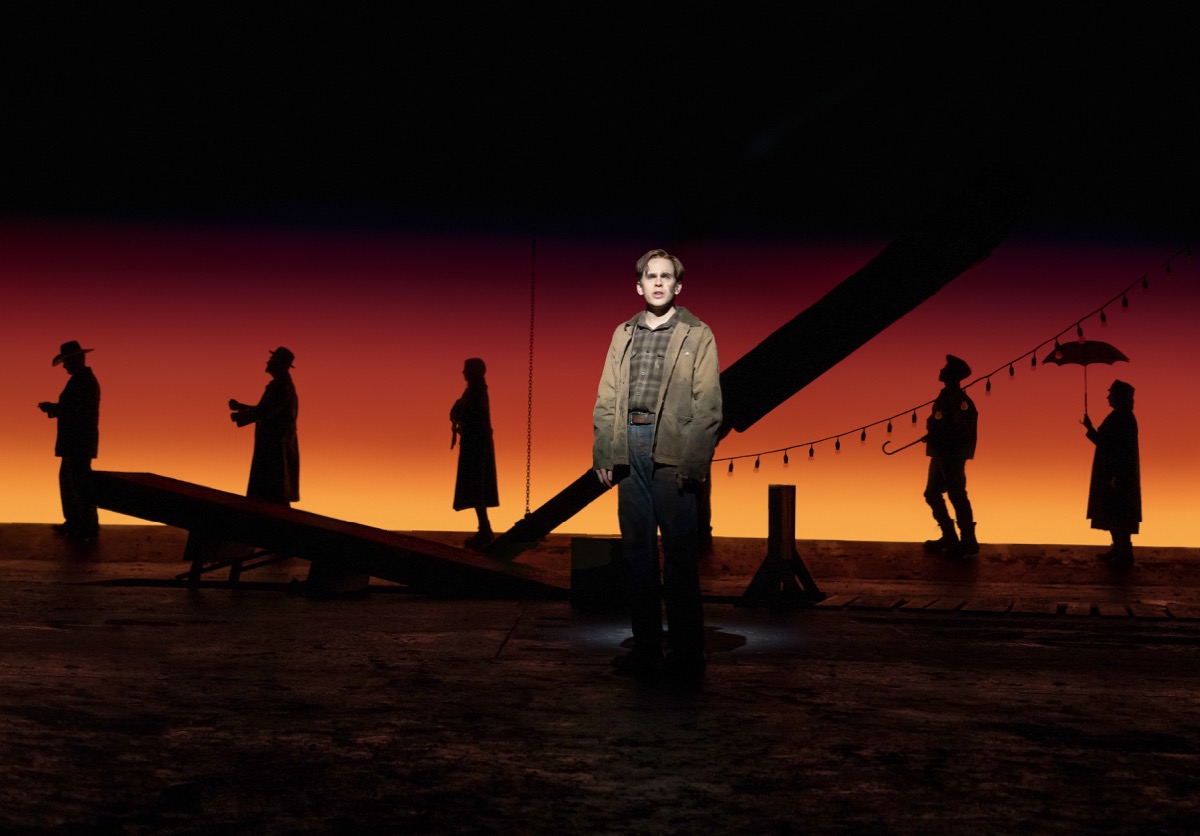
Jeremy Jordan is magnetic as Floyd, looking to find a cave that will lift his family’s fortunes, enamored with the world beneath his feet, joyously yodeling as he makes his way deeper into his discovery. When he fails to come home that evening, it doesn’t worry his family — father Lee (Marc Kudisch), stepmother Miss Jane (a searingly brilliant Jessica Molaskey), sister Nellie (singer-songwriter Lizzy McAlpine, making a strong Broadway debut), and brother Homer (Jason Gotay) — as Floyd has spent nights in the caves before. But when local farmer Jewell Estes (Cole Vaughan) finds Floyd’s jacket outside the cave entrance, it triggers attempts to follow Floyd’s path underground and bring him out.
William “Skeets” Miller (Taylor Trensch), a Louisville reporter with a slight build, manages to get to Floyd, but is unable to free his legs to get him out. Industrialist and self-proclaimed excavation expert H.T. Carmichael (Sean Allan Krill) rides in, planning to dig a tunnel into the cave to get Floyd out. Carmichael is opposed by Homer, who knows the saturated sandy cavern will never support the weight of such a tunnel. The two battle for superiority while Lee, Miss Jane, and Nellie try to keep their spirits up.
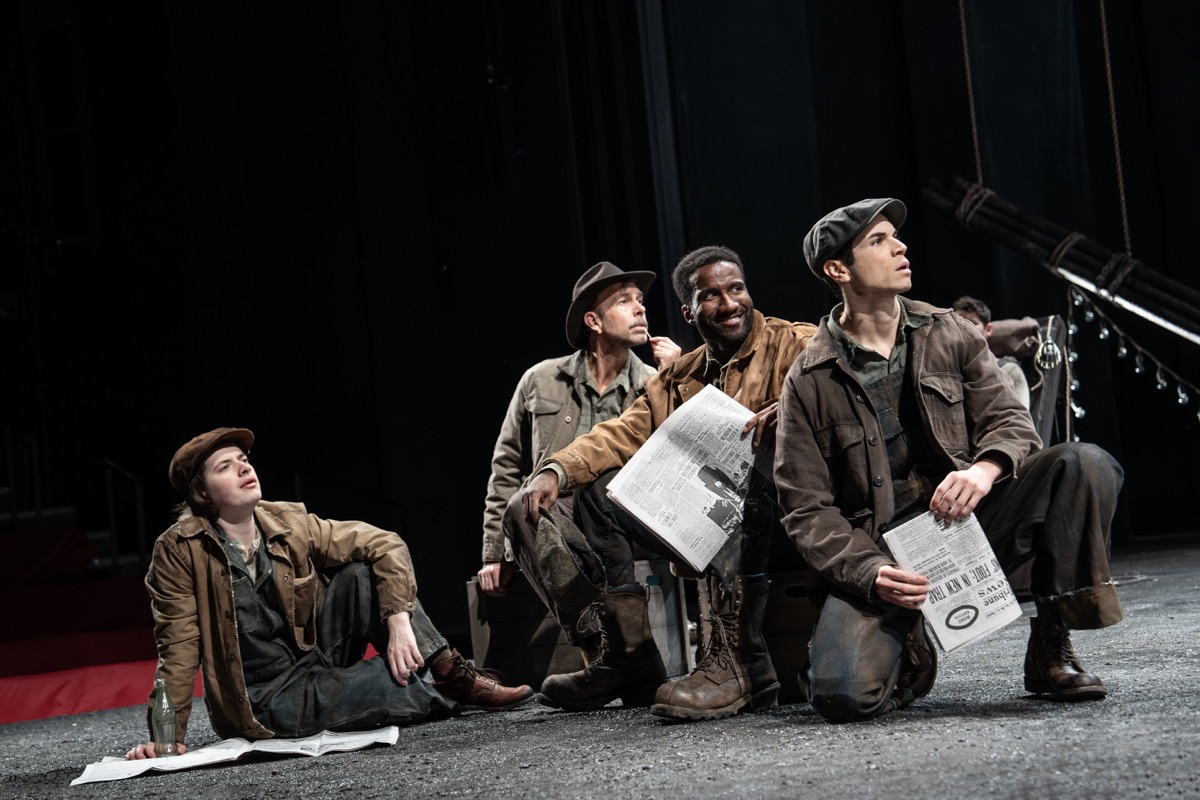
Miller’s stories about Floyd have attracted national attention, and soon a flood of reporters and carnies have set up shop, ruining the farmland of Bee Doyle (Wade McCollum) under which the cavern lies. Lee tries to exploit the situation to raise some money for his family, but fails. A movie producer lures Homer with the vision of a film career, which appeals to Homer’s long-buried desire to travel the world. Nellie, fearing she’ll never see her brother alive again, feels the returning pull of madness. After multiple rescue attempts fail, the sideshow gives up, packs up, and leaves. Only Carmichael and Miller still try to free Floyd on their own.







Guettel and Landau’s score is heartbreakingly beautiful. The joyous “The Call,” revealing Floyd’s dreams of success, is in stark contrast to his final songs. In “The Dream,” he sees himself reunited with his family once more, only to see them slip away. “How Glory Goes” sees a humbled, weakened Floyd hoping only that he gets to meet his mother again. Lee and Miss Jane bolster each other in their duet, “Heart and Hand,” just as Miss Jane and Nellie buoy their spirits with singing about how “Lucky” Floyd is. “Is That Remarkable” is a cynical second-act opener for the flock of reporters at the cave site, while “Through the Mountain” is Lizzie’s fantasy about rescuing her brother.
The stark set by the design collective dots manages to keep the two main settings — the Doyle farm and Floyd’s resting place in the cavern — separate while allowing the audience to see what’s going on in both locations simultaneously. In this, dots is helped by Scott Zielinski’s subtle lighting, the sound design of Dan Moses Schreier, and the projections created by Ruey Horng Sun. Anna Yavich’s costumes create a sense of economic and social status among the many characters. Of special note are her cream-white costumes for the above-ground Collins family for the song “The Dream,” achingly glorious dream outfits that look like they could have been spun out of Floyd’s imagination.













Floyd Collins is a fine musical drama, one that has taken too long to reach a Broadway stage. Lincoln Center Theatre is to be praised for presenting a work that does not fit the mold of the usual Broadway musical, yet doesn’t flinch from presenting a slice of unpleasant Americana with the honesty and seriousness it deserves. I strongly urge you to make the trip uptown to Lincoln Center’s Vivian Beaumont Theatre to learn about the legend of Floyd Collins!
Floyd Collins is presented by Lincoln Center Theatre at the Vivian Beaumont Theatre in New York through June 22, 2025. For more information or to purchase tickets, go to lct.org.