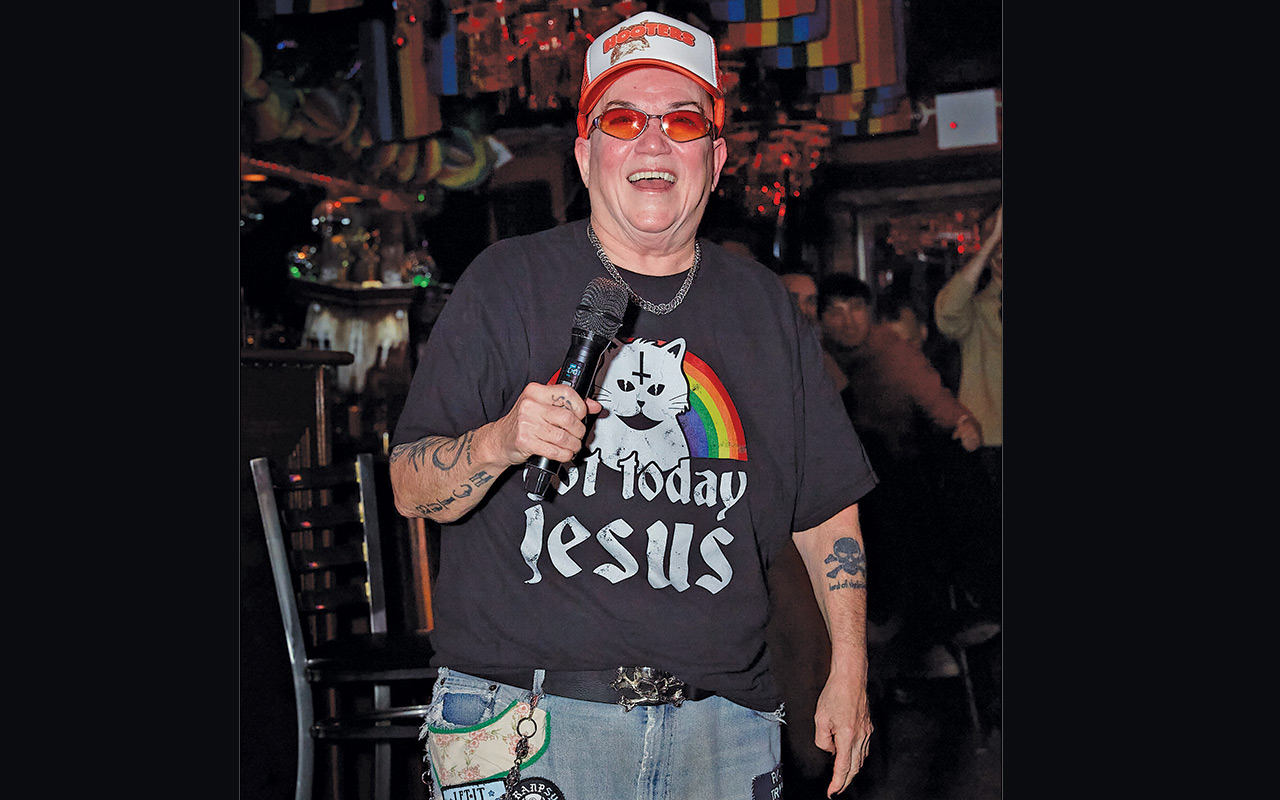
Editor’s note: This is an extended interview with lesbian actor, comedian and singer Lea DeLaria by contributing writer Rudy Palma. The original interview, which was shortened because of space constraints, was published in our June/July 2026 print issue. Please take a look at the extended version and enjoy. We learned after the interview that Lea’s “Stonewallin'” engagement is on pause.
To the casual observer, Lea DeLaria may feel like a recent arrival to the cultural center of gravity. Her sharp-edged, scene-stealing turn as Big Boo on Orange Is the New Black catapulted her into a new tier of visibility. But that perception says more about the lag of mainstream recognition than it does about the complexion of a remarkable career.





Long before streaming algorithms caught up, she had already carved out a singular place in entertainment: a bulldozing comic voice, a jazz singer with real chops, a proudly visible lesbian at a time when that visibility came with real professional risk. She was the first openly gay stand-up comedian to appear on late-night television — a fact that still lands with a kind of satisfying, table-flipping thud.
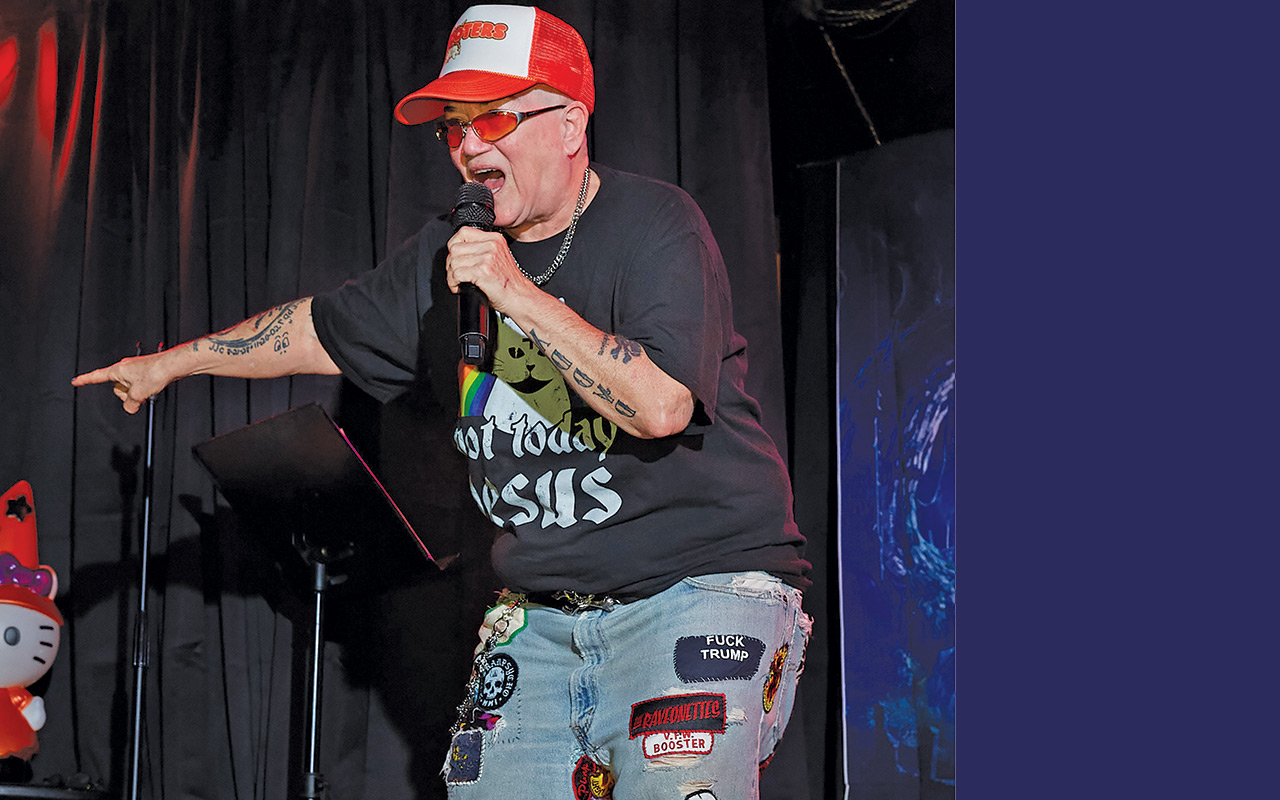
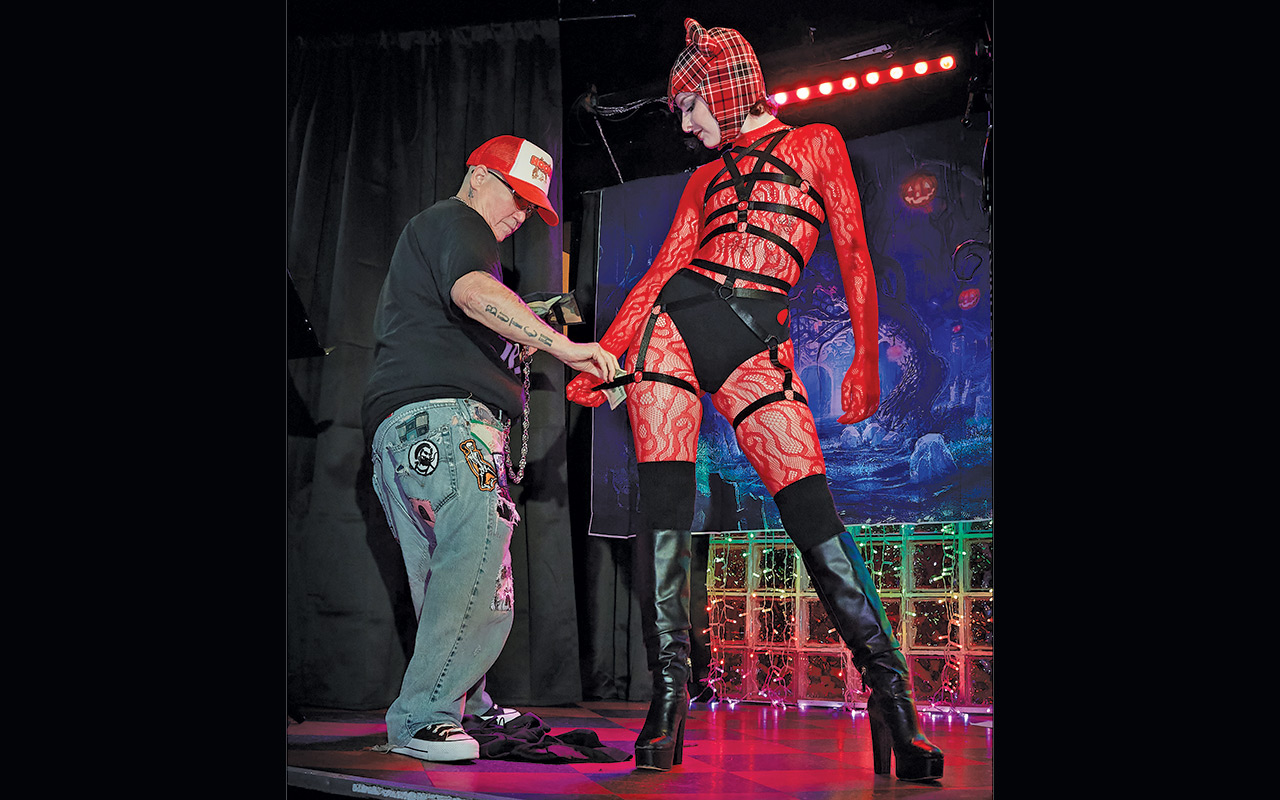
These days, DeLaria isn’t coasting on legacy — she’s curating it in real time. One of her most delightfully unruly current ventures is Stonewallin’, a monthly cabaret-style blowout held every second Sunday afternoon at the historic Stonewall Inn in Greenwich Village.
The show has all the hallmarks of a proper downtown gathering: DeLaria presiding as emcee with her signature, no-filter comic snap, songs delivered in that rich, husky, jazz-inflected voice, and a rotating lineup of special guests who seem to understand that restraint is neither required nor particularly welcome. It’s part concert, part hang, part communal exhale — an excuse for day drinking that makes brunch look like a temperance meeting.
There’s something fitting about DeLaria anchoring a show in a place so steeped in queer history while refusing to let that history calcify into reverence alone. Stonewallin’ feels vital, a little messy, and indelibly present — much like the hostess herself.







She caught up with me to talk about the show, what keeps her coming back to the Stonewall stage each month, and what Pride means to her now after decades spent not just participating in queer culture but actively shaping it.
Your Stonewall residency feels like part cabaret, part stand-up, part political sermon. You make it look easy to put all of that together — with a little tequila mixed in. Has the show evolved since you started in the fall, or are you just winging it and enjoying the ride?













Lea DeLaria: Well, it’s a lot more fun when I have more guests. Instead of one or two, I’m bringing in more people now, which gives it a real variety feel. I’m able to tap into different parts of my world and the people I know through those.
[At April’s show] we had Janis Siegel from the Manhattan Transfer — 10 Grammys, a legend. So you get to see someone like that up close for a $25 ticket. You can actually touch her, essentially. That’s part of what I want the show to offer.
We also started doing a tea dance after the show, and now I’m adding pizza — so it’s a tea dance and a pizza party. And we’re doing something called “Celebrity Pizza Delivery” where each month a different celebrity brings the pizza and also does something else — maybe a duet with me, a conversation, or a solo performance. [April’s] was Cady Huffman — she’s a Tony winner and was on the final season of Palm Royale. She even brought her little dog, which was hilarious.
So it’s evolving into something more collaborative, more chaotic, in a good way.
We also realized 4 p.m. was the wrong time. Three o’clock works much better.
What made you change the time?
LD: It didn’t take a genius. It’s a gay brunch day — brunch is practically a gay holiday. You need time for brunch and then the show. I was giving people too much time to do brunch, if you know what I mean. So we moved it earlier and roll right into tea dance after. Now we’ve tried it, and it’s worked perfectly.
I think my favorite part of your shows is when you sing with your band. You did an impromptu performance the other month that was just sublime.
LD: Thank you! You’re thinking of “Blackbird”. I just said, “Hey, Marco, can you play this?” And he started playing and the band picked it up immediately. They knew it was “Blackbird” and went right into it.
Spontaneity seems to help you find your groove.
LD: Absolutely. I don’t want it to be just one generation in the room. Younger people need to learn where we came from. There’s a lot of improvisational comedy, too. We had Alaina Ackerman play one of the witches from The Scottish Play — she was incredible.
That’s what makes it special. It’s unique every time.
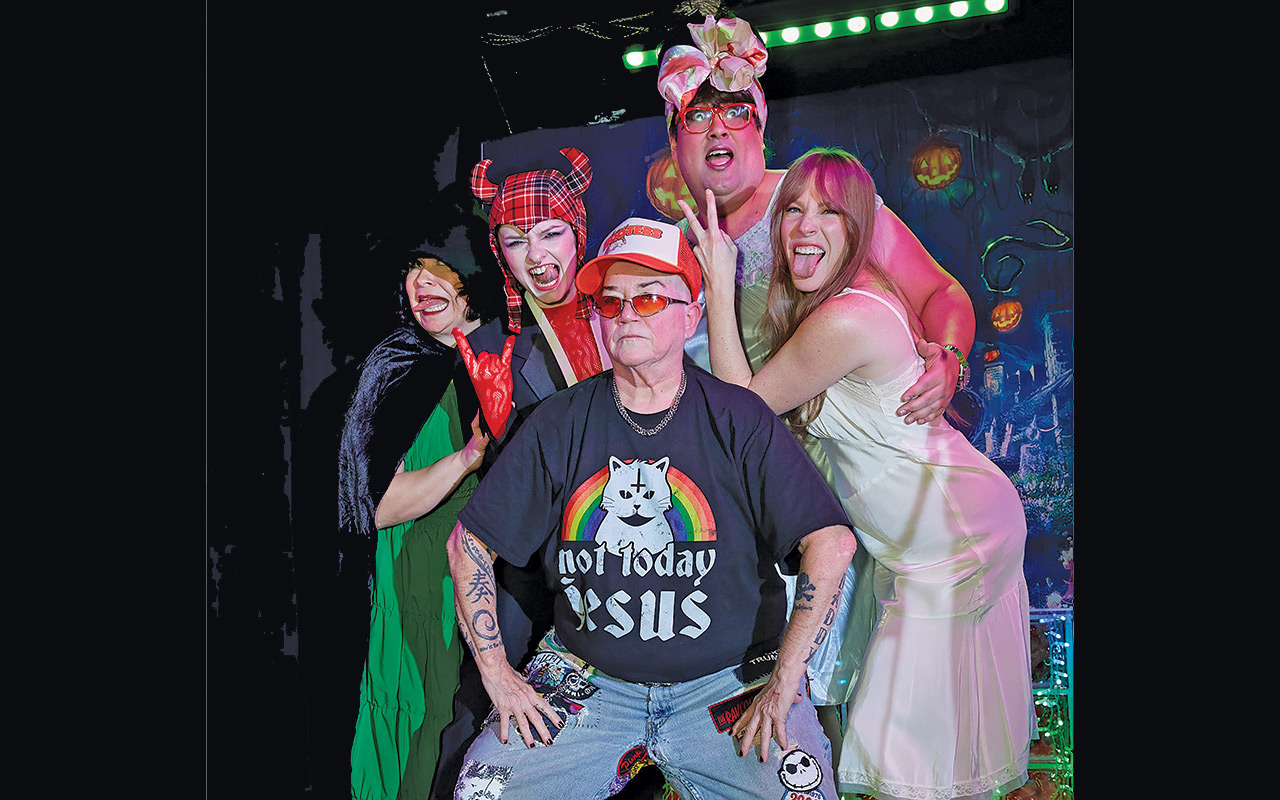
please God, don’t get old before your time! Dare to be ridiculous and have fun!
It seems like it’s a really important thing to you to mix generations a little bit in a fun, kind of festive way.
LD: Yeah. It’s like, listen, how are the 20-somethings going to learn the history of who we are and what we come from? I mean, you want to be with them. You want them to know the history, because that generation, it’s [almost like they think] they arrived fully formed from the head of Zeus and often don’t realize how much my generation and the generation before me and the generations before them have done to create the freedoms they have now — the freedom to go to Stonewall, to go to the Cubby Hole, and blah blah blah.
They’re never going to know that shit otherwise. So you gotta be in there with them, talking to them.
And also, please God, don’t get old before your time! Dare to be ridiculous and have fun!
Plus, it’s the Stonewall Inn — just being there carries immense historical weight in terms of LGBT history. Does performing in that space shape what you choose to say, sing or emphasize?
LD: Of course.
It is your job to get up on stage and say what you think and challenge people’s perceptions of what is right and wrong or what is correct and incorrect.
I have noticed a kind of softening of comedy — a kind of political correctness in some comedians — and you certainly don’t go for that. You go for the jugular, and I love it.
LD: Well, I just call them pussies. You’re a fucking pussy. It’s your job! It is your job to get up on stage and say what you think and challenge people’s perceptions of what is right and wrong or what is correct and incorrect. You know what I mean? It’s your fucking job. And I have been doing that particular job since 1982.
You know something about it.
LD: That’s right! Proud lesbian since 1982. I want to say sometimes, you have no idea how bad it can be. So I’m not about to shut up now!
And I’m happy to have a conversation with anybody. But if you just start spewing that I’m homophobic or transphobic or racist or whatever — if you just start spewing that at me, which members of some younger generations tend to do — I’m like, ‘Guys, again, you owe my generation and those before me so much gratitude, and we’re all on the same side! If I did something that offends you, don’t come raging at me. I’m on your side!’ You know, I’m not Orangina — which is what I call the asshole, by the way. I’m not Orangina. You know I’m coming from a good place. If you disagree with something I’ve said, we can have a civil conversation. Don’t just cancel me. Do you want to have a good time or not?
Let’s face it, you’re performing in a space that’s seen everything from revolution to chaos. What’s the most unexpectedly funny moment from the residency so far?
LD: There was a drunk tourist from the Midwest who came upstairs and said, “Honey, twenty-five dollars? Who is Lea DeLaria anyway?” [Laughs.] Moments like that happen all the time. At the very first show, I was introduced and walked out and it just … didn’t quite land. But that’s part of it. The chaos is part of the fun — audience participation, drunk musical chairs, raffles.
We actually raised over $200 last month for Lesbian [Herstory] Archives. That money goes straight back into the community.
That’s wonderful.
LD: It matters. Small donations matter. And Stonewall matters. I’ve been there for the 25th and now 50th anniversaries. When Kurt [Kelly] got the new sound system, I said, “I’m doing shows.” It was a no-brainer. It’s two great tastes that taste great together.
There’s also a sense that queer people are under a lot of pressure right now.
LD: We are. Pride flags being removed, cultural backlash — it’s real. That’s why bringing people together matters. Different generations, dogs, queer people from everywhere, our allies — laughing, dancing, eating pizza, being together. That’s political in itself right now.
One thing that I really thought was lovely was how you saluted Diane Keaton and that lovely memory you shared of working on The First Wives Club. I hate when people overuse the word “iconic,” but that movie is iconic. The scene you were in is iconic. What stands out when you think about her?
LD: She was a lovely person.
I remember we were walking through an airport and there were photographers waiting. The minute she saw them, I could tell she was uncomfortable. She could be very sensitive and very fragile sometimes. So I basically took the hit. I let them follow me around and ask me questions while she slipped away and got to her car. I watched her make her escape.
She was genuinely kind, and that’s the Diane I remember.
“Provincetown has priced itself out of the market. It’s become so expensive that only very wealthy people can afford to be there.”
You’ve had a decades-long relationship with Provincetown. How do you see the town evolving these days, both for better and for worse?
LD: I’ve been saying this for years, so it’s not going to surprise anybody — Provincetown has priced itself out of the market. It’s become so expensive that only very wealthy people can afford to be there. In the old days, people would pile 10 deep into a room because they wanted to be there for the community and the culture. They made it work because Provincetown mattered. Now you can spend less money going to Paris for a week than staying in Provincetown.
The town has also struggled to figure out how to attract younger queer people. I was at a Provincetown Business Guild meeting where people were saying, “We need more gay people. Let’s have more drag shows.” And I thought, “Are you kidding?” I love drag, but drag is already everywhere. That’s what brings the bachelorette parties.
If you want younger queer people, you have to think outside the box. The theme weeks were a great idea, but they’ve barely changed in decades. The same people keep coming back, and eventually people age out. If younger generations can’t afford to come and don’t see themselves reflected there, they won’t develop that connection to Provincetown.
That said, there’s still something magical about the place. Anybody who’s ever seen a sunset in Provincetown understands why artists keep returning. The light there is unlike anywhere else. That’s why painters, writers, musicians and performers continue to be drawn there. That’s the spirit you want to preserve.
And you’ll be back in Provincetown to perform this summer! What can audiences expect from your show?
LD: This year’s show is called The Best of Lea DeLaria. It’s a concert format, but I don’t really do concerts like other singers do concerts.
It’s built around the songs that have gotten the most attention and the most love from my six albums. I tell stories about where those songs came from, what was happening in my life, what shows I was doing, what inspired them. Most singers call that patter, but I’m a stand-up comic, so my patter tends to be funnier than most. It’s a very musical show, but it’s also a storytelling show. It’s a celebration of the work I’ve done over the years.
That sounds great! And you’re also developing a new comedy special.
LD: I am. It’s called DykeON. It’s really a look at the history of the queer movement in the latter part of the 20th century and the first part of the 21st century through my eyes, because I was there for all of it.
I’ve got stories, videos, songs — everything. But the goal is to make it funny. I want people to learn the history while they’re laughing.
Part of what drives me is making sure younger generations know where we’ve been and what we’ve gone through. If we lose that history, we lose something important.
Speaking of preserving history, you’ve become a mentor figure to a lot of younger queer artists. I was thinking about Qya Cristal, who has become one of Provincetown’s most exciting performers. Just jaw-dropping talent. You helped give her an early opportunity when you owned The Club.
D:: Oh, yeah. I remember hearing her and immediately recognizing what she had. That’s talent — every letter capitalized. T-A-L-E-N-T.
Moments like that are part of what makes Provincetown special. Somebody shows up, gets an opportunity, and suddenly there’s this incredible artist in front of you. That’s the kind of artistic ecosystem we have to protect. The queer community has always passed culture from one generation to the next. That’s how traditions survive. It’s how art survives.
You’ve recorded everything from jazz standards to a full-on David Bowie covers LP. Is there new music on the horizon?
LD: Absolutely. I’m working on a new studio album. The concept is taking songs that stretch from Richard Rodgers all the way to Dua Lipa and interpreting them through the language of jazz.
The important thing is that we honor the songs. We honor the music and the lyrics, but we still make them our own.
I take a lot of care with my records. I record in the same studio I’ve used for years because I want them to sound a certain way. Recording is only part of the process. Then there’s editing and mixing. Quality takes time.
But yes, new music is definitely coming.
We are upon Pride Month. When you look at queer visibility now compared to earlier in your career, what feels like progress — and what feels packaged and perhaps sold back to us?
LD: Well, it’s gone back to being more of a protest, which is good. I see more rage again, and that’s useful. Lip service is not. Rage is what gets things done. Look what’s happening politically. They started sending trans women to men’s prisons. It’s mind-blowing! And the fact that people don’t even know — it’s like, why aren’t we in the streets?
There’s so much negativity coming at people that it flattens them.
LD: That’s strategic. It’s how authoritarian playbooks work — Putin, Hitler, Mussolini, Pol Pot, Kim Jong Un. We should know better. The more people accept it, the more normalized it becomes, and then what happens to us?
Whatever you do — amp it up. Don’t be silent. Talk. Explain. Scream if you have to every day!
What does the community most urgently need to do right now?
LD: Whatever you do — amp it up. Don’t be silent. Talk. Explain. Scream if you have to every day! They’re not stopping, so we can’t stop. Queer people are being targeted.
So are Jews.
LD: Yes. We have to protect each other. Don’t assume someone else is handling it. We all have to contribute.
Pride Month is complicated now — commercialized, but still important.
LD: Exactly. Very important. We have to show up and be impossible to ignore.