


Just as Pride Month remains overwhelmingly white in its representation, Black History Month continues to be deeply homophobic in its omissions. It is a time to acknowledge and celebrate the achievements and courageous acts of people of African descent in the United States and around the world. Yet it has failed to fully acknowledge or celebrate the contributions of black LGBTQ people.
Our continued erasure from the annals of black history suggests — incorrectly — that the only shapers and movers of black life, past and present, have been heterosexual.




Today, contemporary scholarship that examines the intersectionality of people’s lives has begun to challenge long-accepted historical narratives once treated as gospel. Records that were canonized as definitive truths are now being revisited and corrected for their glaring exclusions. These course corrections have given us a more expansive, honest, and complete understanding of black history.
A powerful example is the deliberate and long-standing omission of Bayard Rustin from dominant narratives of the 1960s Civil Rights Movement. Once largely confined to black queer subcultures and relegated to a footnote in heterosexual retellings of history, Rustin has now been rightfully restored as a central figure. We can no longer accurately discuss the historic 1963 March on Washington without naming Rustin. Inarguably one of the tallest trees in our collective forest — straight and queer alike — Rustin was the chief strategist and organizer of the march that propelled the Rev. Dr. Martin Luther King Jr. onto the world stage.
As the canon of black history expands to include notable LGBTQ icons, New Jersey is not without its own.
New Jersey LGBTQ icons







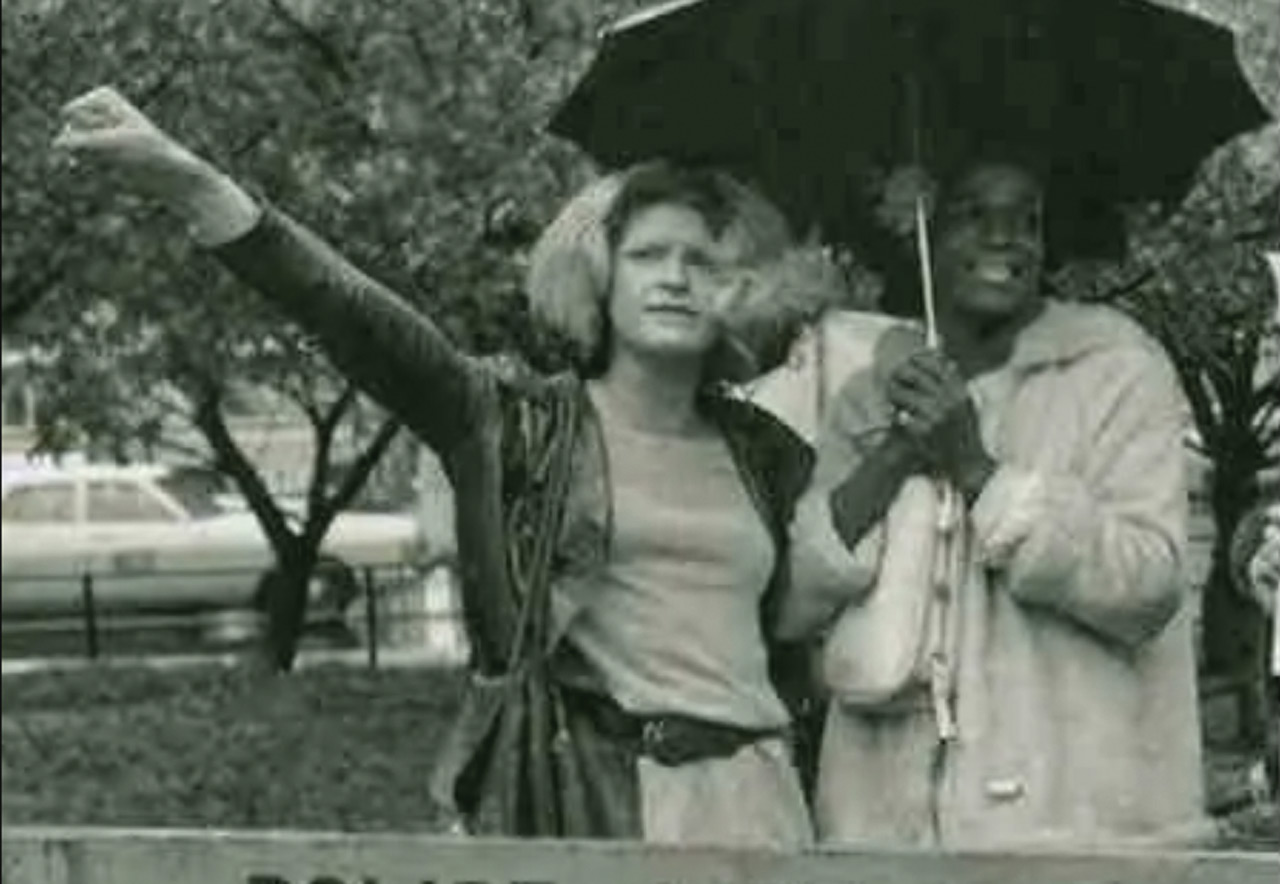
The second wave of the modern LGBTQ movement rests on the shoulders of Marsha P. Johnson (1945-1992) and Sylvia Rivera (1951-2002), widely honored as the trans mothers of the movement. A black trans freedom fighter, Johnson was born in Elizabeth, New Jersey. She is sometimes credited with throwing a shot glass against a mirror during the Stonewall uprising — an act remembered as “the shot glass heard around the world.” Rivera, a Latina from NYC, some say, threw the second.
Johnson’s middle initial, “P,” stood for “Pay It No Mind,” her defiant response to those who questioned her gender identity. She was a founding member of the Gay Liberation Front and co-founded Street Transvestite Action Revolutionaries, an organization dedicated to supporting unhoused trans youth. “They call me a legend in my own time,” Johnson once said, “because there were so many queens gone that I’m one of the few queens left from the ’70s and the ’80s.”












Monuments honoring Marsha P. Johnson now stand in her name, including one in her hometown of Elizabeth along the Freedom Trail. Her legacy deserves recognition not only during Black History Month, but every day.
The Harlem Renaissance was as queer as it was black. More than a black cultural moment, it also functioned as one of the earliest visible black LGBTQ movements of the 1920s. Rent parties, speakeasies, sex circuses, and buffet flats created spaces of sexual freedom and self-expression. The renowned Savoy Ballroom and Rockland Palace hosted lavish drag balls, awarding prizes for the most dazzling costumes. Harlem Renaissance writer Langston Hughes depicted these balls as “spectacles of color.” Historian George Chauncey, author of Gay New York, noted that during this era “perhaps nowhere were more men willing to venture out in public in drag than in Harlem.”
Many LGBTQ figures and nightclub-goers of the Harlem Renaissance lived in Harlem, the mecca of black America. Others, however, resided across the George Washington Bridge in New Jersey, seeking refuge from white audiences’ voyeuristic gaze and Harlem’s rising rents.
A gifted pianist and blues singer, Gladys Bentley (1907-1960) was among the most notorious and successful African American lesbians of the Harlem Renaissance. Cultivating a devoted LGBTQ following into the 1950s, Bentley became famous for performing in her signature white tuxedo and top hat. Her unapologetic gender-bending, however, came at a steep cost.
In 1931, Bentley briefly lived in New Jersey, where she publicly married her white girlfriend in a civil ceremony in Atlantic City — at a time when anti-miscegenation laws were the law of the land and same-sex marriage would not be federally recognized until 2015. Bentley executed a radical coup d’état against both racial and sexual prohibitions surrounding marriage.
The backlash was swift. Under the pressures of McCarthyism, Bentley was forced to conform. The black Church ceased its denunciations, and the black press celebrated her “respectability.” Purportedly to have taken female hormones to cure her lesbianism, Bentley published an article in Ebony magazine declaring, “I am a woman again!” Shortly after, she married a man 16 years her junior.
Before James Baldwin, there was Richard Bruce Nugent (1906-1987). Known simply as Bruce, Nugent was a writer and painter who stood in stark defiance of black bourgeois respectability politics and the ideology of racial uplift. Unapologetically out and proudly gay, Nugent’s brashness challenged norms in both mainstream American society and within black communities.
A vital voice of the Harlem Renaissance, Nugent produced some of the earliest American literature to depict homosexuality, bisexuality, and interracial desire in affirming ways. His 1926 short story, “Smoke, Lilies, and Jade,” predates Baldwin’s 1956 “Giovanni’s Room” by three decades. As a godfather of gay male literature, Nugent’s life and work continue to influence black LGBTQ writers today, helping generations of black queer people affirm their identities.
Born into a socially prominent family in Washington, D.C., Nugent became the last living artist of the Harlem Renaissance. He spent his final years in Hoboken, where he became a beloved local figure — sparking renewed efforts to honor his legacy both there and in Harlem.


Nicknamed “The Voice,” Whitney Houston (1963-2012) is best known for iconic hits such as “Greatest Love of All” and “How Will I Know”. A child of the black Church, Houston became one of the most awarded and bestselling R&B and soul artists of her era. Her multi-octave range, smooth velvety richness, and signature powerful belting made her dramatic voice rare and distinctive — a unique mezzo-soprano. As Rolling Stone noted, “Her voice was a benchmark for vocal excellence that influenced generations of singers across genres.”
For years, rumors dogged superstar Whitney Houston as being a closeted lesbian. Newark’s native daughter was posthumously outed in the moving memoir A Song for You: My Life with Whitney Houston by her BFF Robyn Crawford. The memoir depicts their deep friendship and love story. Houston died from an accidental drowning caused by a drug overdose.
Yet homophobia can be as deadly for black people as racism, even though we rarely name it as such. While family, friends, and fans often blame Houston’s tragic downfall solely on drugs, her husband — Boston’s bad boy Bobby Brown — offered a different perspective. In his memoir Every Little Step, Brown wrote that Houston’s lesbianism was “an open secret.” He later told Us Weekly, “I really feel that if Robyn was accepted into Whitney’s life, Whitney would still be alive today.”
Perhaps the freest expression of Houston’s sexuality — untainted by substance abuse — came in 1999 at the 13th Annual New York City Lesbian and Gay Pride Dance. That year, Houston made a surprise appearance, flying in to perform her then-recent hits “It’s Not Right But It’s Okay” and “Heartbreak Hotel”.
Our oral histories
New Jersey has long been home to a vibrant black LGBTQ community. The list of past and present shapers and movers in the state is inexhaustible. This history continues to grow and expand, and much of what is not preserved in traditional records, documents, and books lives on through a rich tradition of oral history.
“The making of history is not a project relegated only to those in the academy — those who observe our lives and attend to our voices from a distance. History is made through the living and the telling of our lives. It is made when we lift up our individual and collective lives,” wrote Darnell Moore, one of the founders of the Queer Newark Oral History Project, in 2011.
Black LGBTQ oral histories give voice, agency and affirmation to narratives that have long been marginalized or erased. These stories offer the black community a more expansive understanding of survival — both within the larger society and within our own communities.
If Dr. Carter G. Woodson, the Father of Black History, were alive today, he would be proud of the tenacity of the African American community. Our survival on American soil since 1619 — through 250 years of slavery, 90 years of Jim Crow, and 60 years of so-called “separate but equal” rule — speaks volumes. To fully capture the canon of the black experience, Woodson would have wanted our LGBTQ histories, both written and oral, included too.


