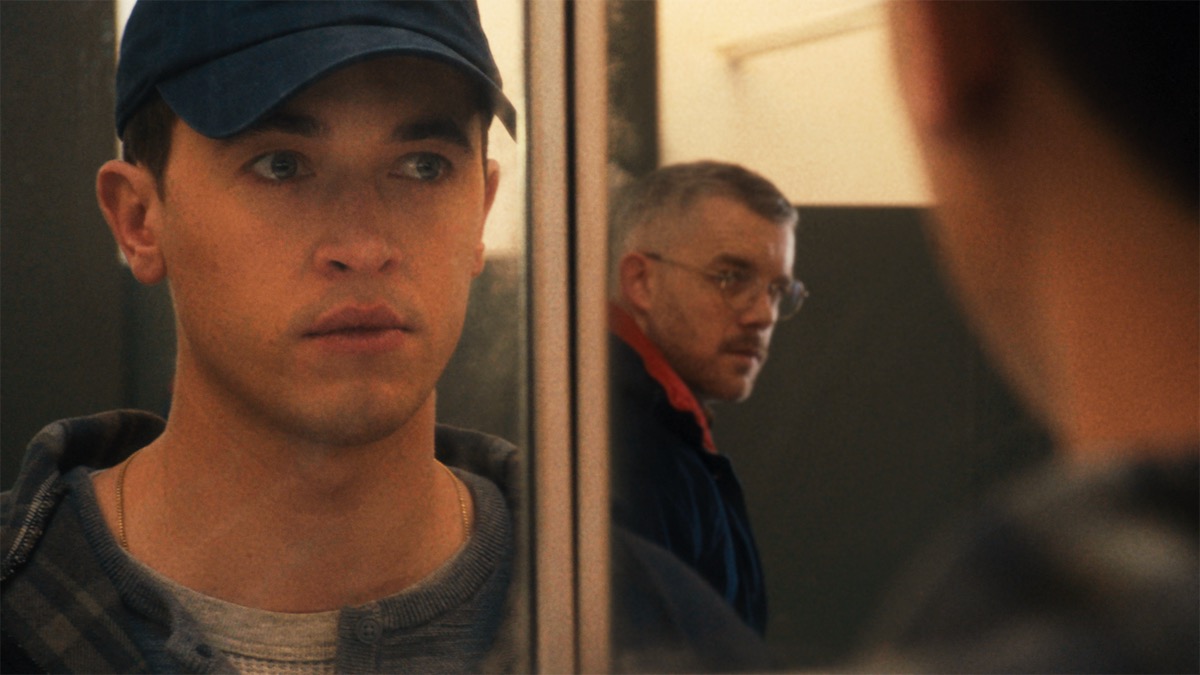
“A nod helps.”
Plainclothes, written and directed by Carmen Emmi, tells the story of a closeted police officer grappling with his sexuality and a new assignment to catch gay men cruising. The ’90s-set film speaks to timeless LGBTQ themes, such as learning to accept yourself and how institutions of power are more than capable of overtly targeting queer people.




The emotional film stars Tom Blyth (Ballad of Songbirds and Snakes) as Lucas, a closeted cop who dares to cross work with pleasure. This leads Lucas down a dangerous path, beginning to lust for the same men his police force is on the hunt for.
As Lucas and the police start their crackdown on mall bathrooms, Lucas comes face-to-face with a kind-eyed man (Russell Tovey) who inadvertently makes him question everything. The movie follows their hectic situationship, giving viewers a raw look at this unique anon-sex culture that still permeates the gay community today.
Cruising refers to the action of stopping by a certain spot, heard about online or through word of mouth, for a gay hookup. These tend to be quick come-and-go moments, devoid of romance, and can go really right, or very wrong. There are places one may never expect to be “cruisy” that actually are, from Home Depot bathrooms to the furthest parts of an obscure hiking trail. It’s meant to be quick and anonymous, satisfying a sexual itch that many closeted queer people can’t find at home.
The film follows anxiety-ridden Lucas (Blythe) taking on the fucked up assignment of joining guys in the bathroom to have fun, only to pull a badge and arrest them. Blythe portrays remorse and stress with great physicality, emphasized by his unraveling throughout the entire movie, which leads to a satisfying end.






A strong tone-setting opening intertwines a military pledge of upholding strict officer morality and Blythe’s character touching another man’s body. There is no shying away from the film’s exploration of forbidden lust, consequence, and ultimately hypocrisy, and how positions of power have systematically targeted and harmed queer people. Also, how some closeted cops were not only complicit in entrapments, but even unfairly found a way to have their cake and eat it too.
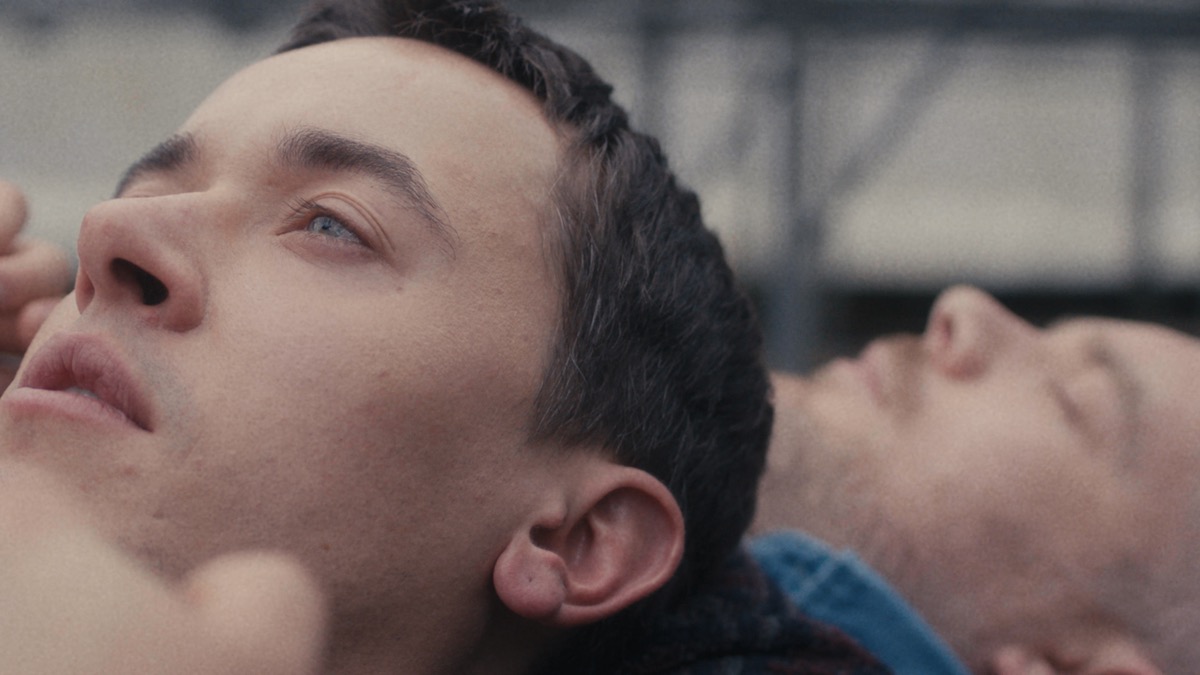

Lucas, on his first assignment, no less, has a real connection with the target, Andrew. After letting Andrew escape, the two begin to find ways to see each other. Stolen moments and secret sex in a greenhouse break Andrew’s “I don’t see the same guy twice” rule, sparking a conflict for Lucas’s new potential lover.












The movie excels at subverting expectations in its second and third acts. Instead of landing on a cliche “You have to choose, the man or the job” scenario, it actually unfolds in a brutally honest and messy way. Shoutout to actor Russell Tovey, who plays a very layered opposite to Blythe’s hopeless romantic. He represents many men of that era, terrified of losing everything but unable to quit the hookup lifestyle.
Watch for great attention to detail that breathes ’90s energy into the movie. From people-filled malls to those blue special cups that somehow faded into the ether, so much of the fashion-forward decade is on display.

Far-off and distant camera shots give the feeling of secret observation, putting the audience in a similar POV as Blythe’s cop, Lucas. Like the real cops on patrol for “homosexual activity,” we’re given an eerie vantage point for creative and artsy shots.
Another creative decision that roots the movie in realism is the use of VHS-style film to portray Lucas’s POV. As someone who has all their childhood memories compiled in a cupboard of jet-black tapes, I appreciated the usage of such archaic technology by today’s standards. It also benefits the narrative, feeling more true to the era.
The movie expresses an important lesson, which is that ’90s cruising was not just about getting off. It was (and still is) a way for folks to find community at a time when gays were fully ignored or relentlessly targeted by the government. We see Blythe’s character get enamored and obsessed with those brief encounters, while Andrew doesn’t see it as meaning more than quick fun. That dichotomy in partners and vibes is always topical, whether you’re cruising or dating monogamously. Being on the same page is essential, or else lives can truly get blown up.
The movie is based on a true crusade against gay people in the 1990s. In a debrief with a new officer, they explain the ways they trick gays into cruising with them. “Make eye contact, he’ll know,” and “a nod helps” are some of the tips shared between the covert police. These tactics were actually used by cops to ingratiate themselves with a cruiser, and once the guy was in a compromising situation, out came the cuffs. Since none of the men wanted to fight the indecent exposure charge in public court, they agreed to pay hefty fines. It also scared the SHIT out of them and kept folks away from cruising altogether, ultimately sending people further into the closet.
In addition to being a lens into a troubling time for queer people, this film serves as a unique character piece from a perspective we don’t often get to see. Blythe’s character is struggling with the recent death of his father and wants to make his widowed mother (played by the ever-fantastic and super solemn Maria Dizzia) proud. He recognizes his sexuality may stand in the way of that and his officer mission, and his mental health is greatly affected. Repression is the name of the game, until this assignment and Andrew come along.
The film explores how the job both liberates and constrains Lucas to hide his own identity. Moments of joy are undercut by pure hypocrisy, as other gays are turned in just for being on the wrong side of the badge. It adds another layer of complication: that Lucas himself may be incriminating members of a community he isn’t quite ready to be a part of.
It’s interesting to think about gay culture and a shared history, how moments in different parts of the community shape how the public and political leaders treat the community as a whole. The government was on a witch hunt against gays, and this film lays out the troubling ways they tried to trap gay men. They even purposefully picked hot and twink-y cops for the cruising assignments to really entice people to commit the “crime.”


Next time you go for a fast stroll in a specific tree-lined trail or eagerly *tap* *tap* *tap* under the stall door (methods of cruising still used today), remember the real roadblocks faced by gays of the past. Risk takers and horny gays alike would get arrested or majorly fined for expressing their desires in the few places around town that were supposedly free from wandering eyes.
“Hotspots for homosexual behavior” is what the cops called those cruising locations. Like we were casting evil spells together and working to rid the world of straights everywhere. Sure, cruising in theory can be gross to an outsider, and putting a stop to public masturbation is always right (never thought I’d have to affirm that), but the systemic effort to target gays just looking for a pocket of relief truly helped nobody. This film, however, may help everybody in understanding the hurt and hurdles faced by cruising gays of the ’90s and before.
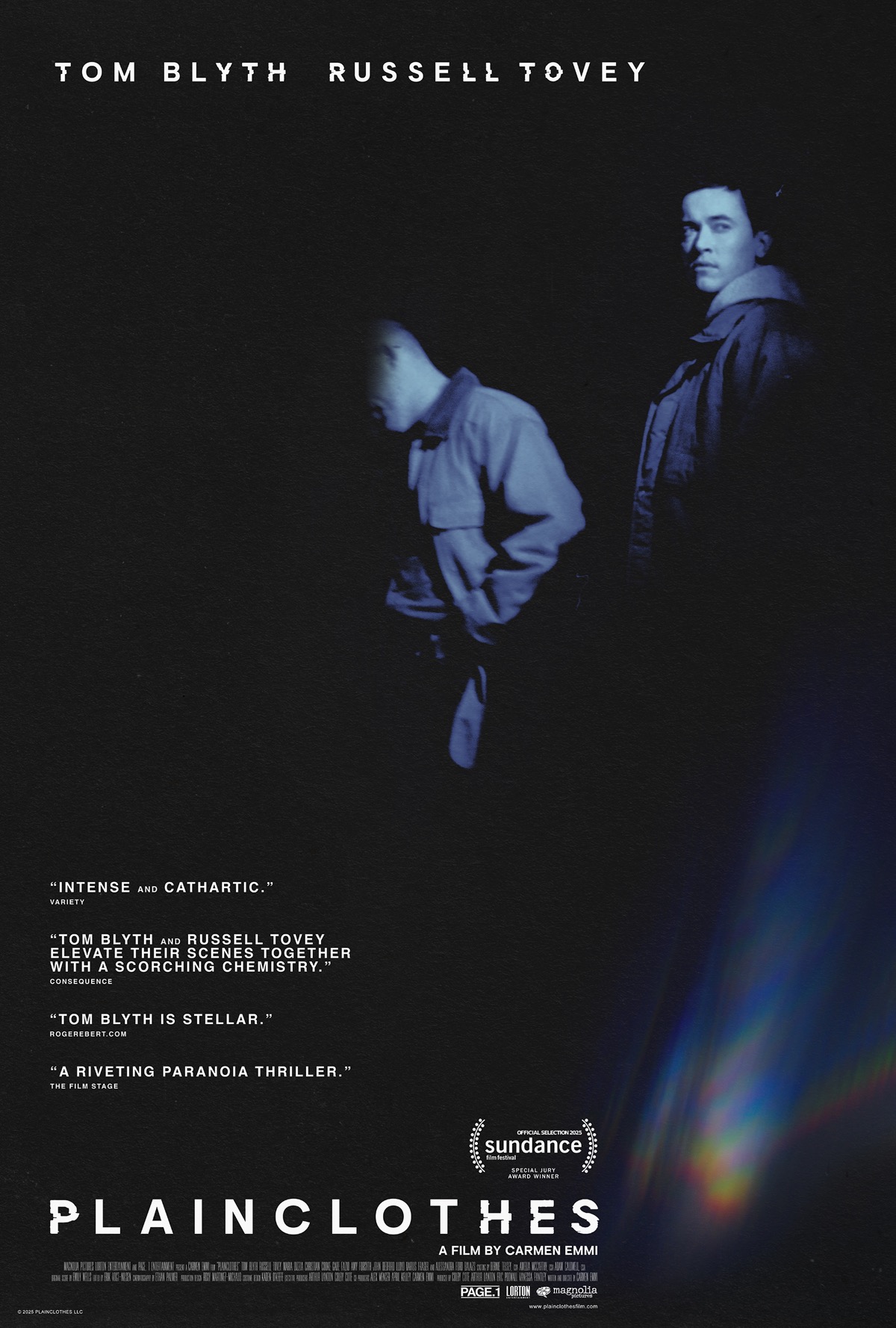
The film is from Magnolia Pictures and will be released in October 2025.