


Living through the AIDS crisis helped shape Jersey City Pride co-producer Eddie Baez, 68, into the man he is today. Baez grew up on the Lower East Side of New York City and said he lost 50 or more friends to the epidemic that ravaged the gay community in the 1980s.
“I had to grow up very quickly,” Baez said. “By the time I was 25 or 26, I was the older guy. There was a whole generation that passed away.” In his early 30s, Baez was still losing friends, and he decided to go back to school to become a social worker to help people with HIV/AIDS.
“There might have been a little survivor’s guilt in there,” he said. “Why did I survive?”





Baez eventually came to believe that he survived so he could help others and, in addition to his work as a therapist, his running Jersey City Pride along with his colleague, co-producer Joseph Cameron, is an extension of that.
“It’s more than just a festival; it’s about building community,” said Baez, who is not related to the singer and activist Joan Baez — unless he joked, that sharing her last name gets him a table at a restaurant.
And like the activist, Baez has worked for social justice for much of his life. He has lived in Jersey City for 17 years, and he and his husband, Erik, have built a strong community.
Baez has been working with Jersey City Pride for 11 years. This will be his fourth year as co-producer. The event this year will take place on Aug. 24.






When Baez and his husband moved to Jersey City, they set up a Facebook page called “Gayborhood Jersey City” initially to meet people. The page then morphed into a medium to help get the word out very quickly about marriage equality, letting LGBTQ residents know that they could get married in Jersey City.
“The mayor said he was going to marry people no matter what the governor was going to do,” he said. “It wasn’t national at the time.”













The page now has a host of information for LGBTQ residents throughout the Jersey City area. For information specific to Jersey City Pride, those interested can go to www.jerseycitypride.com.

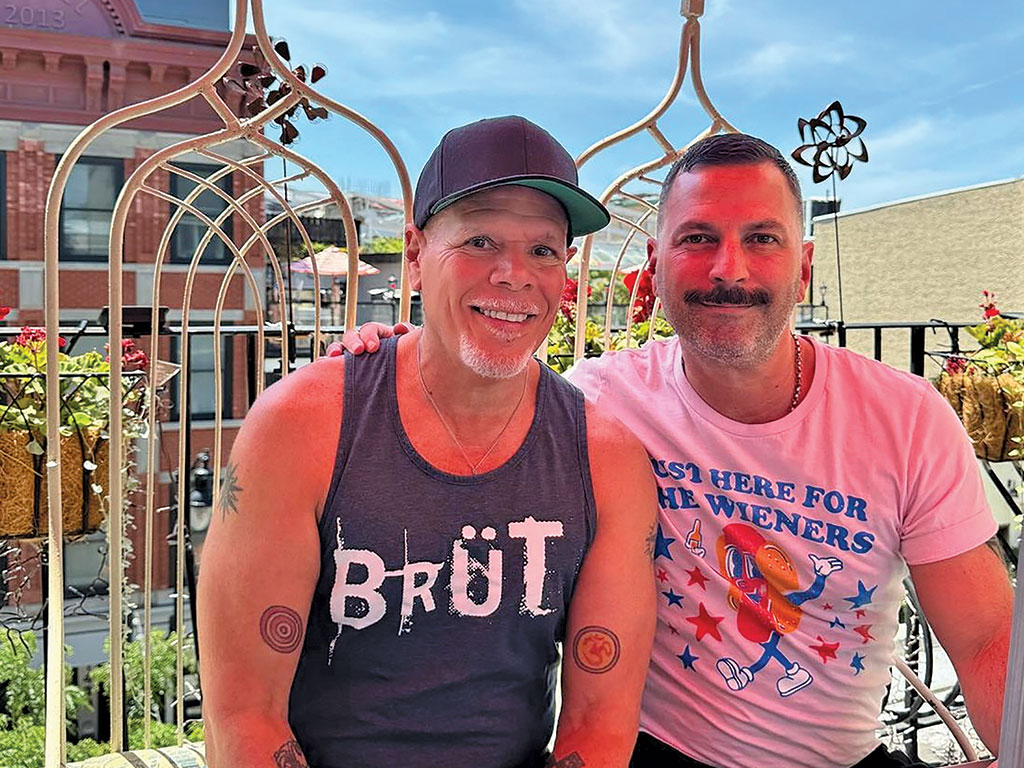
The event attracted an estimated 20,000 people last year. When planning the festival, Baez said, he and Cameron try to do things that include different groups, and they try to reach out to the different communities in Jersey City.
They have built a solid relationship with the business community and with City Hall. Last year, the event generated $1.5 million.
They posted an economic impact report on their website. Baez said that educating leaders of other cities and towns of the money these events can generate can encourage them to host their own event.
In Jersey City, leaders don’t charge Pride organizers to put on the event. The city does the printing, lights city hall, and does a Pride crosswalk, just to list a few of the ways the city supports the event.
“They’re very supportive that way,” Baez said. “It’s about stepping up and leading and trying to make things better for the community. We have a lot of support.”

The first Pride event in Jersey City occurred in 2001 at Exchange Place. Pride in Jersey City has also taken place on the steps of City Hall as a block party. Since 2015, the event has been held at the Newark Avenue Pedestrian Plaza.
“Overall, I think we’re pretty good,” Baez said. “We’re one of the biggest in New Jersey.” Baez said Jersey City Pride has a small-town feel even though it’s in the middle of downtown.
And “We’re very entertainment-based,” he said. This year, the event will have five different stages.
“You see everything from little children to older Jersey City residents who enjoy the day,” he said. “It’s a diverse group of people, which is beautiful when you see it.”
Pride will begin with a march from City Hall, 280 Grove St., which will step off at 1 p.m. Participants are asked to start gathering at noon.
The theme for this year’s event is “Vote with Pride.” Baez stressed the importance of voting and especially wants to encourage younger voters to show up at the polls. “Educate yourself on the issues,” he said, adding that voting is a big piece in moving the LGBTQ community forward.
He also hopes community members will get involved in organizations and volunteer.
In addition to Pride, Baez said there are other events put on throughout the year. Baez said they have strong ties to the arts community, the ally community, and city government, but that’s not to say everything is perfect. There is still work to be done.
For example, last year they tried to do a drag queen story hour, and someone called in a bomb threat. Baez said the police were great, but he got very emotional, saying he couldn’t believe someone would do that, especially with children involved. There also have been incidents in which pride flags were torn down and even set on fire, Baez said.
Baez’s childhood was generally a good one. He went to one of the best schools in the city and then to Yale.
But most of the events Baez is involved with putting on have been positive. On June 26, there was a marriage vow renewal ceremony at the bar and lounge Six26 at 128 Christopher Columbus Dr. Baez and his husband were among those who renewed their vows. The date coincided with Baez’s 68th birthday. On June 30, the day of the Pride march in New York City, there was a party at Six26 called “We Rise.”
The coming out experience for Baez was challenging even though he grew up in New York City.
He came from a Latino family, and he said his mother just didn’t understand. She wanted him, at first, to go to a doctor to see if he could change. “It was very difficult for her,” Baez said.
He said he got the support he needed and eventually his family understood. Baez’s childhood was generally a good one. He went to one of the best schools in the city and then to Yale. He became a flight attendant for Pan Am and did that for 11 years.
“I got to travel the world,” he said. “That shaped me. Going all over the world is something that really expanded my mind.”
“I think there’s still a lot of work that we have to do.”
Generally, circumstances for the LGBTQ community have gotten better, Baez said. “Things are better, definitely,” he said, noting however the stigma is still there.
“There was a point in time when you didn’t say anything; you didn’t talk about it.” And in the last few years with the political climate and social media, people feel free to express their hatred, he said. “Kids get bullied. I can’t look at the comments” on social media, he said.
But despite the hardships, Baez will continue to fight and work for the LGBTQ community with the relationships he and his husband and Cameron have built along the way. “I think there’s still a lot of work that we have to do,” Baez said.


