


What does it mean to be queer? How has that label and identity changed over time? Us gays have actually existed since ancient times. I remember asking my college human anthropology professor if gay people had been recorded in history. “Yes! Many men would often not procreate and help with hunting, or even just join the girls and gather fruits, nuts…” That conversation stuck with me, shaping my early ideas of queerness.
As I came out and assimilated into the community, I pictured being queer as a gay man as simply about assimilating into the all-too-comfortable world of the cis white girls I now found myself surrounded (and empowered) by — after all, what is a f** without his hags?’




But Luca Guadagnino’s Queer examines queerness with wide-ranging views on masculinity, vulnerability, and authenticity in love. The male bond, spoken through words and touch, is one of many definitions of queerness this movie presents. This fifth film from the acclaimed director showcases the volatile same-sex relationship and intimacy of two very different men. Queer, based on the 1985 novella of the same name, was nearly banned at its time for its explicit nature. Graphic depictions of drug addiction and gay intimacy have left the book on “banned” lists that have been sprouting up across the country — which is even more of a reason to support this bold adaptation. Like its book of the same name, this period romantic drama isn’t afraid to show the low moments of toxic connections and how far queer folk are willing to go to salvage the waning connections in one’s life.
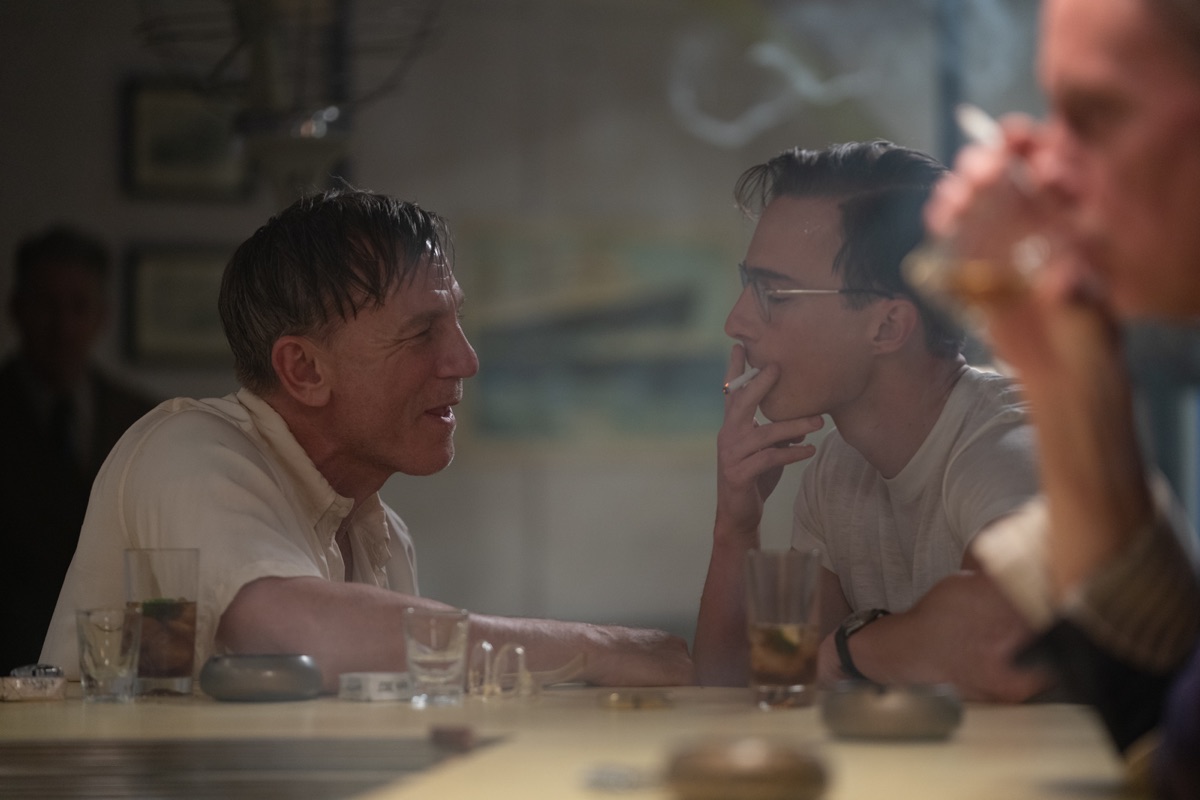
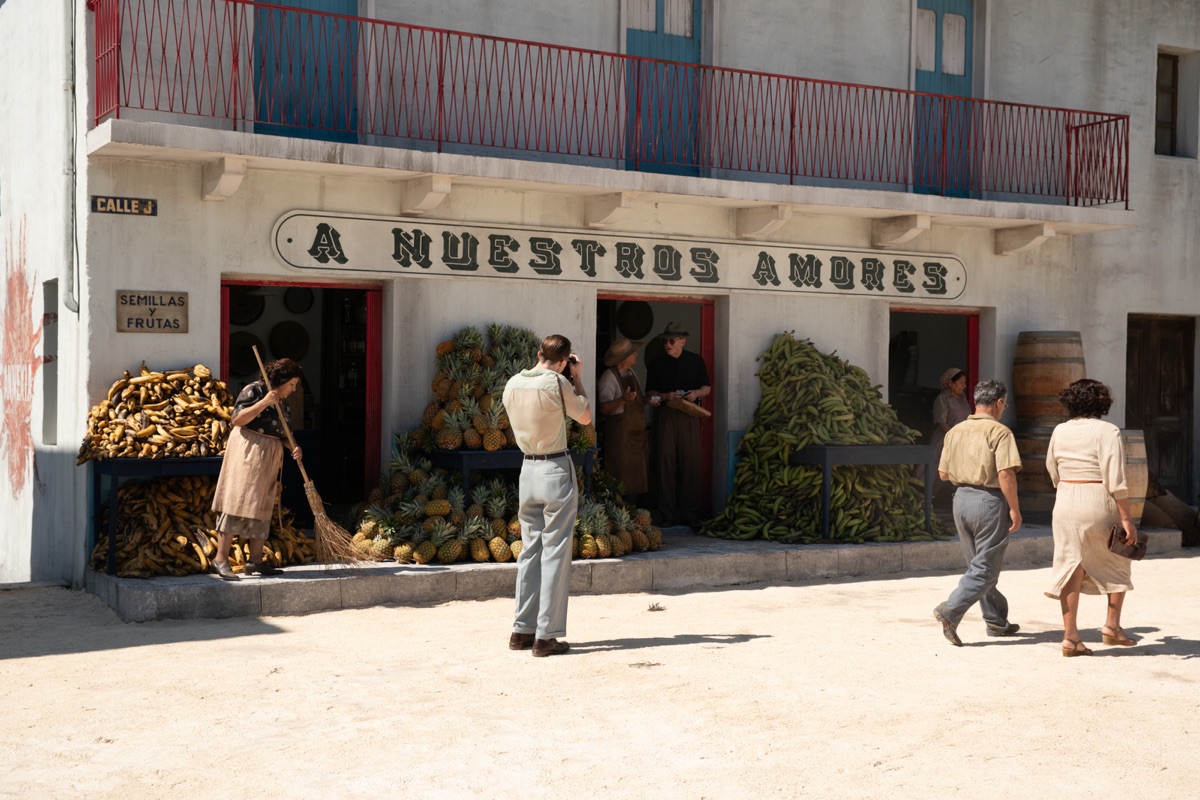
Set in 1950s Mexico City, Queer explores a world where gayness grows in hushed meetups and secret apartment parties. The gorgeous sets transport you into a vibrant yet repressive time, immersing viewers in the life of expat William Lee (Daniel Craig). Lee’s journey of self-discovery takes him across Mexico and later South America, in search of a mystical plant that is said to enable telepathic connection. The film is structured in three chapters and an epilogue, tracing Lee’s struggles with addiction, loneliness, lust, and love.
Daniel Craig shines as the older William Lee, embodying a character we’ve all encountered: the persistent older man at the bar who somehow charms his way into your world. As a person with an opioid addiction in the film, Craig’s performance conveys the omnipresent culture of drug use that continues to persist in the gay community. Lee is a complex individual who, we learn, fled the U.S. from the consequences of his heroin use. The visceral withdrawal scenes, as Lee nearly shakes and shivers to death just going days without his precious opioids, had the audience wishing for his wellness. Queer humanizes addiction by providing a face to someone directly undergoing the consequences of opioid withdrawals.
Opposite Daniel Craig is Drew Starkey, who delivers a standout performance as Eugene Allerton, a young traveling photojournalist drawn into Lee’s inescapable orbit. Sharing the screen with a veteran actor like Craig must’ve been daunting, but Starkey’s quiet charisma and layered portrayal of the disinterested Eugene showed an equally impressive portrayal. Even in a psychedelic-induced sequence where the characters express everything in near silence, it’s clear Starkey has the chops to command the screen as his “007” co-star.






The chemistry between the two is charged, passionate, and undeniably magnetic. It also feels fleeting, like we’re on the vacation of a lifetime with two men on top of a Jenga tower. But instead of embracing the inevitable fall, they continue down a path of mutually assured destruction. An argument could be made that they shouldn’t be together, that whirlwind trips paid for by rich older men are not to be trusted. After all, Lee pokes and prods at his young lover for more love than he’s seemingly willing to give. But Allerton is no naive little lamb, which makes their relationship that much more intriguing to see unfold.
Omar Apollo makes his film acting debut as a supporting character, contributing to the director’s signature and honest sex scenes. Apollo’s steamy moment with Craig not only had the internet abuzz but showed the intense connection queer men crave and share, elevating the film’s exploration of what true intimacy really means.













The film tackles complex themes, such as age-gap relationships. In queer communities, such dynamics can provoke judgment, with terms like “sugar daddy” overshadowing genuine connection. Yet, Queer presents Lee and Allerton’s relationship as one of depth and mutual dependence, challenging societal stereotypes. Their love story isn’t about materialism or lust but about the (albeit waning) connection that remains after the night is done. While people stare at the unlikely pair throughout their travels, especially for homophobic reasons, the audience feels the incredible “fuck it” attitude Lee puts forward. His reckless nature and devotion to his vices (men, drugs, attention) are fascinating to watch Lee grapple with.

The very serious issue of addiction looms large in this honest film. Lee’s reliance on opioids to sleep and his inability to function without them reflects the way a lot of real-world addicts operate. While you can’t help but pity Lee, his self-destructive decisions should not be encouraged.
The film works as an effective warning of prolonged hard drug usage and the toll it takes on the body, mind, and spirit. Lee is also a vagabond who’s convinced the only way to truly understand another, like Allerton, is to find a mythical plant in the Amazonian jungle. The plant is rumored to connect you telepathically with someone, the apex of connection that Lee is desperate to reach. His ambition to find the plant and connect with Allerton leads to an ultimate conclusion for all parties.
Let’s get into spoiler territory. Queer is rich with symbolism, such as the recurring image of a snake eating its own tail — an emblem of cyclical self-discovery and connection. In one of the film’s most surreal moments, Lee and Eugene ingest a mythical plant meant to give them telepathy, leading to a psychedelic sequence of physical and emotional merging. The two men’s bodies flicker, fade, and intertwine, creating a Rubik’s cube of flesh in a wordless dance of connection. Guadagnino’s flair for magical realism is on full display, merging the visceral and the abstract in a way that leaves the audience spellbound. It was reminiscent of I Saw The TV Glow, which was another amazing and unapologetically queer film. Similar to that movie, Queer addresses what happens when the “door” (i.e. your queerness) is awakened. He’s told “You can’t close it, but you can look away from it.” As Starkey’s character continues to deny his queerness, we see the label tear at his heart. These emotionally charged moments make both movies two of the year’s brightest (and gayest) stars.
The sensual visuals are a hallmark of Guadagnino’s work, and Queer is no exception. The scenic streets of Mexico City and the rolling green hills of South America are represented with stunning detail. Whether it’s rustic town roads or the misty rainforest, every setting feels alive, amplifying the film’s emotional resonance. The pair travel to many impressively-designed hotels and a period-accurate doctor’s office, bringing us into their world even further. The vintage aesthetic, like the glass Coke bottles or sequences of smoking on an airplane, was well-paid attention to and felt mighty correct.
The music, managed by Nine Inch Nails’ Trent Reznor and Atticus Ross, adds another layer of intensity. Their work, which previously influenced the soundtrack of Challengers, guides the audience through the carnality of Queer. Meanwhile, a new song by Omar Apollo, directed by Guadagnino himself, complements the film’s themes with a music video featuring gender-diverse couples slow dancing.
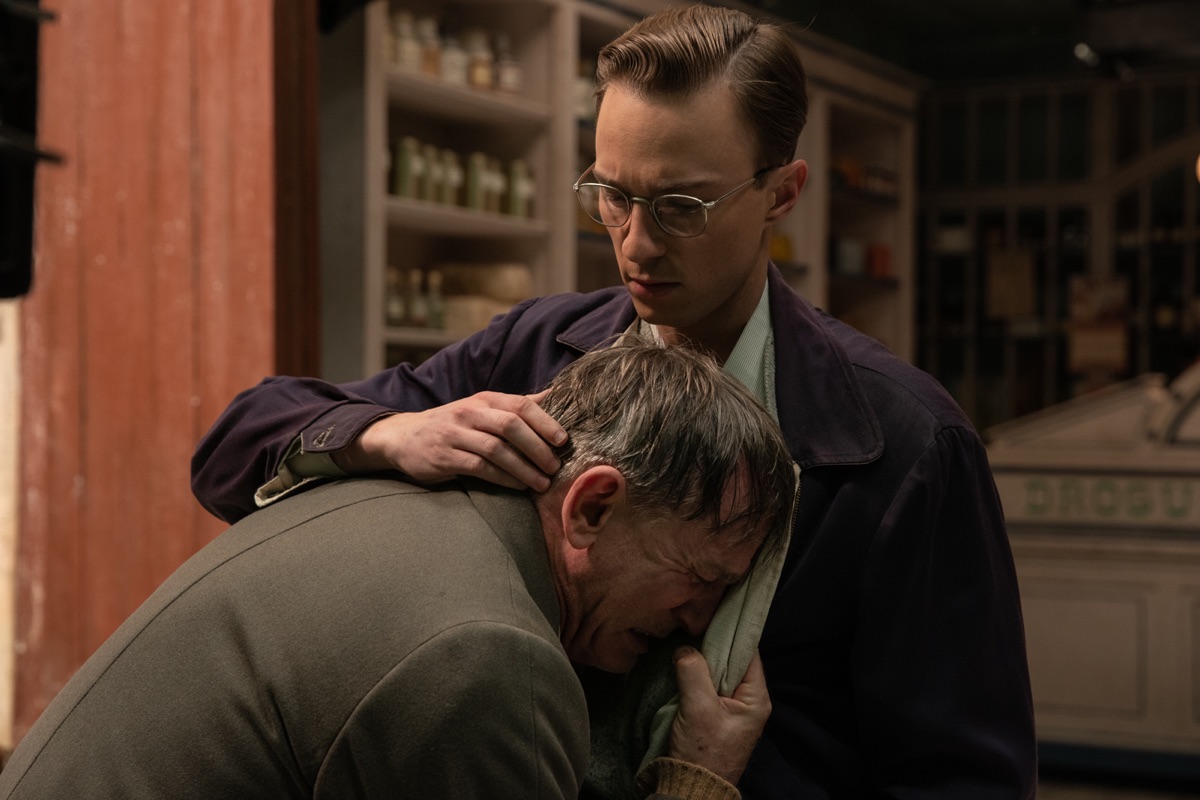
At its heart, Queer is a story about connection — emotional, physical, and spiritual. It’s a conversation on the tug-of-war between vulnerability and self-preservation, making us question who uses whom in relationships and why. Guadagnino captures the complexity of queer life with raw emotion and artistry, as he always excels in doing. May Queer remind us that queer stories have always existed and will continue to deserve the big screen treatment.
In a world still grappling with acceptance, Queer serves as a powerful affirmation of love and identity. Guadagnino’s adaptation of William S. Burroughs’ book breathes new life into a gay classic, leaving audiences eager for more nuanced stories of LGBTQ lives. My hope? Someone tackles The Awakening by Kate Chopin next.
Queerness is about defying expectations and trusting your own heart. Guadagnino’s Queer beautifully captures this truth in a film that is intimate, provocative, and profoundly human. We are flawed, dangerous, and beautiful.


