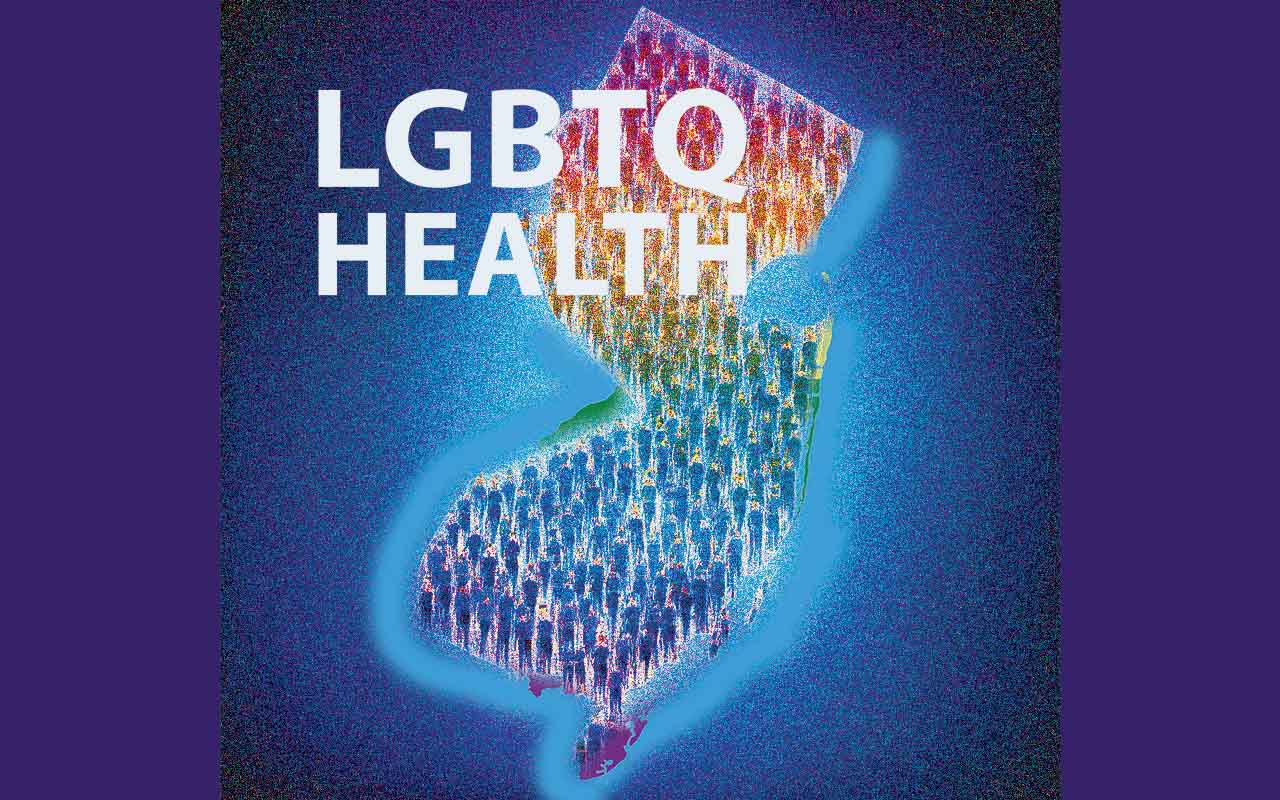
For many in New Jersey’s LGBTQ community, finding informed health care was challenging for a long time. Gay Jerseyans often had to contend with uninformed doctors, frosty receptionists, and wary technicians. HIV and AIDS further raised the walls, the risks and the stigma. Many Jerseyans traveled to New York or Philadelphia where there were more doctors, including some who identified as LGBTQ, which made communication much easier. Shocking for a state that Garden State Equality (the state’s largest LGBTQ advocacy group) estimates has 500,000 gay people out of a total population of 10 million.
Infectious disease doctors ably filled in some of the blanks, but most were or are not part of the LGBTQ community and only addressed their areas of expertise, not the full spectrum of the LGBTQ experience. The introduction of PrEP (pre-exposure prophylaxis), a once-daily pill to protect against HIV, was introduced in 2012 and changed the game dramatically for the better. In 2015, New Jersey Monthly ran a story about two openly gay doctors who had practices in New Jersey and specialized in caring for the LGBTQ community. This was welcome news to a community that had survived on scraps of health care that met their full needs. One of those doctors, the ebullient Dr. Thomas Ziering is still practicing in Morristown.Except for him, the LGBTQ provider landscape was parched for a long time and it wasn’t until 2017 that gay Jerseyans had physicians who welcomed them and addressed their needs.




Now, up and down the state, a few miles off the Parkway or the Turnpike, there is first-rate health care for gay New Jersey.
Robert Wood Johnson University Hospital, one of New Jersey’s biggest health systems, opened its PROUD Center in Somerset in 2017, offering primary care services for the LGBTQ community. PROUD stands for Promoting Respect, Outreach, Understanding, and Dignity. In 2019 the center was renamed the Babs Siperstein PROUD Center, after the late Barbra Siperstein, a New Jersey born and bred transgender rights activist who, among other things, became the first trans member of the Democratic National Committee. It was the first hospital in New Jersey to offer specialized services for the LGBTQ community and besides primary care, it offered HIV care, health education, counseling, and support groups. There are also a wide range of services for the state’s expanding transgender population, including counseling, hormone therapy, and ultimately reassignment surgery. Transgender is defined as persons whose gender identity, gender expression, or behavior does not conform to that typically associated with the sex to which they were assigned at birth.
The Babs Siperstein Center is one of several Garden State institutions that specialize in the growing field of transgender health, which RWJ describes as “a perilous journey.” This journey includes hormonal therapy, surgical procedures like gender-affirming surgery (trans-feminine and trans-masculine top surgery), facial feminization and masculinization surgery, and hormone therapy/endocrinology. Gynecology and urology are included, as is otolaryngology/vocal training. To complete the transition process RWJ has created the Name Change Clinic. A navigator is assigned as part of the extended support system to those embarking on the “perilous journey.” The center just celebrated its eighth anniversary.
Robert Wood Johnson has established PROUD Gender Centers in several locations throughout the state: Collingswood; Barnabas Cooperman Center at St. Barnabas in Livingston; Clara Maas in Belleville; New Brunswick; Jersey City Medical Center; and the newest one in Toms River.
Each has a comprehensive suite of services specifically designed to address the gay and transgender community’s healthcare needs.







Two new LGBTQ health centers opened in Bergen County, across the road from each other in that jumble where Route 17 and Route 4 run side by side. One of them is New Bridge Medical Center, with 1,400 beds, the biggest hospital in New Jersey. In addition to Paramus, it also has an office in Bergenfield. Kelly Martins, a dedicated and exuberant social worker in the LGBTQ field, now works with New Bridge Medical Center. “I really like that New Bridge Medical Center is a safety net hospital and focuses on the most vulnerable. A couple of years ago, the hospital conducted a community health needs assessment. They found that a lot of LGBTQ people were avoiding or delaying the care that they needed because of the lack of access and the lack of affirming, competent providers,” said Martins.
Headed by dynamic veteran Deborah Viscone, New Bridge has become a full-service medical center for the LGBTQ community. ”Deborah Viscone has really been a champion for us and also someone that I admire as well,” Martins added. Christopher Awwad was hired as the medical director of LGBTQ+ Health and Wellness Center.









Just across Route 17 is the new Valley Center for LGBTQ+ Care, which is part of the Valley Health System.
In Morristown, the Ryan White Services HIV/AIDS Program at the Family Health Center of Morristown Medical Center has been an integral part of HIV care providers in the Morris County area since 1995. Social workers assist with individualized assessments to identify the specific needs of each patient and to overcome barriers that might keep them from continuing care. With this information the social worker can see what services and assistance the patient is eligible for. Social workers also provide benefit counseling, community referrals, psycho-educational services, mental health services, support groups and prescription assistance.
In 1990, with little seed money and a few volunteers, Dr. Robert Zufall, a retired physician in Dover, saw that there was still a vacuum for services, including HIV care, in his mostly Latino community. With his wife, Kathryn, he opened a small community clinic in Dover to provide medical care to poor, mostly immigrant families. The retired urologist treated patients while his wife managed the clinic and doggedly pursued funding opportunities. Their commitment attracted a core team of physicians and support staff. Now in several locations throughout the state, including a bus for dental services, Zufall Health offers a full spectrum of needed services. The waiting rooms are often filled with families and moppets trying their best to behave.
Newark’s population was hit hard by the AIDS epidemic. In 1988 people had to travel to New York for whatever care was available. The North Jersey Community Research Initiative (NJCRI) is one of New Jersey’s largest and most comprehensive HIV/AIDS community-based organization dedicated to serving that population. When AIDS patients had to travel to New York for care, NJCRI was the first AIDS service organization in New Jersey to provide medical care to those with HIV and other issues. During the Mpox outbreak NJCRI was one of the few places in the state that offered the vaccine. NJCRI’s services include behavioral research, transgender medical care, pediatrics, primary medical care, chronic illness management education, street outreach, substance abuse treatment, transportation, mental health/psychiatric services, food pantry, syringe exchange, and an adult drop-in center for the homeless, among other vital services. Located on a once barren patch of Central Avenue in Newark, they have brought care, purpose and hope to the recharged area. Over 10,000 people use their free and confidential services each year.
In the same area there are two more important health resources for the LGBTQ community: Rutgers Infectious Diseases Practice, with a main focus on HIV and other sexually transmitted infections as well as LGBTQ health, and the Rutgers Center for Transgender Health which offers a full spectrum of services for the transgendered.
Asbury Park has a large LGBTQ population and it hosts the VNACJ Center, which offers HIV case management, PrEP, and counseling. R.E.A.L. (Real Empowerment on All Levels) offers free social events that bring together the local young (18-34) LGBTQ community, helping build peer support. Project R.E.A.L. provides sexual health advocacy and also serves as a point of contact between the client and community resources such as housing, HIV and STD testing, and therapy.
The federal government and the current administration is not LGBTQ-friendly, if not openly hostile, and has announced its intention to roll back protections for the gay community. As of now, the vision, courage and hard work of New Jersey’s medical community have given gay Jerseyans access to first-rate health care, making New Jersey one of the safest places in the nation.
Note to our readers that next month we will feature the Southern New Jersey LGBTQ health centers.