


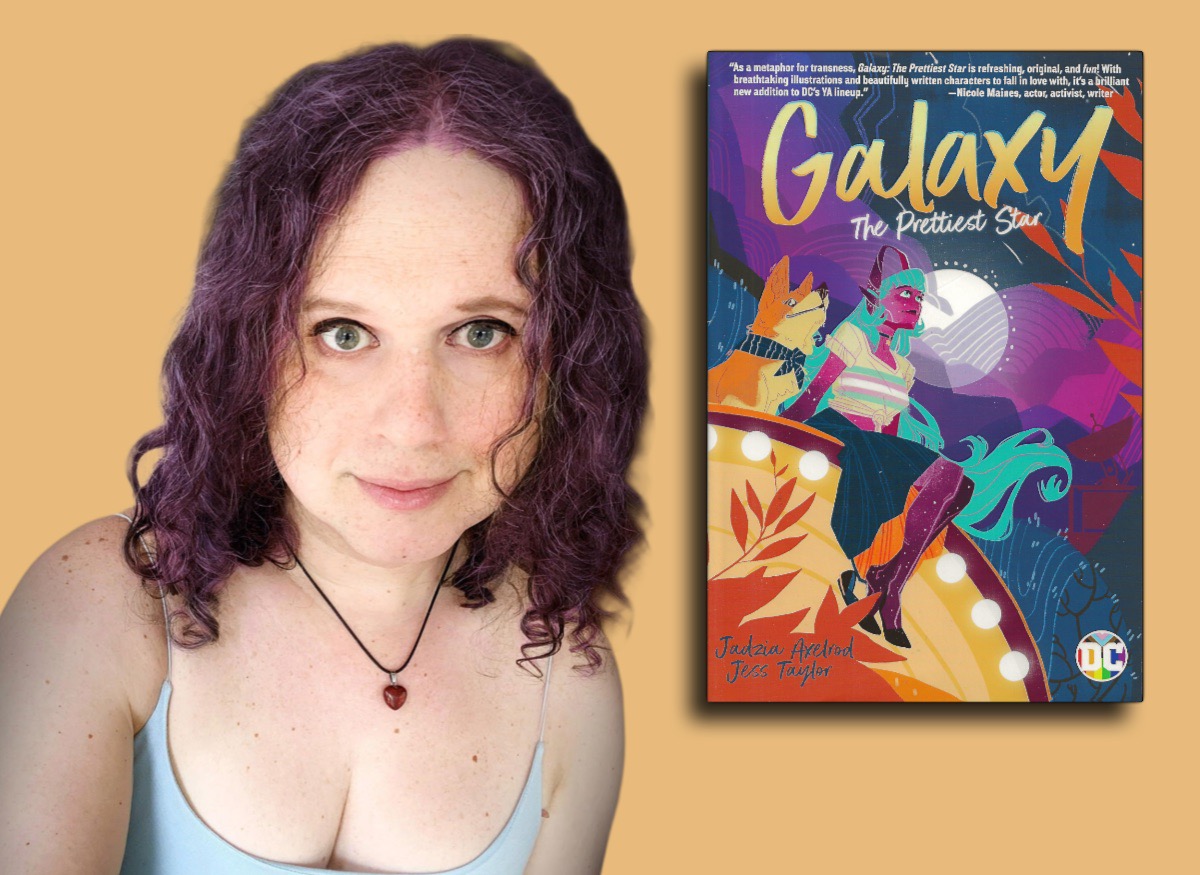
Inside the creation of DC’s first trans superhero graphic novel

I don’t often cry while reading a comic book. But these words on the dedication page of Galaxy: The Prettiest Star brought me to tears: “For the girl who needed this book ages ago, and couldn’t find it.”
It was as if Jadzia Axelrod, the transgender author of this 2022 graphic novel featuring a transgender superhero, was speaking to my teenage self. A feeling confirmed when I saw the first chapter was titled “Aladdin Sane.”





That reference to a 1973 David Bowie album brought back memories of the Bowie concert I saw that year, the queerest event of my teenage life. I was a Bowie acolyte, a fan not just of his music, but also his otherworldly gender ambiguity and brazen flamboyance. My gender-dysphoric self could only dream of possessing such confidence. The title of Axelrod’s graphic novel drew upon the song “The Prettiest Star” from that same album, and his songs from that era provided the chapter headings throughout the book.
“One of my art-class buddies gave me a mix tape of ‘Ziggy Stardust,’ and I was just blown away,” Axelrod said. “I had never heard music that was so unapologetically queer before.”
Born in the Appalachian Mountains outside Knoxville, Tennessee, Axelrod’s family moved to the small town of Hillsborough, North Carolina, when she was 12 years old.
“When I was in high school, I wrote and drew a six-page comic and submitted it to the Congressional Art Competition, and it won!” she said. “First comic to do that, as far as I know. I’ve been writing and drawing comics ever since.”




Despite her academic achievements, Axelrod secretly bore the pain of gender dysphoria.
“I knew I was queer and was pretty certain I was trans, neither of which were the best identities to have in rural North Carolina.”













Her outlet was hanging out with her best friend — a girl who was also queer. Together, they would secretly attend Pride parades and queer film festivals in nearby big cities.
“My writing previous to coming out was full of transgender subtext,” Axelrod noted. “Characters were always hiding something they were scared of people knowing about that was nonetheless intrinsic to who they were.”

Axelrod made her gender transition in 2015 at the age of 36, and rechristened herself “Jadzia,” both for its Eastern European roots in recognition of her ancestral familial roots on her father’s side, and as a nod to Jadzia Dax, a character from Star Trek: Deep Space Nine.
A few years later, Michele R. Wells, vice president and executive editor for DC Comics’ newly-formed Young Readers line, was seeking a writer who was familiar with their lineup of characters and had “an unusual point of view.” She reached out to Axelrod’s literary agent, who assured them his client was the person they were looking for.
Axelrod sent them pitches involving Superman, Lex Luthor, and other stalwarts of the DC Universe. But it was her last proposal, just a two-line summary, that caught the editor’s attention.
“There is an alien princess on Earth who is hiding out disguised as a human boy and falls in love with the new girl in town and decides to be herself,” recalled Axelrod in a YouTube video. DC bought it, and she was assigned to write a graphic novel, which became Galaxy: The Prettiest Star. And the fact that Axelrod and her character were transgender wasn’t an obstacle.
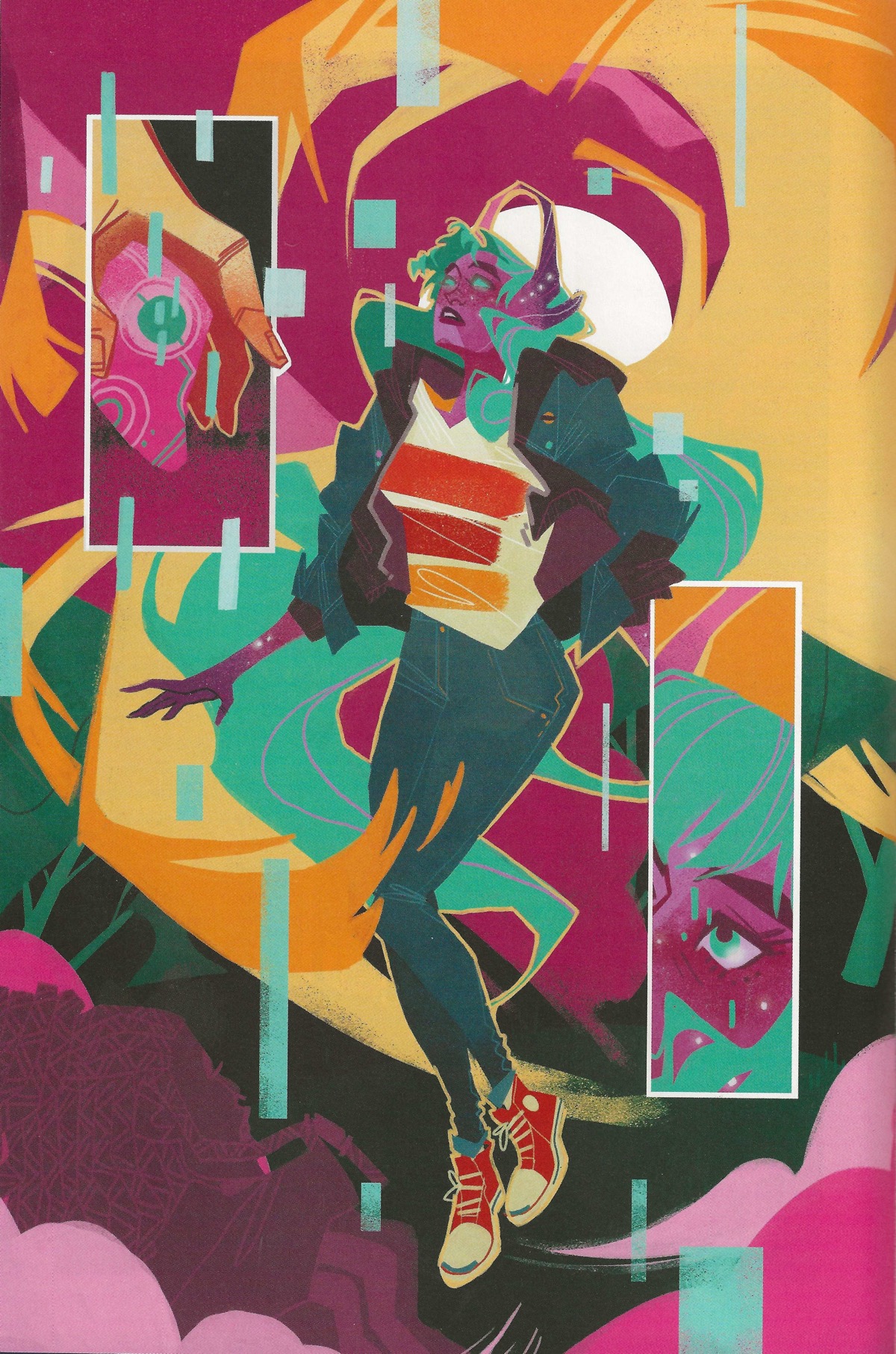
The character at the heart of this story is known as Galaxy, an alien princess forced into hiding on Earth disguised as a human boy. This layered identity mirrors the complexity many trans people experience navigating different aspects of themselves. “I think my outspoken pro-queer, pro-trans attitude was a feature, not a bug,” Axelrod observed.
Still, even before starting work on the book, Axelrod wanted assurances from DC concerning certain aspects of it.
“With Galaxy, I said, ‘I’m not going to change any of the queer stuff. That’s my line,'” she told interviewer Avery Kaplan. “They didn’t ask me to, so I didn’t even have to push back. I don’t think I’ve ever done a project like this where I felt so many people had my back.”
Overseeing the project was editor Sara Miller, who worked with Axelrod on developing the structure of the story.
To make sure that the main character Galaxy acted and sounded like a teenager, Axelrod dipped into her own past. She pulled out journals she had kept when she was in middle and high school and found them to be surprisingly insightful. “I was pondering being trans, and I just repressed it,” was how Axelrod interpreted her long-forgotten diaries.
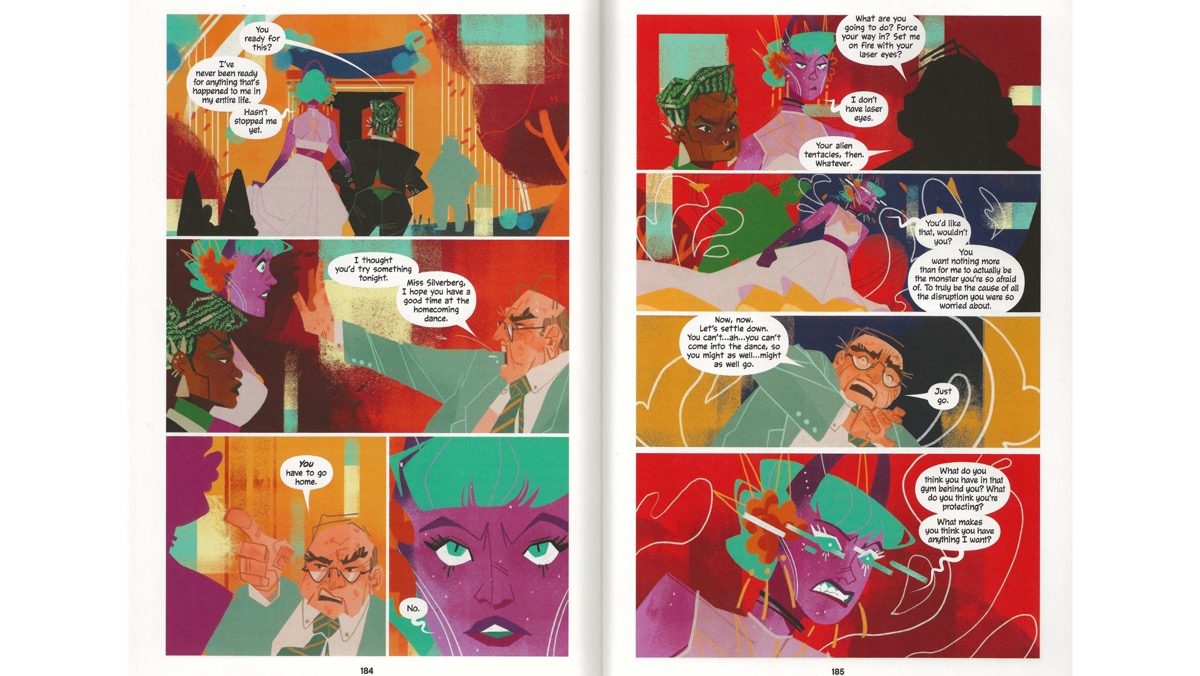
In order to save Galaxy from invading aliens, she and a group of trusted protectors are sent to Earth and disguised as humans. To give her an added level of disguise, she is transformed into a human boy by way of alien technology. Galaxy is understandably anguished by this forced transformation, and her rebellion against it forms the basis of the book.
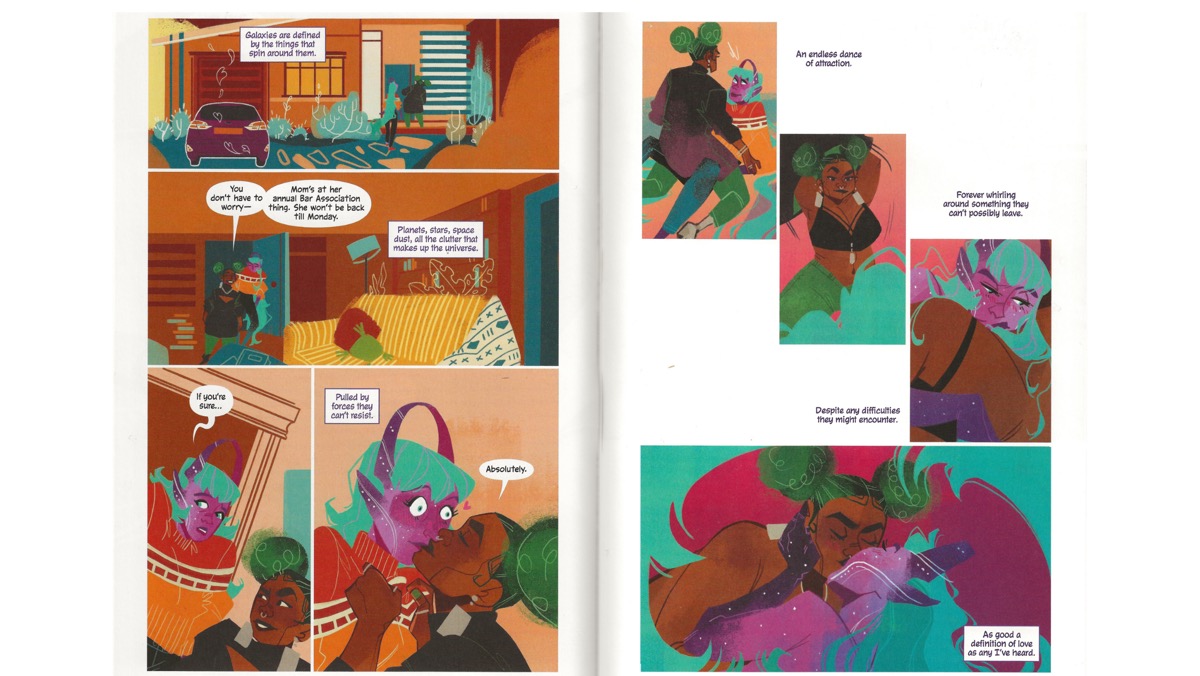
Axelrod infused the tale with unmistakable overtones of Superman’s upbringing as an interplanetary alien raised on Earth and overlaid it with the real-life pain of gender dysphoria. And all of this underlies the love story between Galaxy’s human persona and Kat, her lesbian girlfriend.
Axelrod’s text was brilliant, functioning simultaneously as a powerful story about gender transition and an allegory for that experience.
The script finished, editor Miller reached out to Vash Taylor, a non-binary British artist now living in Canada. “Working on Galaxy was emotional,” Taylor replied in an email. “I cried the first time I read the script. There’s something indescribable about knowing you’re working on a project that really sees you and knowing, in turn, that other people will feel that way too.”
Taylor’s gorgeously stylized, digitally created art is unlike traditional comic book artwork. Taylor and Axelrod collaborated via Zoom over a period of several years. Taylor’s contributions were so integral to Galaxy’s creation that Axelrod willingly credits them as the character’s co-creator.
“Working with Jadzia was one of the best experiences I have had in comics,” Taylor’s email concluded. “Jadzia was so consistently kind, insightful, and enthusiastic. She made the comic a joy.”
So enthusiastic was DC with the finished book that, upon its release in May 2022, an abridged version of Galaxy: The Prettiest Star was one of only three comics in their entire line to be given away on that year’s Free Comic Book Day. Since then, Galaxy has appeared throughout the DC Universe, including in Hawkgirl, team-ups with other trans heroes like Nicole Maines’ Dreamer, and an upcoming May 2026 graphic novel titled Galaxy: As the World Falls Down.
In an industry historically dominated by cisgender, heterosexual white characters, Axelrod has created authentic trans representation that resonates with readers who’ve rarely seen themselves reflected in superhero stories. Galaxy fights cosmic villains, saves the world, and falls in love, just like any other superhero. The difference is that she also navigates the very real experience of gender transition.
“I get messages from readers telling me what Galaxy means to them,” Axelrod said. “That never gets old.”
It’s heartening to know that Jadzia Axelrod has created a superhero that the trans community can believe in. Current and future generations of trans youth won’t have to wish, as I do, that she had been around when they were young.


