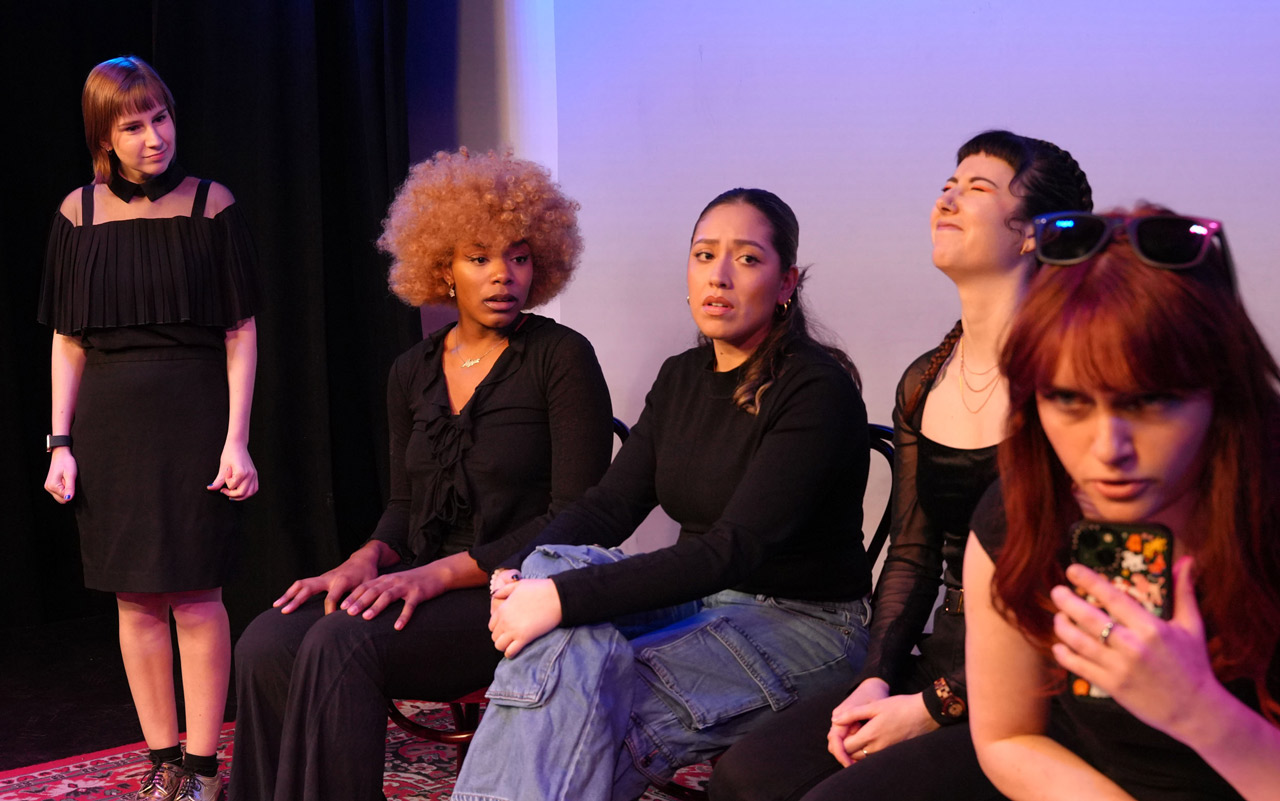
Inclusive comedy is a new way to bring folks into the fun rather than making them the butt of the joke. Frankly, we need it now more than ever. Instead of transphobic or bigoted comedians like Dave Chappelle — who keep getting rewarded with multi-million-dollar Netflix specials and coveted SNL hosting gigs — what if we had performances that made space for everyone?
There is pain in being the punchline. It’s sobering when you’re at a comedy show, and the straight guy on stage drops the f-slur, smiling ear to ear for a reaction. What cuts even deeper is the resounding laughter his hatred stirs up, as if they all agree. Nothing takes you out of the moment more than being randomly or unfairly targeted. Even in the dark anonymity of the audience, that wandering bullseye still feels laser-focused on your sense of self. And you paid for the ticket, just to be insulted. Such a crime!




For the LGBTQ community, finding a performance that doesn’t fall back on dated stereotypes or venture into offensive territory proves more difficult than it should be. Nobody’s asking for conservative buzzwords like “safe spaces”, but there truly is a line most of us should agree not to cross. We deserve better. And finally, we’re starting to get it, thanks to Lateral Move. They’re an impressive sketch comedy group based in New York City elevating diverse voices rather than tearing them down.
Lateral Move puts on shows about once a month across the Big Apple. To date, the team has performed more than 30 sketches by their growing group of members. Lateral Move consists of several identities and perspectives, all people with one common goal: to make a crowd laugh without making others feel alone.
I attended a show on a cold winter day in New York. It warmed my heart to see such care, passion, and enthusiasm for performing together.
“At a Lateral Move show, expect original comedy that’s funny and smart,” says producer and funnyman in charge, Andrew Bossone. “You’ll see something you’ve never seen before.”




How does a group of wildly different folks become so connected? Bossone continued, “Through personal interactions, everyone is heard, listened to, and respected. I think it’s really important to have diverse people in the room making decisions. Some of our content is edgy, but we don’t punch down. We want to have a safe space and make people smile.”
Member Lynn Hardy explained, “When I’m writing sketches with couples, I try to have one of them be queer because romantic couples in most sketches are in unnecessary straight relationships. For some reason if there’s a couple, it’s always a husband and wife or a boyfriend and girlfriend and it’s just like, ‘Well, why is that the case? Why do queer relationships never exist unless there’s a specific reason?’ If me and my friends are just gay and taking up space, shouldn’t our sketches reflect that too?”













If you’re seeking advice on how to make your own comedy more inclusive, take a note from hilarious member Gail Tierney. “Write the roles you’d be excited to play. The best way to constantly evolve and embrace your fluidity as a performer is to write juicy characters and then collaborate with people who are different from you.”

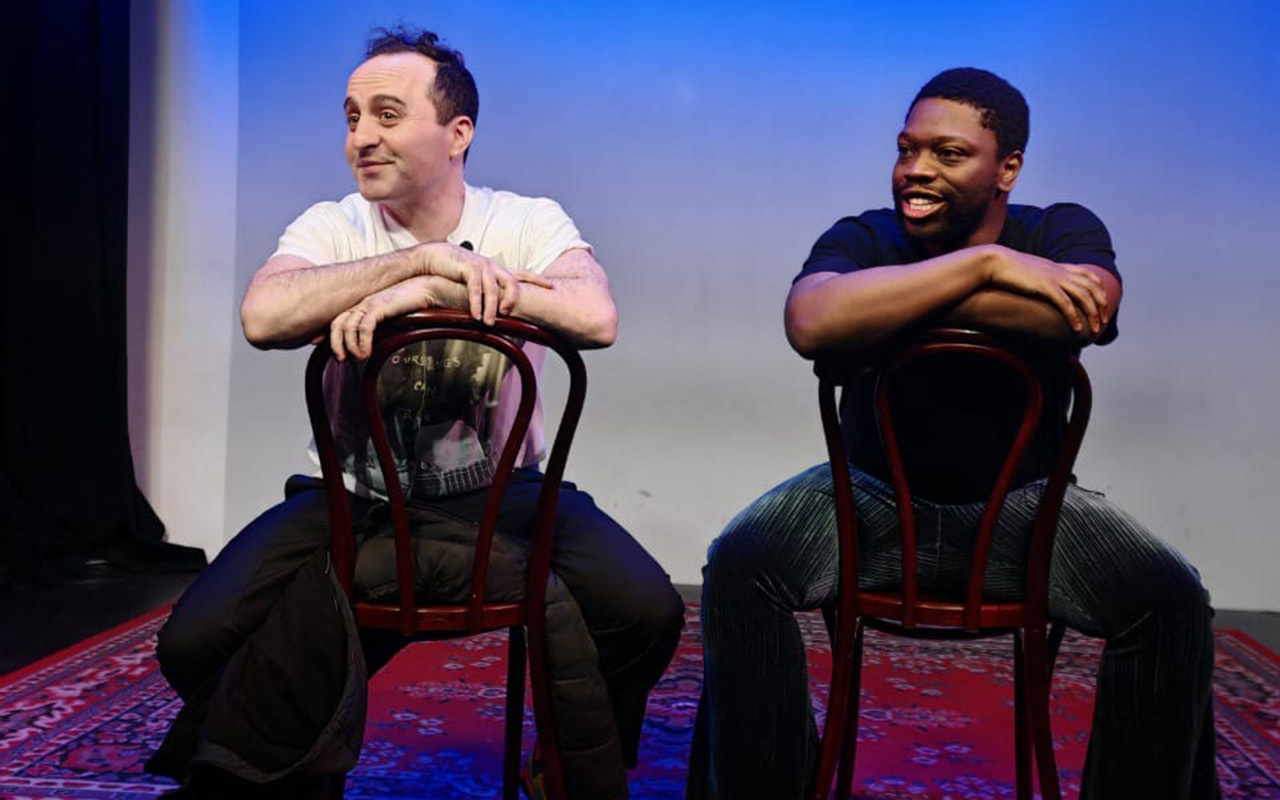
“I won’t let my joy be censored,” continued Tierney. “I will say ‘thank you’ to unhelpful feedback and then promptly release it like a fish on a man’s dating app. I’ll be political and speak truth to power in my writing. I’ll recognize that claiming a seat at the table in the queer community, saying you belong, is the best practice for resisting the extractive elements of an industry that commodifies talent. Celebrate yourself. Decide you belong. Make things you find funny.”
Before the show, performer Vaughn Broderick shared how her LGBTQ identity shapes her comedic voice. “You kind of have to be fearless (cue Taylor [Swift]) to be your most authentic self, to strip down all your layers and be like, ‘Hey world, this is who I am.’ That’s what comedy is. You have to jump headfirst into something, and you may not know what the outcome will be.” She went on to share, “Being up in front of people can be scary, but you just have to remember that the audience is on your side. They don’t want you to be bad — they’re excited to see a good show from you!”
Performers of the show and writers of its sketches include Lynn Hardy, Marcelo Hanta-Davis, Alyssa Alizor, Andrew Bossone, Kenny Reilly, Katie Hauppi, Vaughn Broderick, Estabaliz Romero, Gibbee Stone, Patrick Williams, Gail Tierney, and Andrea Fabiola.
After this performance, the Lateral Move crew offered to answer some in-person questions. As they trickled out from backstage, I sat along a wall of Sherlockian trinkets and spaceship-adorned walls, perfectly fitting the quirky vibe put out by the group. After saying hi to friends and family, many members were excited to chat about the sketch team.
Kenny Reilly offered, “I think what we try to cultivate with our collective is everyone bringing their like unique selves, whatever that may be. Whether that’s questioning your boyfriend about smoking so much weed they forget what year it is, or a sketch about the nerd-dom of Catan or Dungeons & Dragons that we just love to play in. I think what we encourage is for people to bring their true selves and that’s where the fun is always. [My friends are] the funniest people in New York. I’m so honored to be a part of them.”
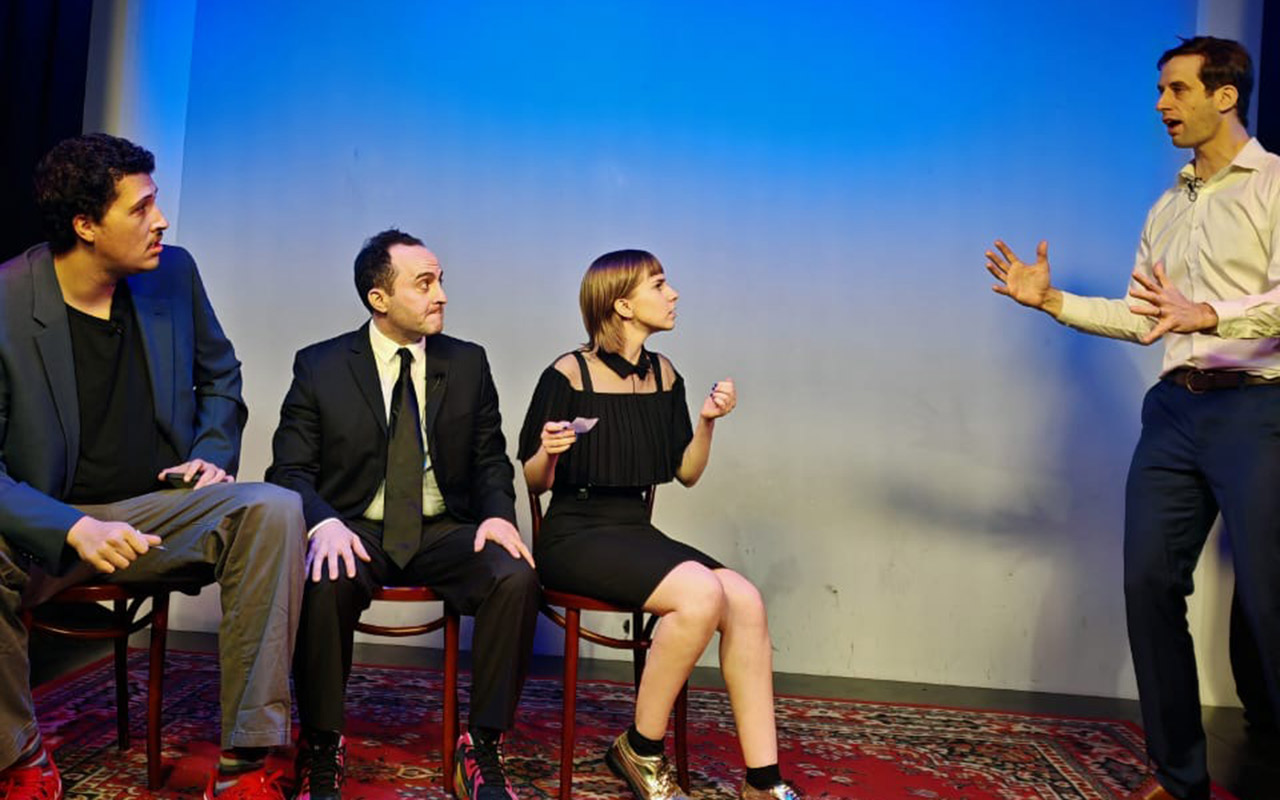
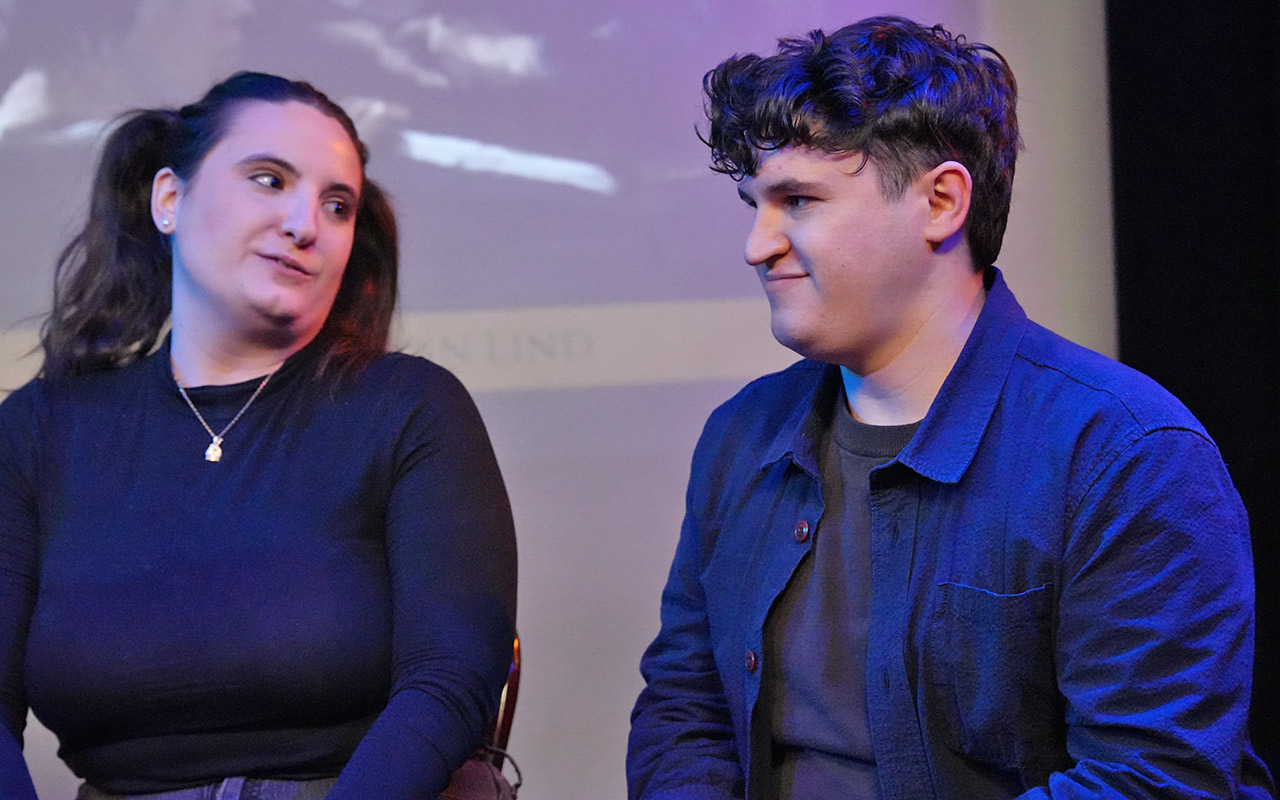
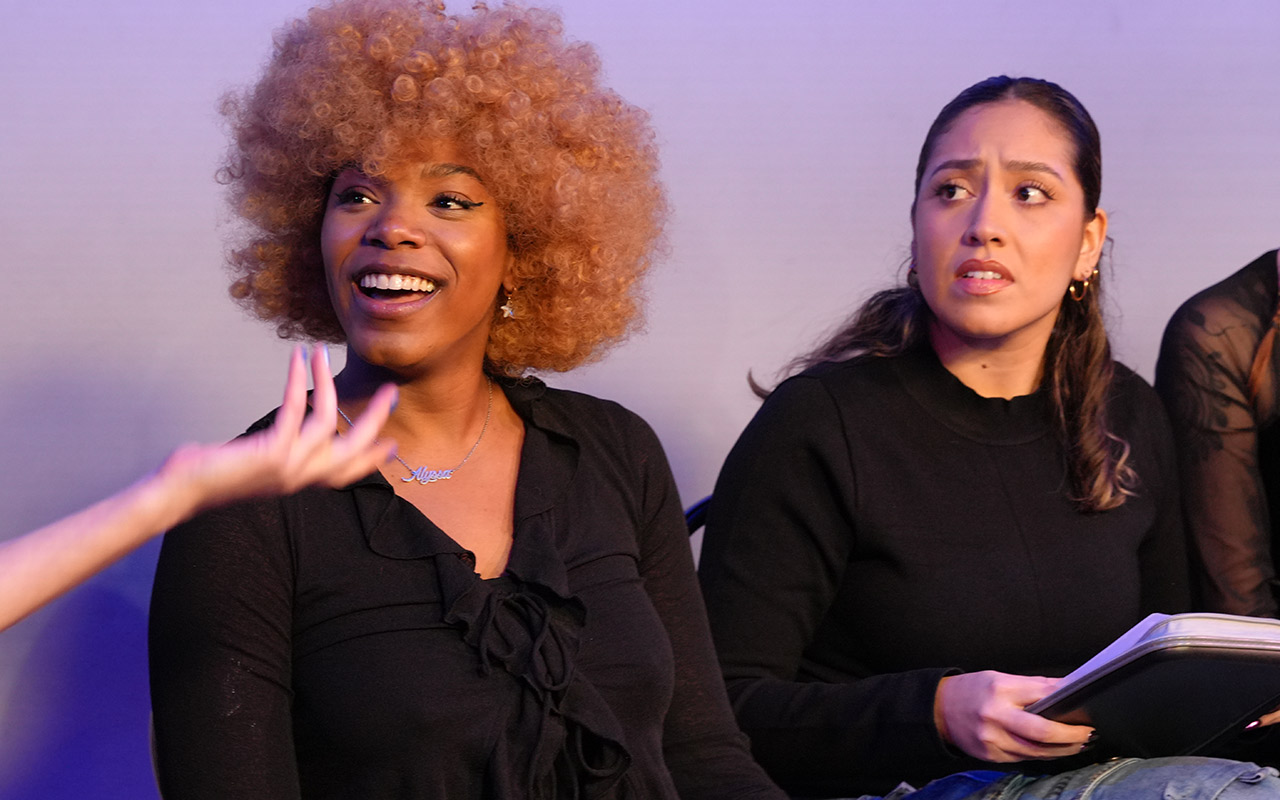
Inclusive comedy boils down to this, as colorful (both in personality and awesome hair style) Vaugn Broderick explained via email: “[Our sketches], we’re not trying to poke fun at a topic or a person. [Our sketches] are more ‘turn your brain off for a few minutes and laugh.’ Things that we all need sometimes, no matter who you are.”
“I’m going to be on SNL when Lorne Michaels steps down and gives Tina Fey the reins.” Really!
On asking about future plans, it’s clear some have their eyes on the altar of sketch comedy, Saturday Night Live. After having performed just 20 minutes away from Rockefeller Center at the cozy club Caveat, Broderick spoke of her motivations and manifestations. “I’m going to be on SNL when Lorne Michaels steps down and gives Tina Fey the reins. Really! She’s going to want to look for new talent, for people who are actors as well as comedians. It’s not just comedians anymore. I think that they’re going to want to get back to the meat and bones of how they used to cast actual actors and improv-ers. And they’re going to find a perky little redhead, and that’s going to be me!”
“I just love how kind, creative, and weird we are. I feel like it’s very rare now to find a group of people who have the same weirdness and same sense of humor,” shared Estibaliz Romeo. “It’s just easy [for us]. I go in, I express myself and it’s just nice. There’s no judgment, everyone’s like, ‘I’m also weird.’ [You notice] someone has more weirdness than you and you’re like, ‘someone gets me.’”
There were many moments in the show when the audience’s laughter became infectious. On the topic of trying not to laugh on stage, Alyssa Alizor offered, “There are things that you see in rehearsal that you’re just like, ‘That kills me every time.’ And then you get on the stage, and you’re like, ‘Please don’t laugh.’ And it takes everything in you. It takes everything.”
On my question of building bridges instead of barriers, Tierney replied, “The reality of this industry (and many others) is that doors don’t usually just open. You have to get better at opening them for yourself. And then waving some trusted collaborators through.”
To finish my chorus of questions, I was able to chat with the very funny Andrew Bossman.
“I started improv as a post-pandemic thing when I had a child. My friends moved out of the city and I just needed a social life, something to do. I started doing improv and loved it, but I immediately knew that writing was what I was going to do with it. Improv helped me get over the fear of getting up on stage, then I started writing with the intention of being able to go up on stage and do it [myself]. Ultimately, what I want to do is direct, and in order to be a good director, I have to understand how actors work.
“I consider myself an ally, and so I just, I’ve always tried to be intentional and make sure that we have casts that are LGBTQ, that are non-binary, that are black, that are people of color, that have all different kinds of identities. My hope is that there is somebody that eventually is going to see us and feel like, ‘Hey, I can do that too. Oh my God, this is what I want to do.’ That would be amazing if somebody else would just see it and want to do it for themselves and become an artist.”
Bossone is busy working on a musical set to premiere in February. “She Sings Me Home is about a young black trans woman named Monika and a young black cis woman named Liliana who slowly fall in love in an under-21 mental ward while passing notes, creating alliances and friendships, and risking their safety in the process.”
Shows like this remind us that comedy can unite us, celebrate us, and still be wildly funny.
Comedy has long been a boys’ club — cis, straight, and exclusionary. The barriers of entry for anyone outside that norm can feel insurmountable. But Lateral Move and groups like it (shoutout to Little Secrets) are changing that, paving the way for more LGBTQ folks and allies to solidify their place in the comedy world.
Shows like this remind us that comedy can unite us, celebrate us, and still be wildly funny. You’ll leave feeling joyful and seen. As for my review? “Yes…and bring your friends!” Have a night out that’s remarkable for all the right reasons.