



For many trans people, like Meghan Cortez, the Supreme Court upholding state bans on trans athletes on women’s and girls’ school sports teams didn’t come as a surprise. “The right focusing on trans people is a distraction,” she said. “It’s easy to come up with lies and accusations because we’re not known. They can easily fearmonger.”
Cortez, a former swimmer for Ramapo College in Mahwah, found herself on the receiving end of anti-trans rhetoric and hate just a few years ago when she broke a record in the 100-yard butterfly event, while competing with her team. “I was really proud of what I accomplished,” she recalled.





The school posted on social media, congratulating her, and her community was supportive. But a conservative, anti-trans activist, who also used to swim in college, found the post and criticized Cortez. Then others piled on in the comments. If you’ve spent any time on social media, you know how these things can snowball.
“I surprised myself by getting that record,” Cortez said. “I was so proud my hard work paid off. People kept telling me I was a liar and a cheater. It was silly; they didn’t know me at all.”
Cortez remembers the women at Ramapo welcoming her with open arms. Despite the acceptance from her teammates, she acknowledges that effecting change on a wider basis could be far off. “There’s little we can do to fight, unfortunately,” Cortez said. “We are completely dependent on lawmakers to change that for us.”
Dozens of states have laws on the books that ban trans women and girls from competing on women’s and girls’ sports teams. Derek Demeri, a civil rights lawyer based in New Jersey, called the impact of the decision in West Virginia v. B.P.J., which was handed down in June, “far-reaching.” The good news for athletes in the Garden State is that the Supreme Court decision doesn’t strike down a state law that allows trans athletes to play on women’s and girls’ teams. But players looking to suit up with their fellow women in 27 other states aren’t as lucky.






“For cisgender women and girls, it subjects them to invasive and traumatizing sex verifications all in the name of purportedly protecting them,” Demeri explained. “For the wider trans community, the ruling of this opinion is limited only to sex-segregated sports in public schools or teams that are compliant under Title IX. However, the court’s rationale will undoubtedly be used to continue the ongoing attempts to erase trans people from society. Try as the court and transphobes might, however, trans people will not be erased.”
One of the issues raised in West Virginia is the 14th Amendment’s equal protection clause, which reads, “No State shall make or enforce any law which shall abridge the privileges or immunities of citizens of the United States; nor shall any State deprive any person of life, liberty, or property, without due process of law; nor deny to any person within its jurisdiction the equal protection of the laws.” The conservative majority on the nation’s highest court ruled state bans didn’t violate this provision.













Justice Sonia Sotomayor, known for some of her strongly worded dissents, didn’t hold back when voicing her opposition to the ruling. “These circumstances demand exercising judicial restraint, not rushing to answer conclusively difficult questions without sufficient evidentiary development,” she wrote. “In opting otherwise, the majority extends great sympathy to those it favors: the young cisgender girls and women who play sports. I share that sympathy. Playing sports can lead to benefits that are immeasurable, and many are understandably invested in ensuring that competition stays fair and safe. Because the majority, however, inflicts a hardship on those it disfavors without giving them the fair and full opportunity the Constitution requires to litigate their contentions, I respectfully dissent.”
Cortez had a similar response to Justice Sotomayor’s. Swimming on the women’s team at Ramapo “was the best experience of my life,” she said. “Being able to compete with them for the first time was just so euphoric. They were so celebratory of me being able to do that with them.” She also said that building relationships with those women “was beneficial to [her] mental health.”


Demeri’s analysis of the ruling said it “unquestionably” weakens the equal protection clause. “The analysis has deep ramifications for all current and future sex-based classifications under the law as the opinion largely erodes common understandings of the legal doctrine of ‘intermediate scrutiny,’” he explained. “It also strikes at long-standing constitutional analysis in reviewing any kind of equal protection claim. In short, the Supreme Court made it harder to establish a law is unconstitutional even when it is discriminatory.”
So that raises the question: Do trans athletes, who were assigned male at birth, have an unfair advantage when competing against other women? If you ask a right-wing political pundit, they’ll say, “Absolutely.” But ask a scientist, and the answer isn’t clear-cut, because it’s not widely researched.
That being said, about two weeks before the decision in West Virginia came down, a review of available data was published in the British Journal of Sports Medicine. The authors of the review looked at studies of transgender people’s body composition, and they determined that “While transgender women have higher lean mass than cisgender women, their physical fitness was comparable.” The review admits the current evidence is “mostly low certainty,” but it “does not support theories of inherent athletic advantages.”
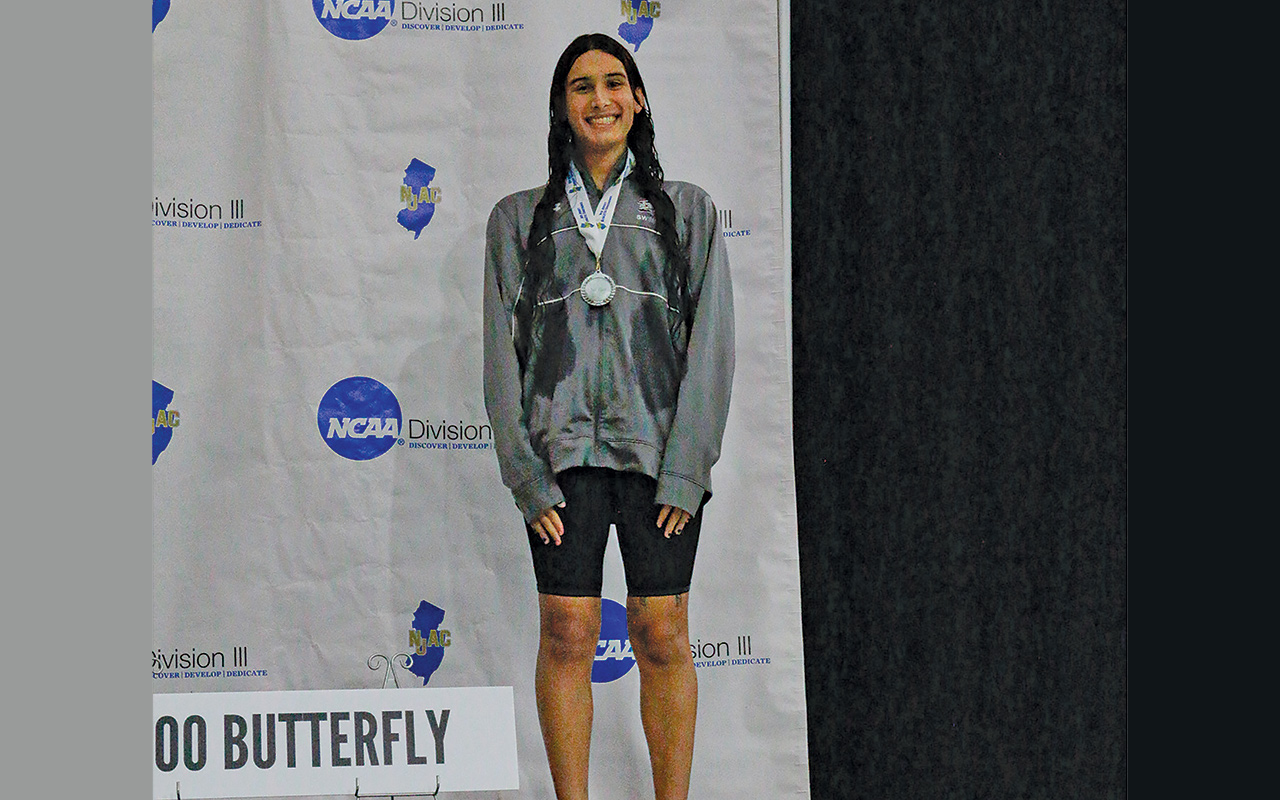
The future for trans athletes in this country is uncertain, although things certainly appear to be getting harder under a White House that has pushed several policies targeting the community. But despite the concern and stress these actions have caused, Cortez doesn’t want other trans people like her to give up.
“I want them to know they’re not alone,” she said. “They truly aren’t. I felt completely alone because I didn’t know any other trans athletes going through what I went through … It’s not going to be easy because those people who fear us or choose to discriminate against us will always be out there. Do not let your transness be your barrier for what you want to achieve. It’s not a barrier.”


