


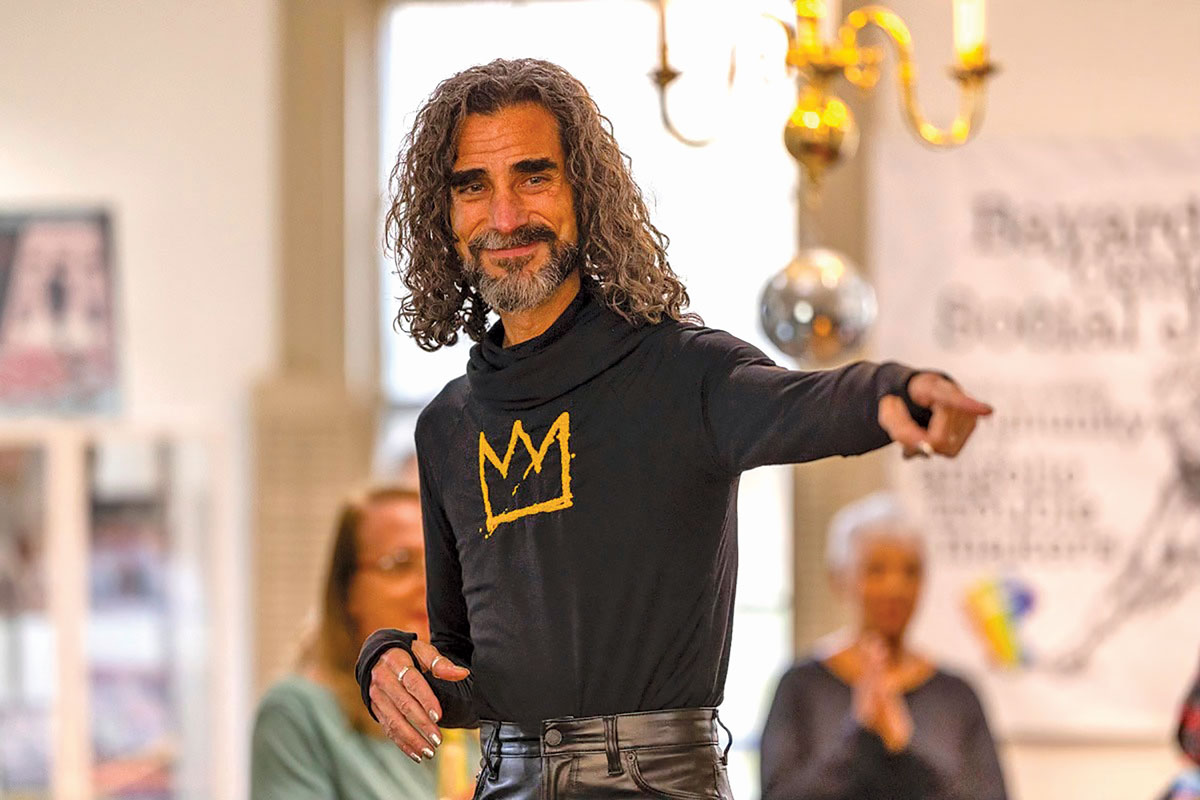
He was born an activist. Robt Martin Seda-Schreiber established the Bayard Rustin Center for Social Justice in Princeton.
“I marched on Washington in the womb,” said Seda-Schreiber, whose parents were influential in making him the person he is today.
Seda-Schreiber, 54, is a national community organizer and chief activist at the center, which he named after one of his heroes, Bayard Rustin, a black queer pioneer who was Dr. Martin Luther King Jr.’s closest adviser. Rustin’s beloved partner, Walter Naegle, is board member emeritus at the center.





“Robt is a dynamic spokesperson for the LGBTQ+ community,” Naegle said. “He approached me several years ago about using Mr. Rustin’s name for the BRCSJ in Princeton, and I gave him my blessing.” The center, located at 12 Stockton St., serves the whole community, but particularly LGBTQ youth, Naegle said. “It provides a safe space for meetings, organizing, and mentoring, where young people can share their experiences about being different in a society that champions conformity.”
Seda-Schreiber started the center after a nearly 25-year career as a middle-school art teacher in the East Windsor Regional School District. While there, he formed the first Gay-Straight Alliance in a middle school in New Jersey — one of the first in the nation.
The National Education Association named him “Social Justice Activist of the Year” in 2017. He also has been honored as New Jersey’s state champion of equality, has served as a Fulbright Memorial Fund Scholar to Japan, and has received two Senate proclamations recognizing his service to the community.
Holding on to people, forming relationships, and making connections are some things that Seda-Schreiber values deeply. “So many of my former students from my days and years as a middle-school art teacher have become supporters of the center,” he said, adding that some stop by and “share a meaningful moment.”







Seda-Schreiber works to build a loving community — a loving community of “angelic troublemakers,” a term coined by Rustin. “Most people don’t know that comes from him,” Seda-Schreiber said.
Rustin brought nonviolence to the Civil Rights Movement. Seda-Schreiber, who has written extensively about Rustin, said the civil rights activist went one day to the home of King, who at the time had armed guards because he was being threatened on an hourly basis. The two men spoke from dusk until dawn, and the movement changed.













“Dr. King got rid of all his guns, and that’s when the nonviolent movement began,” Seda-Schreiber said.
Seda-Schreiber was born in Brooklyn in 1969, the year of the Stonewall upridsing. He moved to East Windsor with his mom and dad when he was five years old. He grew up attending the New Jersey school in the same district where he later taught. “My mom and dad are exemplary of that work that Dr. King talked about,” he said. Seda-Schreiber was raised in a loving home where everyone was recognized and loved for who they were.


“What my folks did was create a safe space before that term was even coined,” he said. Seda-Schreiber said he used to come home at night, and he’d have friends in his house.
His friends would say to him: “I’m not here to see you; I’m here because this is the only place I feel safe, the only place where I can be myself.” Seda-Schreiber’s parents never thought about it, he said. It was just who they were.
“They spoke lovingly to each other. They treated each other with respect that was bar none,” he said.
Schreiber has made many friends during his time at the Bayard Rustin Center. One of them is Adam Gopnik, who writes for The New Yorker. The two met when Seda-Schreiber contacted Gopnik about a book that Gopnik had written about Rustin.
Gopnik characterized Seda-Schreiber’s activism as being radical with a pragmatic and real-world approach. Gopnik used a phrase he coined — “radicals of the real” — to describe it. It’s a phrase that Seda-Schreiber liked when he heard his friend use it.

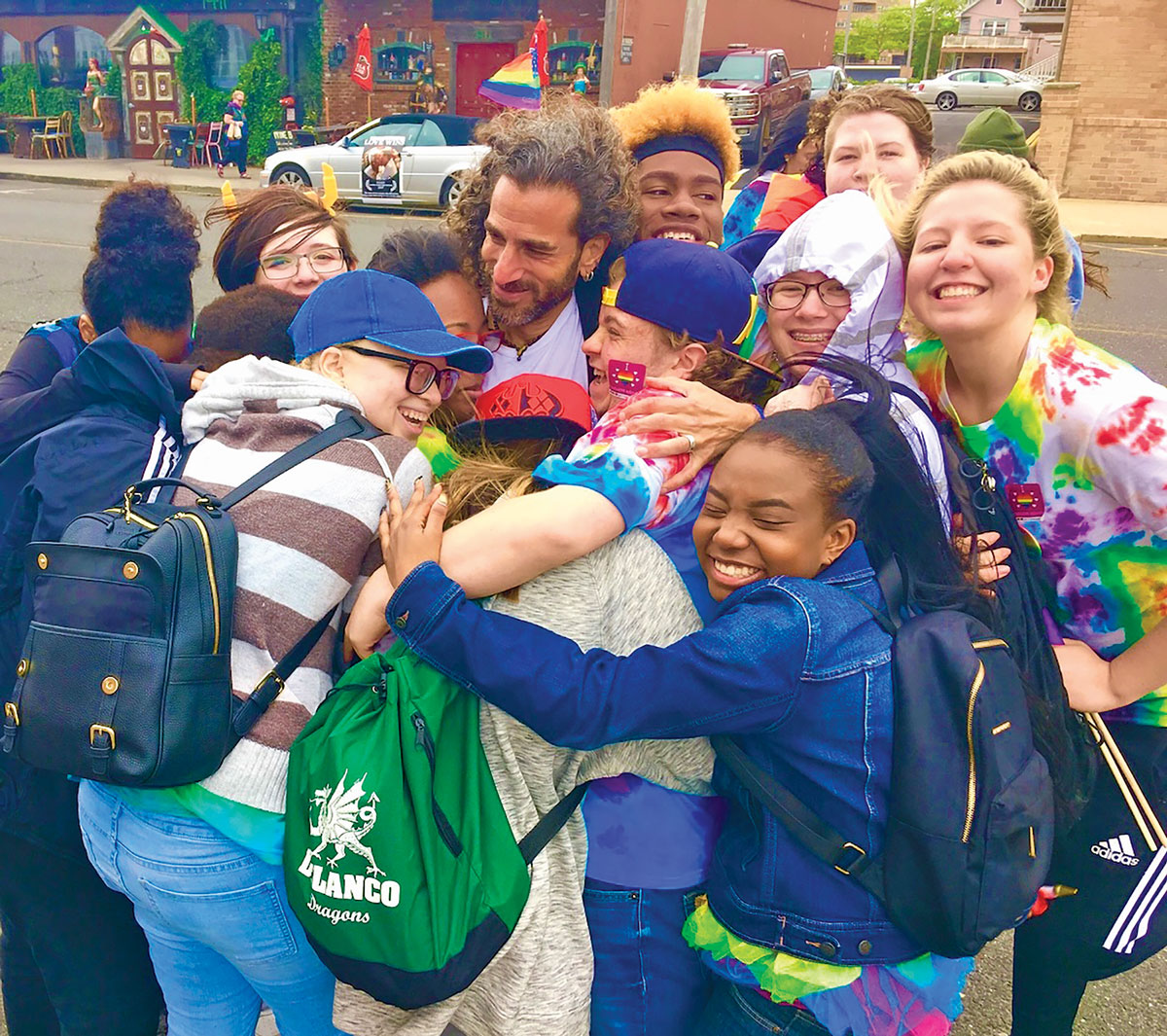
“He’s a passionate and empathetic man,” Gopnik said. “He’s got a terrific and, I think, inculcated sense” of social justice and activism. Gopnik said the center is a beautiful place “in a fine old house” with an atmosphere of welcome.
Tony Valenzuela, a national partner of the center, is also the executive director of One Institute, the oldest LGBTQ organization still operating in the country.
“Through his leadership at the Bayard Rustin Center, Robt has made a deep impact in New Jersey and beyond to educate about Rustin’s legacy and support queer and trans communities today in our continued struggle for LGBTQ rights and liberation,” Valenzuela said.
Dr. Sara Wasserman, who has a doctorate in teacher education and teacher development, started at the center as a volunteer and now works there full-time as a queer educator and local community organizer.
Wasserman met Seda-Schreiber when she came to the center for a Planned Parenthood event, and the two began talking. She said she “was blown away by his approach to social justice and advocacy from an intersectional lens.” He not only created a physical space for community members, “but he was even more so dedicated to building that space with everyone,” she said. Her favorite quote of his is: “We will never speak FOR anyone but we will speak WITH everyone.”
Dr. Peniel Joseph, who is a professor at The University of Texas at Austin and vice president of the center’s board, called Seda-Schreiber “a first-caliber social justice leader.” Joseph said the center’s work “is more vital than ever in this age of political backlash, retrenchment, authoritarianism, and anti-democracy that have gripped the nation, divided Americans from themselves, and triggered new waves of violence against historically marginalized and oppressed groups.”

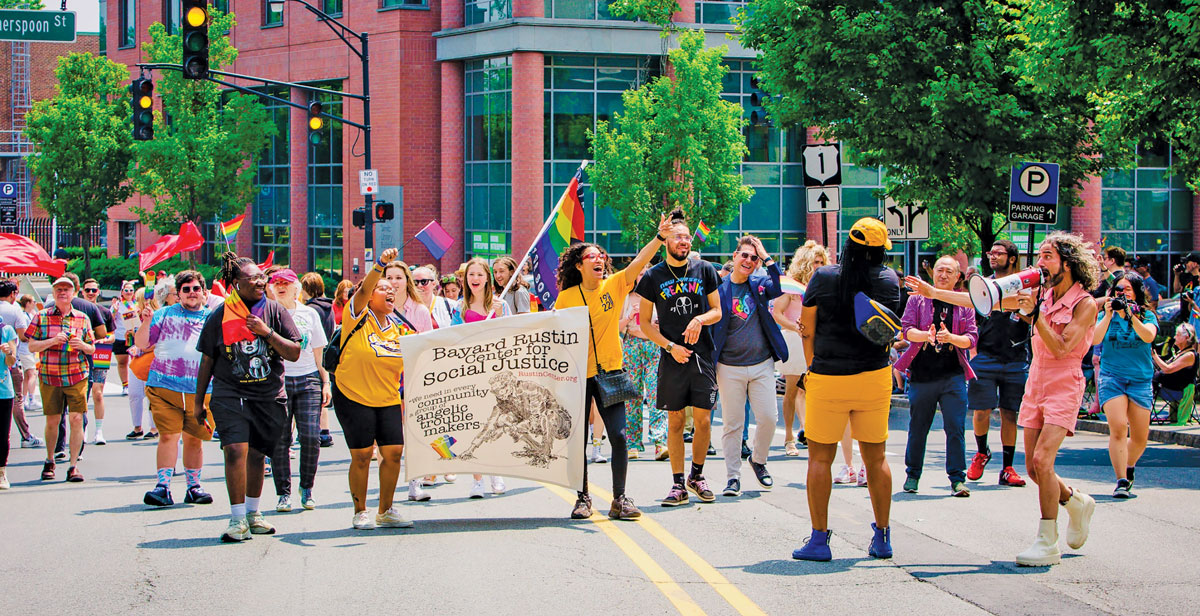
As in King’s day, violence is not an unfamiliar occurrence in the social justice activism of today. But, Seda-Schreiber said, he does not fear for his personal safety and he looks to his heroes for strength.
A threat of violence occurred last year at the center when it received a bomb threat because the center was going to host a drag queen story hour for children. The threat was determined to be unfounded.
Seda-Schreiber said the children didn’t know there was a threat and they felt safe. He said they persevered, and “together as a chosen family, we sashayed down the block” to a home and held the story hour there. “We created a field trip,” he said. “Our queer community, if nothing else, knows how to come together and how to pull ourselves together as fabulously as we possibly can. We need to overcome obstacles, which is what we’ve always done.”
Having people feel fabulous, empowered, respected, and loved is what Seda-Schreiber and the others involved with the center strive to accomplish. That and preserving Rustin’s legacy and educating people about the man who has largely been “lost to history because of who he loved” and “who he was,” according to a piece on the center’s website. “This cannot happen again. This is our work. This is our Dream @RustinCenter HQ.”
In addition to his writings on Rustin, Seda-Schreiber is working with Tony and Grammy award-winning musician Bryan Carter on a concert paying tribute to Rustin at Lincoln Center. It will take place Oct. 18 and 19. Tickets and further information on the tribute can be obtained on the Jazz at Lincoln Center website at jazz.org.
“This cat is so talented and so beautiful,” Seda-Schreiber said of Carter.“ They reached out to me and wanted me to share some stories about Bayard,” Seda-Schreiber continued. “We’re so excited about this project.”
In addition to collaborating with musicians, Seda-Schreiber works with legislators, of course. Currently, he is working with U.S. Rep. Bonnie Watson Coleman, D-N.J. 12th District, to establish a national LGBTQ advisory board.
“I do not think, as a member of Congress, I have been in any space that is more loving and caring than this space right here,” Coleman said of the center. “I’m so glad you are here…not only for young people and old people, and whoever else needs a safe space for that moment, but for people like me that have been elected to office and need to see the good that gets done.”
Both young and old people frequent the center. In addition to youth, there are people in their 60s, 70s, and 80s, some of whom came out later in life and are now living life as their true selves.
Those involved with the center help each other find their way in the hope that they achieve what King talked about. “We all deserve to be here and be who we are,” Seda-Schreiber said, noting that is an ideal that this country is supposed to be founded on.
Seda-Schreiber and those involved with the center will keep fighting for equal rights for LGBTQ people and to eliminate homophobia and transphobia. Until then, the center will be a refuge where angelic troublemakers — those who are different — can grow, get support, and continue the “beautiful struggle,” looking to the past for the strength to move forward.
“It’s about respecting how far we have come and also recognizing how far we have to go,” Seda-Schreiber said.


