


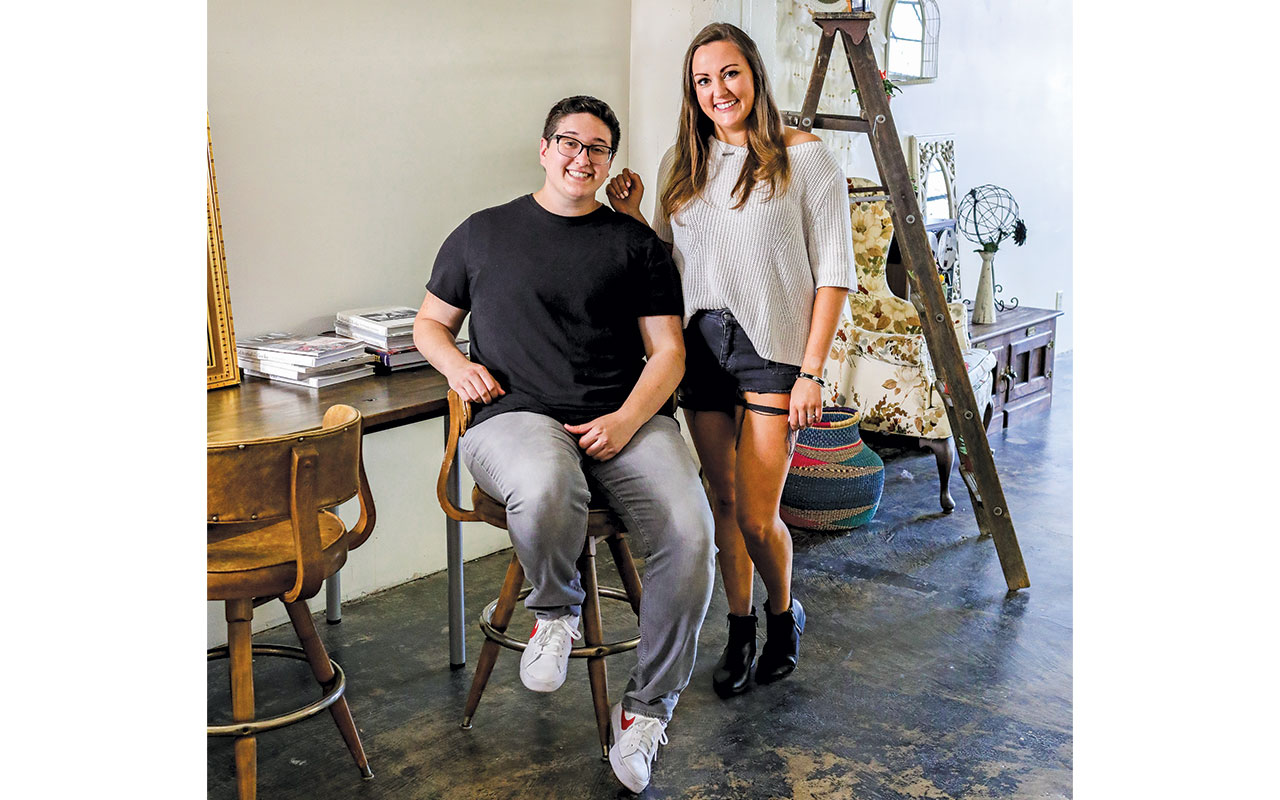
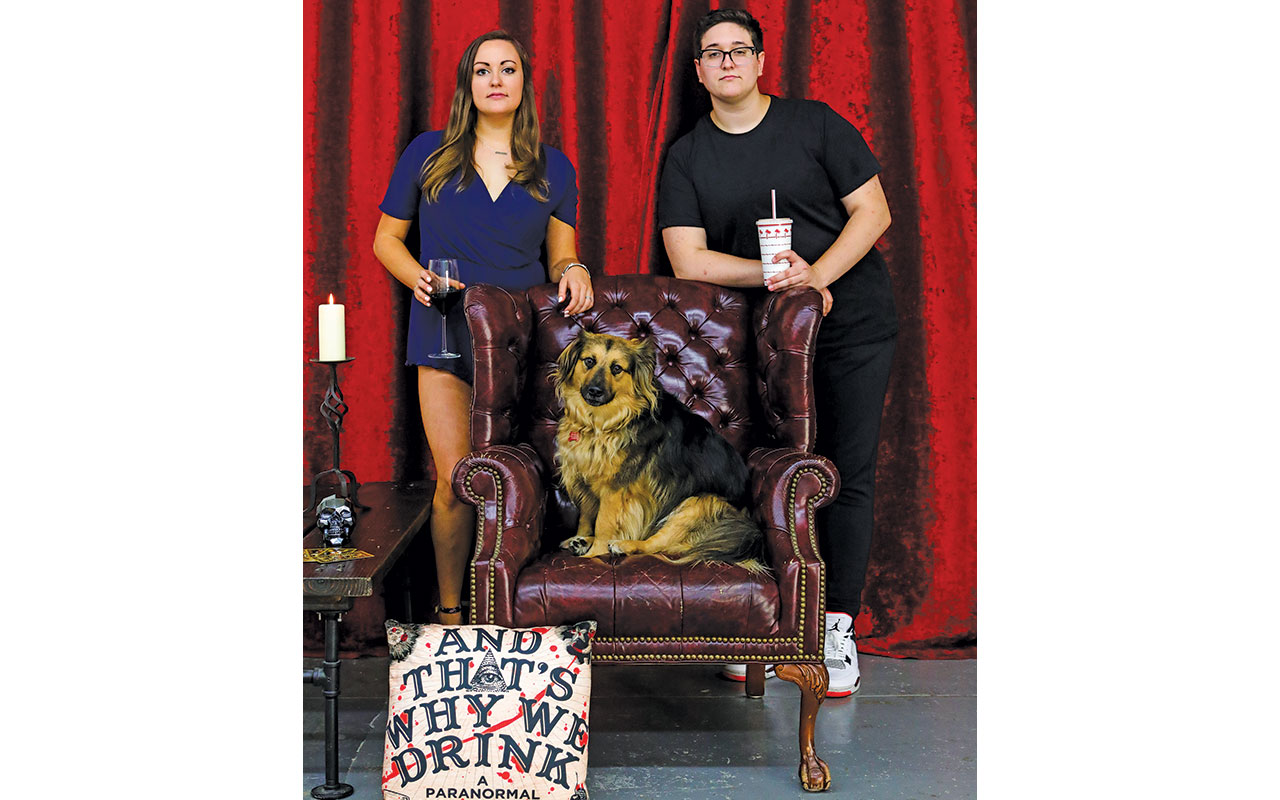
An LGBTQ-owned podcast is one of the biggest podcasts in the game right now. Christine Schiefer, bisexual, and Em Schulz, trans, have taken over the market with And That’s Why We Drink. The unique concept features Christine, a wine lover, and Em, who is sober, merge the worlds of the paranormal with true crime.
The podcast is consistently ranked at the top of the comedy charts and has won many prestigious awards including Webby Awards, People’s Choice Podcast Awards, Signal Awards, and People’s Choice Awards. In Fall 2024 they kicked off their latest tour, Pour Decisions, which has tons of dates lined up nationally from now through May. Christine and Em spoke to me and told all!





I am speaking with podcast royalty! You have garnered over 200 million lifetime downloads and a plethora of awards. What is your greatest achievement?
Em Schulz: I like tchotchkes and collectibles [laughs]. We never think we are going to win so we are always grateful. Christine and I put winning a Webby Award on our shared vision board. Ultimately, years later, we ended up winning multiple. Thus, that was definitely the most important one. In 2019, 2021, and 2022 we won People’s Voice for Best Comedy Podcast at the 23rd, 25th, and 26th Annual Webby Awards.
There is a story behind every podcast. What was your life like growing up and what led you to establishing this podcast?
ES: Christine handles the true crime side of our podcast, and I handle the paranormal side. I was raised in Virginia, I was always into the paranormal, and a common activity of mine growing up was breaking into abandoned houses with my friends. Moreover, when I was seven, I saw my grandfather after he passed away. That solidified my desire to work in the field. Christine and I met in 2014 and ultimately the podcast was established in 2017.






Christine Schiefer: I was always very into the creepy stuff growing up. I even had a Ouija board which my stepfather kept trying to throw away because it is demonic. I met Em in grad school when we were both studying television and we instantly bonded over our mutual love of the unexplained. I was very fascinated with true crime and at the time I was working for a private investigation company while Em was a ghost hunter in college. After exchanging so many stories, we decided let’s make it a podcast and see what happens.
For the past 10 years, it seems everyone has a podcast, and it got worse 2020 and beyond. What is the recipe for your success?












CS: I think we were lucky with the time we launched. At the time circa 2017 there were no true crime and paranormal podcasts. We got in at the right time not even strategizing how we were going to garner an audience. It was a very authentic process. After several months we were impressed that we started to accrue a wide range of listenership that wasn’t our families [laughs]. We were mentioned in Newsweek first, then Buzzfeed, and the more press we received the more our audience grew in conjunction with our social media presence.


Prior to 2020, podcasts still were not as massive of an industry as they are now, and were also not so celebrity focused, which worked in our favor. Also, we had a niche concept, which despite being intimidating initially, is a good thing in hindsight because it proved there is a market for everything.
You touched on an important point. You had no competition at the time yet now there are a lot of knockoffs. Often imitated, never duplicated. Despite all your mega success, do you still feel there is a stigma with podcasting?
ES: It is so weird. During the first few years of us doing this, when we said we were podcasters, everyone was so puzzled. They did not know what it was. Now when we say we are podcasters, they all say, “everyone has a podcast.” We never got our flowers. Put respect on podcasters’ names!

Your first book, Haunted Road Atlas, debuted on the New York Times bestsellers list. You just released your second book, Haunted Road Atlas: Next Stop. What does the new book feature?
CS: When we wrote the first book, we wanted to write about 60 different cities, but our publisher said it would be too big of a book. Once we knew that, we knew we wanted to include all the cities we could not fit in the first book. I cover a true case from each city and Em covers a paranormal case from each city.
You were one of the first to hit the road with the concept of live podcasting. How long have you been doing it and what does it entail?
ES: A lot of trial and error. We started live podcasting in 2018. It is actually why we had to quit our day jobs. We ended up having someone reach out to us who said they could coordinate an entire tour for us. That is when we had to decide if we were going to commit to podcasting full time or say no to the tour and keep our day jobs. The first live show was on my birthday, ironically, since I was petrified of doing this and originally said I would never tour.
The concept started as me telling a ghost story while Christine would tell a true crime story, always specifically tailored to each city we were visiting. As time went on, audience interaction became a more integral part of the show. Initially, we had no boundaries and did not know how to say no. We were just so excited people wanted to see us yet scared of the commitment. We ended up with a 50-city tour in a three-month period. Sometimes we would have multiple shows in the same day. Keep in mind this was all while we were still recording our show. It was successful yet it killed us. That is when we learned how to juggle without burning out, what to say yes versus no to, and how to keep the main show alive while managing a better touring schedule.
Do you agree social media is the cause of a lot of dissension today, especially in reference to homophobia?
ES: The Burbank Bigots page has let me know bigots are all over, even in Los Angeles. I grew up in Virginia, so I assumed California was a bunch of hippies. After moving to Los Angeles, I was shocked to learn how there are only patches of really liberal areas. A lot of California is very red. On top of that, even in the blue patches, I have been noticing more bigoted activity from people who would normally keep their mouths shut. It is gross and feels unsafe.
To add to your example, just look at that recent video from Nashville with a bunch of people carrying Confederate flags through the streets.
CS: The same people who will say “not all men” will say “all gays.” It’s hypocritical and ignorant. If you were to say all white teenage boys are school shooters they would be outraged. It is the same thing. You can’t judge a group by a few bad apples. Moreover, look at the book ban situation. I was traumatized more just going to Catholic school. None of the books I read as a kid are going to make me a porn star.
Lisa Lampanelli has always been a staunch supporter of your podcast. The first time I even heard about you was from her. I hear there is a relation?
CS: My husband is Blaise Lampugnale. His dad’s sister is Lisa. Lisa is his aunt. She Americanized her Lampugnale name so her stage name is Lampanelli. When we started the podcast, and she saw it growing, she helped us with everything. She helped us figure out touring, how to fire people, and how to have boundaries. At some point she even was our manager, which she decided for us [laughs]. She hooked us up with our current manager and has been such a fierce advocate for us since Day One. She was our first guest on the show before the podcast even took off! She is the best.


