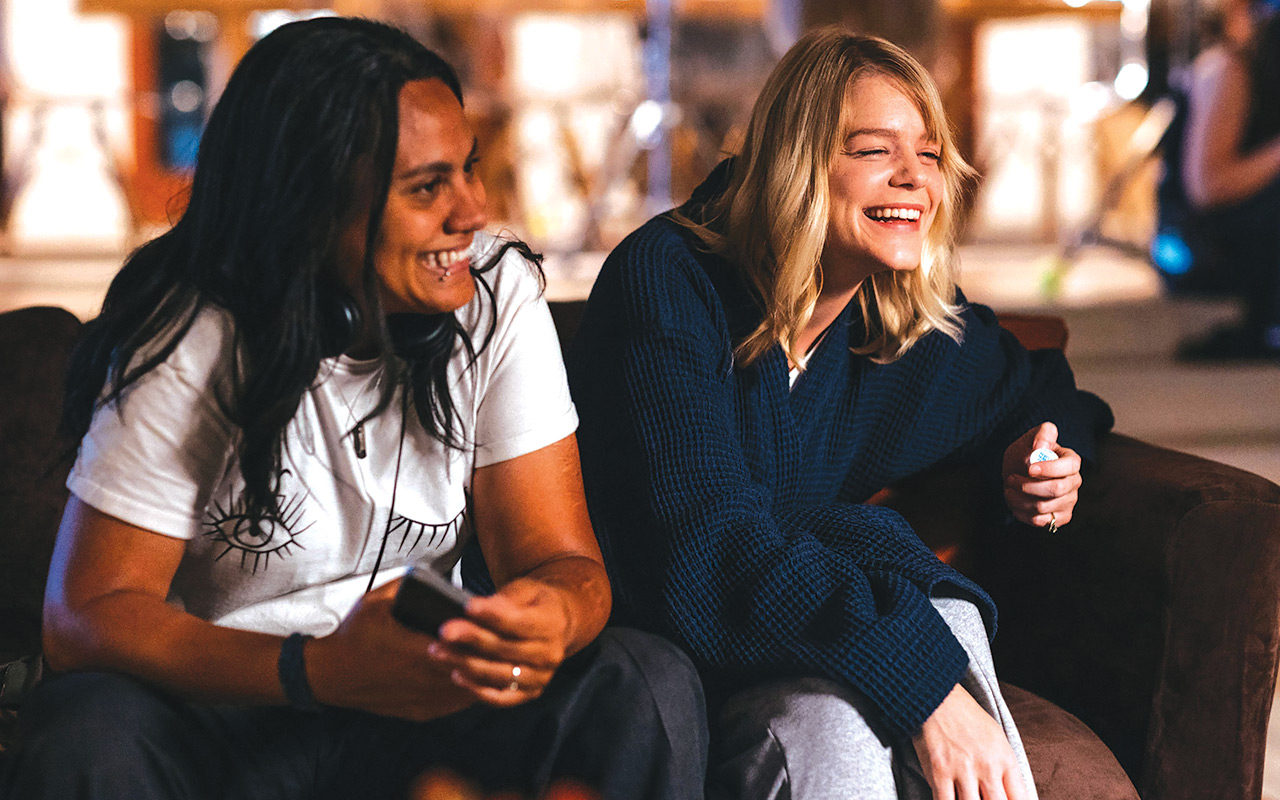
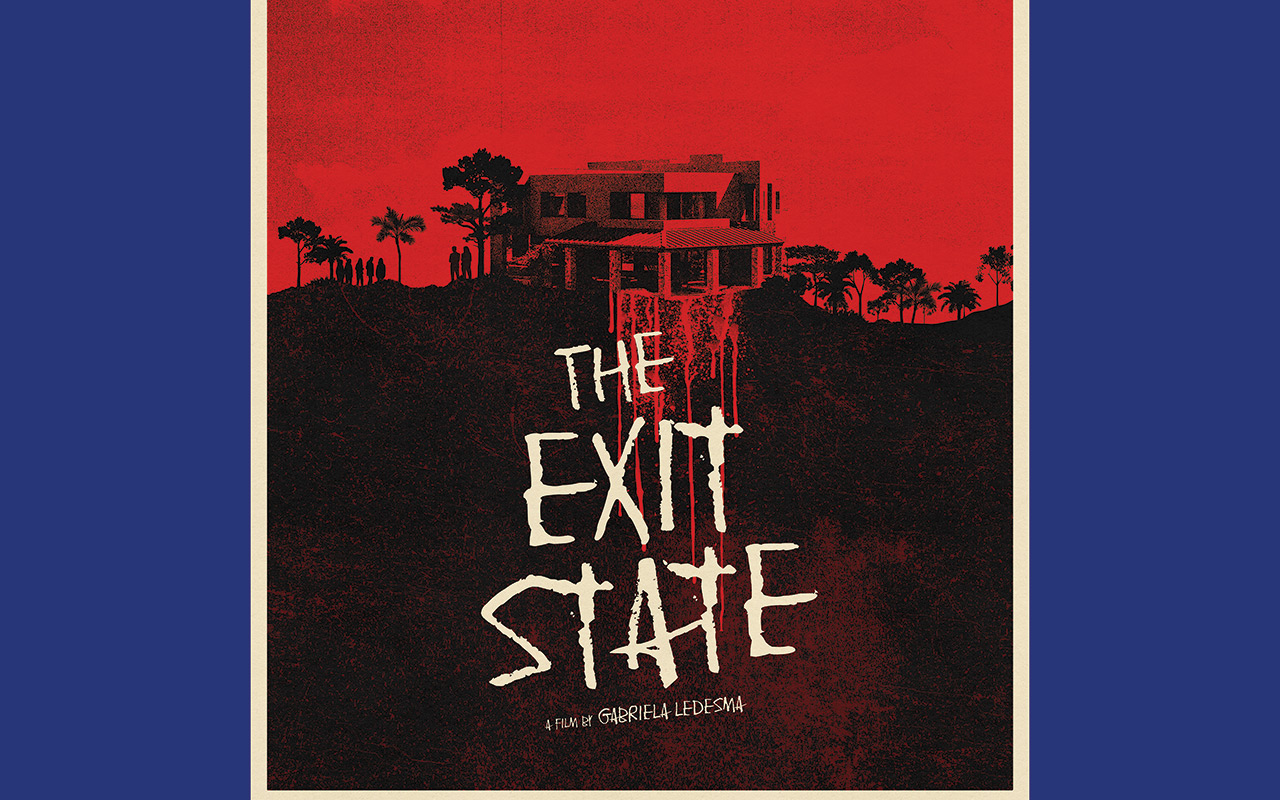
In an industry still catching up to authentic LGBTQ representation, the married queer producing duo Callie Schuttera and Gabriela Ledesma are quietly — and fiercely — reshaping the independent film landscape. They are the creative forces behind Poison Pictures and have several feature films to their credit. Their latest project, The Exit State, is a suspenseful horror thriller that focuses on a country deteriorating into authoritarian collapse. This powerhouse couple has built a reputation for telling emotionally unflinching, politically urgent stories, and their timing couldn’t be more perfect.
Gabriela Ledesma, the writer, producer and director of The Exit State, her third directing project and feature film, was born and raised in Brazil. She met Callie Schuttera, actor, writer, and producer most notably known for her breakout role in Zach Cregger’s Weapons (2025), while pursuing their film careers. They both worked on music videos, documentaries, and content creation for major record labels and streaming companies. “We met making films, and one thing just kind of led to another. We started making a feature film, our first. We started writing together initially, and I don’t think either of us set out to be producers. It just is natural when you want to sort of take charge of making your own content.”





They started Poison Pictures about eight years ago. The name for their production company came from working on their first feature film, Blue (2018), in which a young woman tries to put her life back together after a failed suicide attempt. Noticing the prop box of rat poison on the set, Gabby said, “That’s it, poison.” Callie was not quite into the name at first, but was eventually persuaded. Gabby recalls, “It grabs you, and you’re like, ‘Why?’ You know what I mean? It felt just so ‘us’ and so unique to our beginning.” Callie reflects, “I liked the play on poison once you said Poison Pictures. I was like, ‘Well, that does sound nice.’ And then, I think, we were talking about wanting to have movies or films that convey a message, it’s almost like we’re, you know, slowly infecting the population.”
In a landscape where lesbian couples are rarely positioned as power players behind the camera, their visibility matters. They are not the muse. They are not the supporting character. They are the architects. Callie states, “I remember talking to my agent, one of my agents a few years back, when we first had started the company, and they said something about, ‘Well, you know, Gabby’s brown and gay and a Navy veteran, she’s just gonna get work,’ like that somehow being part of these minorities was really helpful, instead of recognizing that is something that stops you from getting in the room. But hopefully, that’s a change that we’re making in the industry.
“It does feel like there were these token women that got into the space, and that because of that, we’re supposed to say things have changed, but the amount of female directors in particular, and queer directors is nonexistent, almost. And female directors are such a small percentage of the group. It’s almost like you want to tout your otherness as being special and offering a fresh perspective, but I think a lot of times in the industry, what you’re met with is, ‘Oh, you’re not good enough, so you’re telling me that you are a special hire.’ You know, it’s almost like the DEI argument that I should give you the job just because of this, and sometimes you’re met with that kind of attitude instead of an excitement about fresh perspectives. But Gabby does not have that advantage when walking into the room, so she really has to own who she is.”
Gabby states, “I think that sometimes that can be a plus. That can be something that helps me, because, you know, I think some people in the industry have a tendency of listening to the voices a little stronger and a little more masculine, and that is okay. Callie’s the smiles, and everybody, oh my god, Callie, I’m the one that goes, ‘No, this is right, this is wrong. Moving forward or not, this is gonna happen, not gonna happen.’ So, I think that the response, at times, is positive, and sometimes, of course, even from, you know, allies you know…” Callie jumps in and says, “Yeah, even women, a lot of women are used to responding to a masculine presence.”





They both discuss having a welcoming and supportive set while working. “We work with really wonderful filmmakers, so whenever we’re making a project, not only do we have the utmost respect from our crew, they’re just so wonderful to collaborate with, and they’re great at respecting Gabby in a director position, and that goes for the straight crew members, the male crew members. It’s a really lovely environment that we’ve cultivated.”

In casting The Exit State, they already had an idea of which actors were going to play the characters. More specifically, Callie’s costar in Weapons, Clayton Farris, was a major player they wanted in the film. “When he said yes, we started writing with him in mind, so, you know, every word that he says, we were like, oh, we heard that before. You [Farris] were in our ears while we were writing, and some other actors, too, like, we had, I think everybody but two. Almost everybody, we had in our heads as we were writing, which was fun, we’ve never really gotten to do that before. No, that was kind of cool, yeah. And so that was a real gift, because it really just allowed the character to bloom from a personality that we already knew existed.”











In talking with Gabby and Callie, they struck me as having a nice balance. Gabby said “We work together so well, and, you know, we know how much to push and what to do, but I think more than anything, I think that we take care of each other, right? So, you know, if somebody needs something, you know, we’re there for one another, and I think that’s so important.”
Callie agrees, “And you’re absolutely right, we are very different, but we agree on our morals, our values, and I think, other than that, our approaches being different is something that is fun for us.” When I asked about how they maintain their production company and their relationship, Callie humorously states, “I would say the thing that keeps you going, like you mentioned, it’s not an open-door career where you just walk in and choose what you want to do. I would say delusion is a pretty healthy substance to have a lot of when it comes to this, because there is so much work and so much learning involved that if you don’t have an air of delusion, and sort of, like, blind optimism, I think it’s easier to get jaded and give up much quicker.”
But don’t plan on Gabby and Callie giving up anytime soon. In fact keep your eye on this award-winning power couple. Their focus remains clear: stories that push boundaries, create conversation, and refuse erasure. For readers hungry to see themselves reflected onscreen — not as caricature, not as tragedy, but as fully realized protagonists — the work of Poison Pictures and the team behind The Exit State offers something radical: Proof that when lesbians control the narrative, the story changes. And once it changes, there’s no going back.