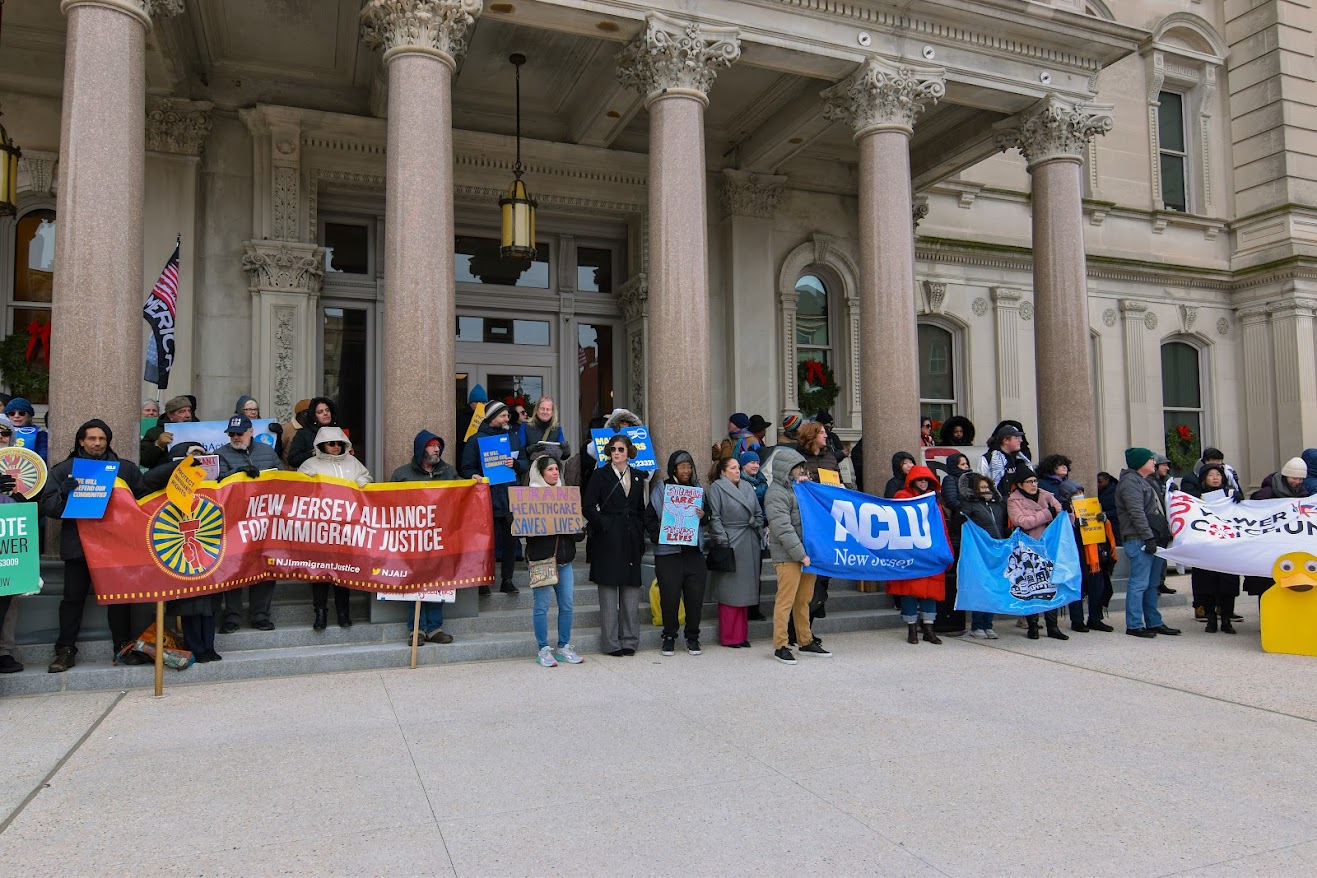
New Jersey lawmakers were not given the opportunity on the last day of the legislative session Jan. 12 to vote on a bill that would have codified protections for those seeking gender-affirming and reproductive care, emboldening LGBTQ advocates to work to get the measure reintroduced and start the process again.
Senate Bill No. 3491 and Assembly Bill No. 4656 were not brought to the floor by Senate President Nicholas P. Scutari, D-22, or Assembly Speaker Craig J. Coughlin, D-19, in their respective chambers. Neither Scutari, who is listed as one of S3491’s sponsors, nor Coughlin responded to messages seeking comment on why.




“They never tell us,” said one of A4656’s sponsors, Assemblywoman Garnet R. Hall, D-28, on Jan. 13. “We did over a hundred bills last night. … We never know from our seat what’s going on except for the bills that are put up on the board.”
While Hall’s term in the General Assembly is over, she said that she will continue to be influential. “I’m still hopeful, and I’m still going to keep pushing,” she said.
According to the synopsis of A4656, the bill would have secured “protections for patients and providers accessing and providing legally protected health care services, which are restricted in other states.” Those health care services encompassed gender-affirming and reproductive care, including abortion.
Section 1.f of the bill stated: “New Jersey, through this act, will codify critical protections to those seeking and providing reproductive and gender-affirming health care. Further, this act is intended to ensure that anti-abortion and anti-LGBTQ+ persons cannot harm patients or providers.”




Advocates in New Jersey had said passage of the bill was “critical” because conservative states have been trying to prosecute providers as well as patients seeking that kind of care.
For example, a grand jury in Louisiana, which has almost entirely banned abortion with few exceptions, indicted a New York doctor in January 2025, alleging the physician provided abortion medication through the mail to a mother’s minor daughter. The mother also found herself in legal trouble. New York Gov. Kathy Hochul rejected Louisiana’s demand that the doctor be extradited, citing the Empire State’s shield law, similar to the measure New Jersey was considering.













Although not a law, New Jersey Gov. Phil Murphy’s Executive Order 326, which he signed in 2023, does provide protections. However, a conservative gubernatorial administration could take office and revoke the order. That is why advocates want the protections codified into state law.
Gov.-elect Mikie Sherrill, a fellow Democrat like Murphy, is expected to sign the bill if it is reintroduced and passed by the Legislature, according to advocates such as Louise Walpin of the progressive group WADEIn NJ and who was at the forefront in the fight for marriage equality in the state.
Walpin said she ironically feels that what happened is a win for advocates, who can now work in real time on the language in the bill to come up with one “that will deal with the dangerous policies that have been coming down from the White House” and that will best protect the trans community. “Now we do have legislative leadership understanding the needs of the trans community, which I think was a very important step, and they are committed to working with us and to getting something on Mikie Sherrill’s desk within the first quarter, which I think is a big win,” Walpin said. Sherrill is expected to be sworn in as governor on Jan. 20.
Walpin, who is a cis-gender ally to the trans community, added that she is very excited to be working as part of the Trans Coalition of New Jersey, which was formed in December.
“We won’t stop until all people can access the full range of reproductive and sexual health care, and gender-affirming care, that they need and deserve.”
In addition to WADEIn NJ, the Trans Coalition, and supporters like Hall continuing the fight, Planned Parenthood and LGBTQ civil rights organization Garden State Equality are two of the many advocacy groups that pushed for the bill’s adoption and remain undeterred.
Kaitlyn Wojtowicz, the executive director of the Planned Parenthood Action Fund of New Jersey, said in a statement Jan. 13 that while the organization is disappointed, it is ready to work with the Legislature and the incoming governor during the new legislative session to make reproductive freedom and health equity a reality for everyone. “We won’t stop until all people can access the full range of reproductive and sexual health care, and gender-affirming care, that they need and deserve,” Wojtowicz said.
GSE said in a statement also that day that it and its partner advocates continue to have “meaningful conversations to refine key aspects” of the legislation. “Legislative leaders have personally assured me this is an issue they support and that we will expeditiously pass this bill in the new legislative session,” GSE Action Fund Board Chair Jeannine Frisby LaRue said, adding she is confident that Sherrill “will enthusiastically sign this bill into law.”
Brielle Winslow-Majette, GSE’s acting executive director, said in the statement that this “is about the freedom to exist without fear, the right to autonomy over our bodies, and the government reestablishing trust with our communities. When protections are not codified, they are mutable.”
“While no one should have to travel across state lines to receive care, if they do come to New Jersey, they deserve to know that both their healthcare and their providers are protected here,” Winslow-Majette said.