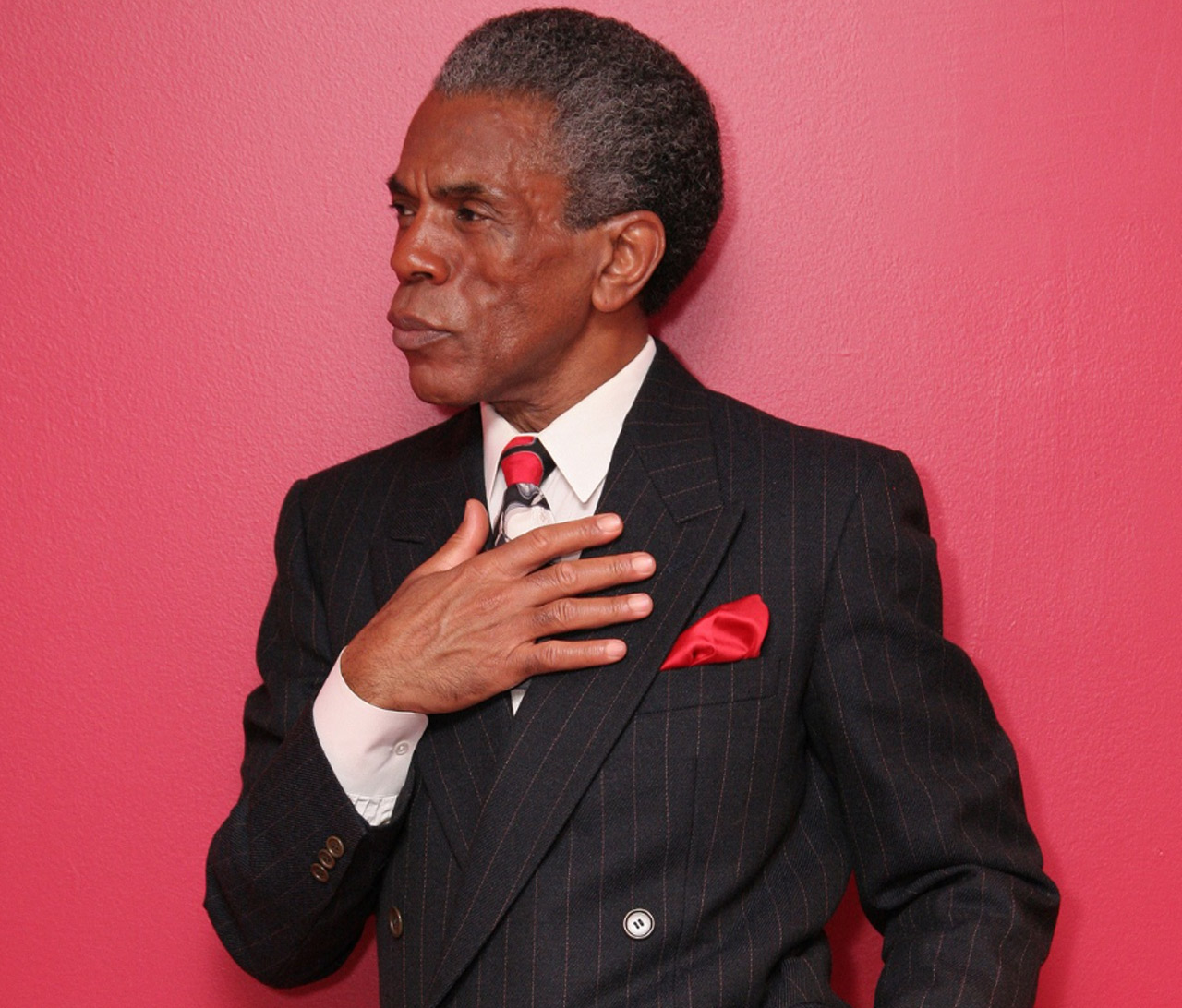
Princeton’s McCarter Theatre will hold its annual McCarter Gala the evening of Friday, June 6. A performance from Broadway icon André de Shields will serve as the evening’s piece de resistance.
The organization’s most significant and highly anticipated annual fundraising event will feature a wealth of entertainment and festivity. Silent auctions, signature cocktails and a three-course meal will culminate with an evening of dancing under the stars for all attendees.





The evening will also see the presentation of the 2025 McCarter Award, presented in memoriam to longtime supporter and legendary Broadway producer Roger S. Berlind “for his indelible impact on McCarter, our community and the region.”
McCarter’s Gala raises vital funds every year to support its mission of bringing exceptional live performances to Central New Jersey and delivering transformative arts education experiences to thousands of schoolchildren each year. Through initiatives such as Stage Door Access, McCarter is committed to ensuring that everyone — regardless of income — can experience the power of live theater and performance.
Thanks to the generosity of donors and McCarter’s partnerships with local organizations, thousands of free and discounted tickets are offered annually, opening the doors to creativity, connection, and community for audiences of all ages.
This is perhaps more critical than ever in light of the current administration devaluing the arts and slashing funding. Only last month McCarter learned that a previously approved grant for $200,000 procured through the National Endowment of the Arts has been withdrawn thanks to that organization’s dissolution under the Trump regime.






This subject holds particular resonance for Mr. De Shields. Although the Tony, Emmy and Grammy award-winning legend has thrilled audiences for over five decades with his dynamic talent and captivating presence, he is assiduous in pointing out that his dreams are a direct manifestation of those of his parents, who had great talent but had to sacrifice their own ambitions. He knows all too well how societal constraints can hold back artistry before it has a chance to blossom and counts himself fortunate to have been consistently employed over decades in a challenging industry.
De Shields won his long overdue Tony award for his breathtaking performance in Hadestown in 2019 and has enjoyed a storied career. It is a remarkable achievement to have originated roles in landmark works such as Ain’t Misbehavin’, Play On!, The Full Monty, and The Wiz, in which he played the title role. And yet he is quick to underscore that the artist’s journey is one rife with peaks and valleys — further challenges beckon, and that’s as it should be.













There could be no better artist to represent McCarter’s mission to rise above these uncertain times. De Shields’ calming, shaman-like presence was in full evidence as we spoke over the phone ahead of his McCarter performance on a busy day. That dusky, mellifluous voice was unmistakable as we touched on his career, LGBTQ representation in the creative media and the importance of the arts to uplift and inspire.
Hello Mr. De Shields! It’s a pleasure to hear your voice!
André de Shields: Thank you. I apologize that we had to change the time of this call, but you know, this is award season, and you’ve got to be in three places at one time.
That’s quite all right. How lovely that you’re making time to come to McCarter. I wondered if you could share a bit about what those attending can expect of your performance?
ADS: You want me to give away spoilers? [Chuckles.] Well, I am going to perform three songs as an entree, which will be collegial and uplifting, and we are also performing a tribute in memory of Mr. Roger Berlind. I know there are others who are going to be performing as well, and that at the end of the entire event, I’m going to close with another song.
This is a fundraiser to help McCarter sustain its programs. Do you have any thoughts on how we can stem the tide and fight back on that with elegance and dignity, aside from buying a ticket, or performing as you do?
ADS: The most effective thing that artists can do is to continue making their art without hesitating and certainly without fear. It’s curious, because when the arts are being threatened, it is the artist who’s the most in danger, not only of not being able to carry on with his profession or his trade, but also because in terms of the hierarchy, it’s the artist who is least compensated in monetary terms.
Yes.
ADS: But when the problem is exacerbated, it is the artist who is then asked to be at the forefront of the line of resistance, so we have to take that into consideration also.
I think it’s important for us [to have galas and award shows in these times] because we find solace and we find strength in community. And it’s always — if not necessary — it’s always helpful to choose a particular representative to raise above everyone else, which makes it seem as if we are prepared to fight the good battle. This is particularly true of national public radio and public television because it’s by donations that they can exist.
Yes, and we have never needed them more.
ADS: And of course, the biggest donations come from an empathic government. Our government is no longer empathic.
As a matter of fact, our government is hell bent on destroying the arts. It brings to mind a statement from Vice President Vance that universities are the enemy. Did you hear that?
Yes. Unfortunately, I did.
“[artists] are the face of everything that the authoritarians despise.”
ADS: All right. So this says to me that it is the whole fabric of humanism, it is the whole concept of intellectualism and intelligence that is being threatened now in not only what I affectionately call the United Plantations of America, but all over the world.
It’s most important for artists to heed this call because we are the face of secularism. We are the face of humanism. We are the face of mental acuity. We are the face of democracy. We’re the face of inclusion, plurality — we are the face of everything that the authoritarians despise.
Which speaks to the funding that has been taken away from Princeton and McCarter.
ADS: Well, you see, large institutions like Princeton, as Harvard has finally done, should stand up to the boogeyman, to the emperor, and reveal to everyone that he has no clothes instead of looking to the base, if you will, because the fortune doesn’t flow up from the bottom. It’s collected in pools at the top and should flow down. [Ultimately], those of us who are responsible for creating the healing arts, those of us who take an oath similar to the Hippocratic Oath — “First do no harm” — are the first being harmed.
This isn’t the kind of interview I was expecting, but that’s okay.
Well, I just wanted your thoughts because you’ve been in the industry for quite some time.
ADS: Yeah, I have.
And you’ve seen the ups and downs and vagaries of the profession through other difficult periods.
ADS: Well, I don’t think what I’m going to do on the sixth of June is going to move the needle. I mean, it’s going to raise the money for Princeton, for the McCarter, to continue their outreach into their immediate community, but it’s not going to stop the president from robbing the country blind.
“I can make a difference….THe whole is greater than the sum of its parts.”
Well, hopefully it’s a drop in a positive bucket, with the arts playing a large part in that.
ADS: Right. Exactly. And hopefully people will have a good time and put away their fears for an hour or two, and put away the nascent PTSD, and say to themselves, “I can make a difference.” And the greater the difference made by individuals — well, let me just use the adage that everyone knows: The whole is greater than the sum of its parts.
You’ve spoken a lot about how fortunate you’ve been to be consistently employed throughout your career.
ADS: Right.
And that your dreams have been — I believe you put it this way, correct me if I’m wrong — a manifestation of your parents’ deferred dreams. I wonder what it felt like to see their dreams to completion.
ADS: Well, this is all about destiny for me. And each of us has an opportunity to surrender to one’s destiny or not. At a very early age, I surrendered to my destiny, which I was able to realize — to be the dancer that my mother always wanted to be. She would talk about that. She would say, “My dream was to be a chorus girl.” The vernacular was different back then — my parents were born at the turn of the 20th century.
Pain is inevitable. But suffering is a choice.
So when my mother would speak about what she would have wanted to have done with her life, she would say, “Oh, I wanted to be a chorus girl,” just as my father would say, “I wanted to be a singer.” They did not have any political machinations of any sort associated with that desire, but because of the vicissitudes of their lives — I don’t think I have to enumerate that for you — they could not achieve that. So as a young child, as one of 11 siblings, I knew that I could make a choice to manifest their deferred dreams and not only give them vicariously a taste of the dream that they had to defer but also complete my own destiny.
So, my first impulse was, “I’m doing this for my parents.” Years later, I discovered I’m still doing it to be the locus for all of those people who have suspended their dreams, suspended their paradise, suspended their contentment because they are now incarcerated by the daily demands of the drudgery that life can be if you are living outside of what you desire. If need is the impetus for why you get up every morning, you’re living a painful existence.
Not that pain is not inevitable. Pain is inevitable. But suffering is a choice. And when you make the choice to suffer because you have missed the opportunity of the abundance that had your name on it, but for whatever the reasons were, you could not embrace it — that’s unhappiness.
Yes.
ADS: And I think most of us live an unhappy life. So, the few of us who resist that and say, “I’m going to experience the pain that life brings to everybody, but I’m not going to suffer it” — we’re doing a good deed, I think. We’re being those mythical gods that we used to believe lived in the mists of the mountains — which is the reason that the Greeks built those amphitheaters that could seat an entire nation state of 20,000 people, 40,000 people, because they thought the gods would come down from the tops of the mountains with sage advice, with healing medicines, and answer those five questions that exist: Who? What? Where? When? Why?
But, lo and behold, we are the remnants of that. Those of us who choose the profession of performing arts, we are the remnants of those gods.
So, when people gather in these venues in darkness next to strangers, they’re doing the same thing as if they were in temple or a mosque or church. They’re asking us — the latter-day gods, if you will — to answer questions for them, to solve problems, to resolve crises, to lift burdens, to reveal the mysteries of life.
And the one mystery that has been solved and best expressed by George Bernard Shaw — it’s one of the beacons that I live by — is this: “The purpose of life is not to find oneself. The purpose of life is to create oneself.” And if you are busy creating yourself, then what you are doing in a great way is diminishing the inevitability of pain.
There’s a reparative quality to what you do.
ADS: Absolutely. Not only for the audience, but for those of us who call ourselves healers. Yeah. Absolutely.
I’m reminded of how very special it was to see you and Patrick Page and the rest of your brilliant cast in Hadestown, which I saw toward the end of your run. Just spectacular.
ADS: Oh, well, I’m glad you had that experience, because in my — what is this, 2025? — in my 56 years of being a professional actor, it is Hadestown, as a commercial expression, that has come closest to that relationship that I just described to you — why we choose the profession, and why the profession, in turn, chooses us.
Now, having said all of this, having had this exchange with you, yes, when I perform at the McCarter on June 6th, part of my rationale is going to be, I hope I can do a little healing that night. I don’t sing without purpose. The songs I have chosen are with direction and with enough content that if my audience is receptive, then they will receive the message of “everything is all right” — and that’s what we all wish for, I think.
My mother speaks rapturously about having seen you in Ain’t Misbehavin’. She remembers it like it was yesterday and compares your grace, your fluidity, your ability to float across the stage, to Honi Coles.
ADS: [Chuckles.] Oh, now I’m blushing! Because Honi Coles was a floater!
I often get that response from people. People will say, “André, you don’t walk, you float…,” and I thank them for being so observant, because it’s not a mistake that I appear to be floating. I do that deliberately. Because I want, when people encounter me, I want them to consider that the experience can be either walking on hardscrabble or floating inches above the inhospitable terrain. And you get to whatever your destination is, with less pain. It won’t be without pain, because that seems to be a condition of humanity.
Unfortunately, yes.
ADS: Yeah. And I’m very grateful that I’ve been able to do this for 56 years, and that as I mature, my life, or at least my career, is expanding. But because I am married to my profession, it is my life that is expanding. So, when I do these events, whether they be a gala, or one of the eight performances that we do a week [in theater], or a television series or movie, at the epicenter of what I’m doing is attempting to heal the human condition, which even the Buddha discovered was misery. If we could conquer misery — which is what the current administration should be about, conquering world misery — there’s certainly enough to grab anyone’s attention who is awake, much less woke — we’d be on a better track than we are now.
Who knew this conversation was going to be so deep? [Chuckles.]
Well, I hope you don’t mind.
ADS: I don’t mind.
One thing I want to touch on — I don’t even know if you can explain it yourself — is the stamina that you have on stage. I suppose there’s no way for you to describe how you’re able to summon what looks to me like the energy of two people. It’s extraordinary. I realize that’s not a question.
ADS I’m glad you’re aware of that, and I can explain it. Now, whether or not you’ll understand it is another question. But the term I use for it is cosmic indicators. It is not madness, it is not silliness to think… How do the great thinkers put it? “As it is above, so is it below.”
Whatever is happening up in the firmament and even beyond, we hold it within us. That’s why when a meteor hits the Earth and it is investigated, amazingly, we find that we possess the same elements — gold, ammonia, carbon, copper. We’re made of the same things, so it’s not foolish to think that we are all one or, at the very least, we all come from the same source. So in our daily existence as the species called humankind, we should be headed to the same source. The differences that we represent should bring us together in an effort toward understanding and cooperation and coordination, collaboration, all that. It shouldn’t separate us.
But now we’re at that point in our evolution where we are deliberately separating ourselves from other expressions of humanity — thinking that some of us are better than others, thinking that some of us are born to be rulers and others are born to be slaves. Or thinking that our relationships should be all utilitarian and not mystical.
So, in my personal life — but particularly in my life as a performer, just as they send these telescopes, these huge telescopes that weigh tons and tons, and they place them out in space so that we can see beyond our own galaxy and we get these gorgeous photographs coming back…
Oh, yes.
ADS: …We are telescopes. So I open up to whatever is in the cosmos, and I try to be a conduit for it. And just as I’m receiving it, I’m sharing it. Well, that’s what I try to do. [It’s not the] capitalist approach to receiving it and keeping it — that’s the road to cancer.
I agree.
ADS: But letting it flow is the genius of life.
I also just wanted to say, I very much enjoyed seeing your work on Uncoupled with Neil Patrick Harris.
ADS: [Chuckles.] Well, they shut that down, didn’t they?
They did, right? I guess that kind of answers the question, partly, then, because it’s nice to see such nuanced, more adventurous portrayals of the queer community like that. I was so happy to see you be such an integral part of that show, and I’d like to see more content like that, hopefully with you playing an integral role in some of it. Still, do you think we can do better with that as we go forward?
ADS: I think we can. Let me ask — did you see Cats: The Jellicle Ball?
I’m sorry to say I missed it.
ADS: Ahhh, I’m so dismayed that you didn’t see it. But maybe you’ll understand what I’m saying anyway. I was involved with that show [produced to critical acclaim Off-Broadway last year at Perelman Performing Arts Center] because I knew that if we could successfully get it produced, even Off-Broadway, it would reveal the next wave of revolutionary art. And now we’re getting this attention [with rumors of a revival]. So maybe there’s life after death. Certainly, with cats, it shouldn’t surprise anybody! We have nine lives anyway. [Chuckles.]
Yes!
ADS: And the whole idea about the Heaviside Layer [in the musical] is that there are lives beyond nine — so nothing I say should be taken as hopeless. I see on the horizon that there is an opportunity to adjust the zeitgeist. I know you understand that word, but that’s not the word I’m looking for. What’s the word I’m looking for?
The climate?
ADS: No, no… Well, what I’m saying is those of us who are living now are experiencing a rare opportunity, because this is an intersection of history and evolution, and those of us who can understand what’s happening will be able to look to the horizon and see what’s waiting to be embraced if we choose to embrace it.
And it’s not “zeitgeist” — that’s much too psychological. It’s another word. I think it starts with a T… Oh, André, you’re at a loss for words now. Okay, I’m going to leave that alone.
Now I wish I could impress you and come up with it on my own, but I can’t.
ADS: But you will! It’ll come to you and you’ll go, “Oh, that’s what he was talking about.”
I hope so! And this speaks to what you just said — you once said words to the effect of that you don’t want to be chained, and that freedom is an interior thing that one chooses for themselves…
ADS: Yes, right.
Like, they can legislate what they want, but what you do after that and who you are is no one’s business but your own. I think that’s important that people not lose sight of that — so hopefully we have art that can speak to that. And we do.
ADS:: Yes. We do.
I’m reminded of what you said when you won the Tony Award — that at the top of one mountain is the bottom of the next one. So just keep on going.
ADS: Keep on going. Exactly. And that’s how I live my life. And that’s what you see when I am on stage performing. You are watching me in real time scale a mountain.
Think about it — the other two of the three cognitive rules — the first one is in place, to “Surround yourself with people whose eyes light up when they see you coming.” We’ve established that by the audience buying tickets and sitting in the theater. I’m surrounded by people whose eyes light up when they see me coming.
The second is “Slowly is the fastest way to get to where you want to be.” And we’ve already talked about how slowly I move that it looks as if I’m floating.
And then the third one is “The top of one mountain is the bottom of the next.” So keep climbing. Now, if you can actually envision that when you see André de Shields, game over. That’s it. That’s it.
When you said you said you saw two people… I think that’s what you said…
That you have the stamina of two, at least.
ADS: The stamina. All right, yes. I have had people ask me, “André, how do you do it?” And I reply I was born triplets — you just can’t see the other two.
That’s perfect.
ADS: It’s a common compliment and one I appreciate.
Thank you for taking the time to indulge my questions today. I appreciate it.
ADS: Well, you are irresistible.
For a while I’ve wished to interview you, and, lo and behold, this opportunity to do suddenly presented itself thanks to McCarter. This has been a delight.
ADS: Thank you! See! That’s a cosmic indicator! Do you hear me?
Oh, yes. Yes, I do.
ADS: Good!
Good luck with the rest of the awards season fracas.
ADS: Thank you. It was a pleasure.
For tickets and information, please visit McCarter.org/gala.