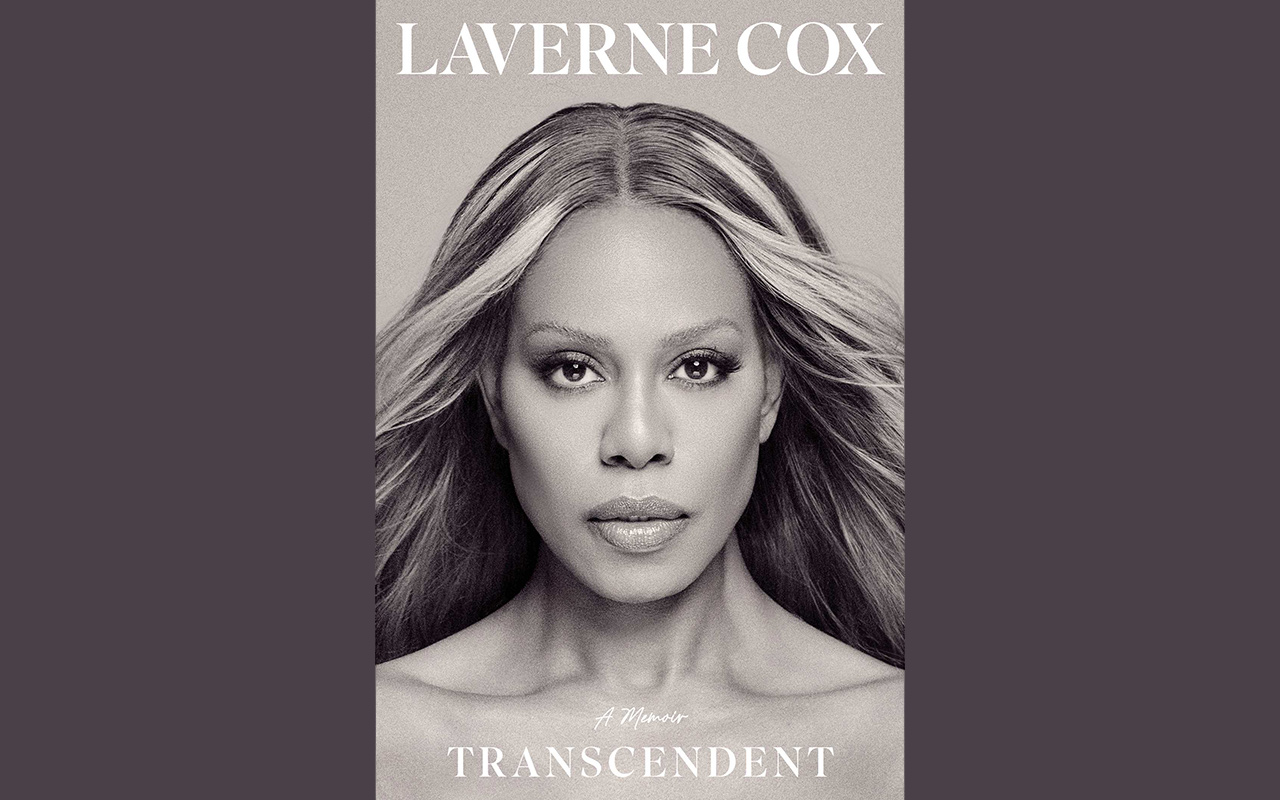
OK, let’s just say it: You’re tired of lies.
They come from above, behind, from either shoulder. They’re repeated, laid out in a line, told as if they’re true, but they’re not. You wish people would stop lying to you. As in the new memoir Transcendent by Laverne Cox, you wish you could tell the truth about yourself.





Sissy.
If the bullies in the neighborhood weren’t constantly calling Cox that name, then Cox’s mother was. “Sissy” was just one word, though; the others were worse. The boys would say those things while they beat Cox, when they could catch her. Her mother screamed them at her gentle child who didn’t like “boy” activities.
Even at 8 years old, said Cox, “I was a prim and proper lady.”
Despite the verbal abuse about her perceived feminine behavior and a furtive, failed attempt at conversion therapy, Cox’s mother sent her and her brother to the Alabama School of Fine Arts, where Cox learned to dance. It was a lifeline for her, and the talent gained there helped Cox get into college in Indiana.






From there, Cox expected to find fame and fortune in New York City.
And yet, the abuse she suffered as a child held Cox back, and the words “There is something wrong with me” became a daily mantra.













“I didn’t know how to say it,” Cox said. “I’m a girl.”
There were therapy sessions to get to that point, as Cox learned the language and skills needed to speak the truth. Landing a sense of style helped, as did her brother’s support, a handful of friends and happy, scent-infused memories of her mother’s makeup table.

At each step, Cox said, “I was expressing myself; I was also allowing myself to edge closer to my girlhood.”
Let’s start here: Transcendent is a difficult read — not for style, but for substance.
From her earliest memory of being sexually abused as a toddler to verbal and physical abuse from many sources to what, judging by photo captions, seems perhaps like forgiveness, Cox glosses over nothing. Be ready, in other words, for pages and pages of memories that, like a roller coaster, will make you cringe and want to hide your eyes, although doing so would be a mistake. The best part of this memoir is in its overall message.
As this book progresses, Cox’s story does, too. We see a child who knows a truth, but has no words for it. The child becomes a teen with a bursting sense of self, then a young adult who craves love as she’s stretching her wings. By the time Cox advances to writing about her career and the abuse is (mostly) over, readers will breathe a well-deserved sigh of relief. Whew, you’ve winced through a harrowing tale to reach a satisfying but not complete update.
Fans of Cox’s work will want Transcendent, as will anyone who’s transitioned, is thinking about it or loves someone who has. It’s a rough read, but a necessary one, then, and that’s no lie.
Transcendent: A Memoir, by Laverne Cox
© 2026 Gallery Books